

Audio By Carbonatix
The University of Ghana (UG) has trained early and mid-career academics in bibliometric analysis to strengthen research capacity and enhance the quality and impact of scholarly output.
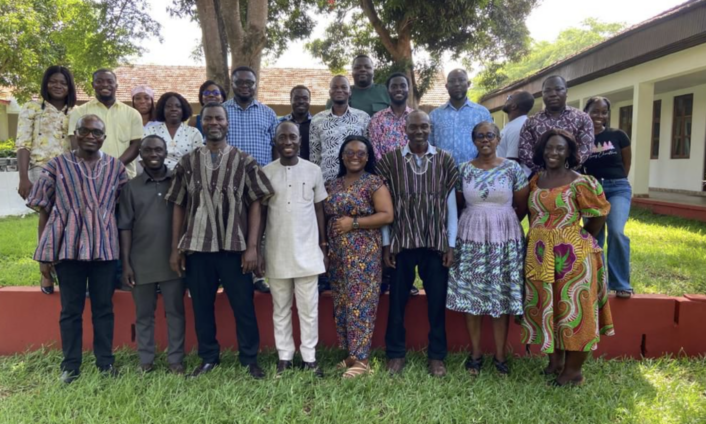
The three-day workshop brought together about 30 faculty members and PhD candidates and focused on equipping participants with data-driven skills to analyse scientific literature, identify knowledge gaps, and improve research productivity.
Organised by the Department of Animal Biology and Conservation Science under the School of Biological Sciences, UG, the training forms part of the University’s broader strategy to promote impactful research and academic excellence in a highly competitive global research environment.
Professor Francis Gbogbo, Dean of the School of Biological Sciences, said the initiative aimed at sharpening the research focus of both staff and postgraduate students.
He explained that bibliometric analysis played a crucial role in helping researchers evaluate existing literature and properly position their work within relevant and emerging research fields.
“The ability to identify gaps in research is key to producing meaningful academic work suitable for publication,” Prof Gbogbo said.
He added that the training would also enhance collaboration among researchers and improve their chances of securing research funding.
Prof Gbogbo noted that the initiative was spearheaded by early and mid-career researchers who sought to build research capacity within the School through collaborative learning.
Professor Eureka Emefa Ahadjie Adomako, a participant from the Department of Plant and Environmental Biology, described the workshop as timely, saying bibliometric analysis was an emerging research skill gaining relevance in academia.
She said the approach went beyond traditional literature reviews by enabling researchers to track trends, identify emerging topics and understand how knowledge in specific fields evolved over time.
According to her, the tool was particularly beneficial to postgraduate students as it helped them focus on relevant research areas and avoid duplicating already exhausted topics.
Professor Bethel Kwansa-Bentum, another participant from the Department of Animal Biology and Conservation Science, highlighted the efficiency of the bibliometric tools introduced during the training.
He said the ability to analyse large datasets quickly and identify research hotspots gave academics an advantage in refining their research focus and improving output.
He emphasised that literature review remained the backbone of academic research and was essential for producing strong theses and publications.
Participants are expected to apply the knowledge gained to enhance research productivity, develop competitive proposals and foster interdisciplinary collaboration.
The workshop reaffirmed the University of Ghana’s commitment to equipping researchers with modern tools and skills to remain competitive and contribute meaningfully to global knowledge production.
Latest Stories
-
CSR must be measurable commitment, not a gesture of convenience – Ga Mantse tells mining companies
2 minutes -
Ga Mantse urges mining industry to protect communities beyond the life of mines
17 minutes -
Empowerher in Upper West region
37 minutes -
Ga Mantse challenges mining stakeholders to consider long-term impact of Ghana’s mineral wealth
46 minutes -
Afenyo-Markin accuses GoldBod of mismanaging Ghana’s gold resources
47 minutes -
Non-interest banking products must meet required standards – BoG Governor to NIFAC
48 minutes -
Social licence to mine can be withdrawn – Ga Mantse warns mining companies
49 minutes -
X1 Energy Drink Division One Super Cup: Attram De Visser secure third place after late own goal
49 minutes -
‘A mine may close, but the community must not’ – Ga Mantse calls for sustainable mining
51 minutes -
UG Pro VC calls for an integrated risk management approach to tackle Ghana’s perennial flooding
58 minutes -
Parents can buy additional NaCCA-approved textbooks for children – Deputy NaCCA boss
1 hour -
Youth must have a real voice in national issues beyond jobs, creative arts – EU
1 hour -
AGTC: How women-led initiative is turning golf into jobs and tourism opportunities
1 hour -
Exporters call for single-digit interest rates to boost Ghana’s horticulture sector
1 hour -
Young political leaders must look beyond party lines to strengthen Ghana’s democracy – EU
1 hour