

Audio By Carbonatix
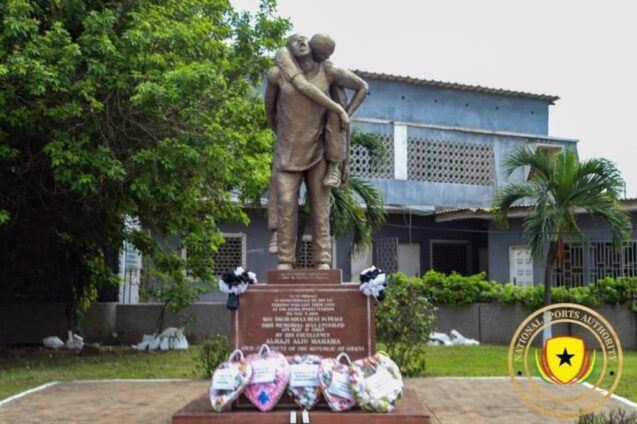
Every nation has dates that are etched in the collective consciousness not by triumph, but by tears. In Ghana, May 9 is a day of profound stillness. It is the anniversary of the 2001 Accra Sports Stadium disaster—a tragedy that claimed 126 lives and left a permanent scar on the heart of the country.
As the entertainment industry grows and the national calendar fills with gala events and award ceremonies, a difficult question arises: Is it appropriate to celebrate national achievements on a day traditionally reserved for national mourning?
The Case for Solemnity: A Debt to the Fallen
The primary argument against holding a national music award ceremony on May 9 is rooted in reverence. For the families of the victims, this is not just a historical date; it is an annual reopening of a wound.
It may be argued that a "Red Carpet" atmosphere—defined by glitz, glamour, and high-energy performances—is fundamentally incompatible with the mood of the nation. In Ghanaian culture, respect for the dead and solidarity with the grieving are paramount. To pivot from a morning of laying wreaths to an evening of popping champagne can be seen as a "commercialization of amnesia," where the pursuit of entertainment eclipses the duty of remembrance.
The Argument for Progress: Can Art Honor Memory?
On one side, it may be argued that the best way to honor those lost is to showcase the vibrancy of the nation they loved. Music, after all, is Ghana’s universal language of healing. The author is of the view that a national awards platform could actually amplify the "NeverAgain" message. By integrating a solemn tribute, a documentary segment, or a "Safety Message" into the ceremony, the event could reach a younger generation that may not fully grasp the gravity of the 2001 disaster. In this light, the event isn't a distraction from the tragedy, but a bridge that carries the lessons of the past into the cultural expressions of the present.
The Verdict of Public Sentiment
Ultimately, the "fairness" of such a scheduling choice is judged by social contract. In Ghana, May 9 acts as a moral compass for stadium safety and institutional accountability. When a national event is held on this day, it risks being perceived as a signal that the nation has "moved on" before the lessons of the tragedy have been fully institutionalized.
While the logistical wheels of the music industry may demand specific dates, the cultural weight of May 9 disaster suggests that some silences are too loud to be filled with music.
To hold a celebration on this day is to walk a tightrope between progress and piety—a feat that requires more than just a tribute, but a deep, visible commitment to ensuring the tragedy remains at the forefront of the national conversation.
Ultimately, while this celebration is not illegal, it is culturally risky and creates a dilemma in some individuals like me who follow sport and entertainment.
This piece was written by Frank Appiah Kusi, PhD, Lecturer in Sport Management and Marketing at the School of Sports and Exercise Medicine, University of Health and Allied Sciences, Ho. Email: fkusi@uhas.edu.gh
Latest Stories
-
GoldBod to fund rehabilitation of six water treatment plants affected by mining
4 minutes -
ORC challenges CSA cybersecurity sanction, says penalty was premature and procedurally unfair
6 minutes -
GoldBod to introduce gold traceability system by end of 2026 – Sammy Gyamfi
13 minutes -
Photos: Eleventh batch of Ghanaian evacuees arrive from South Africa
15 minutes -
GETFund explains mandate as EFPI expands partnerships to support Ghana’s education sector
20 minutes -
US$4.8bn SME financing gap exposes Ghana’s credit challenge — A call for swift implementation of open banking, open finance reforms
23 minutes -
Ghana is open to responsible mining, investment – Minerals Commission
29 minutes -
Driver busted with cocaine at Accra International Airport
31 minutes -
GoldBod to launch digital gold platform for Ghanaians, Africans
36 minutes -
NPP will reinstate Torkornoo when we return to power – Afenyo-Markin hints
38 minutes -
We’ll establish a Gold Village in Accra next year – Sammy Gyamfi
40 minutes -
Many Canadians are boycotting the US, so this is where they’re travelling instead
44 minutes -
Mining communities must be treated as development partners and economy shareholders – Sammy Gyamfi
49 minutes -
Nearly 9 metric tonnes gold refined locally this year – Sammy Gyamfi
49 minutes -
The world’s best countries for expats in 2026
53 minutes