

Audio By Carbonatix
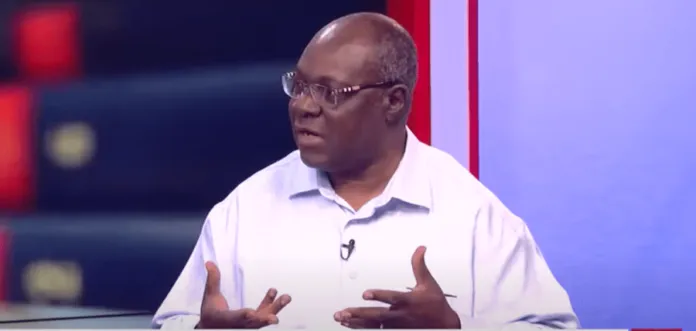
US-based Ghanaian medical doctor and former New Patriotic Party (NPP) presidential aspirant, Dr Arthur Kobina Kennedy, has called for urgent and comprehensive reforms in Ghana’s healthcare system, following the release of a committee report on the country’s ongoing “no-bed syndrome.”
Dr Kennedy criticised what he describes as the narrow focus of the Prof Agyeman Badu Akosa Committee report into the death of 29-year-old engineer Charles Amissah, insisting that Ghana’s healthcare crisis is the result of a longstanding systemic failure rather than the negligence of a few frontline workers.
In a statement issued on 8 May 2026, Dr Kennedy commended the committee for its “thorough work” and recommendations, but argued that its conclusions did not go far enough in confronting the deeper structural failures that continue to undermine emergency healthcare delivery in Ghana.
He raised concerns about what he described as the report’s narrow focus and the broader systemic issues that continue to plague Ghana’s hospitals.
“I only watched the video of Professor Akosa’s delivery of the report, so I may have missed some points,” Dr Kennedy said. “Nonetheless, I must respectfully challenge both the committee’s conclusions and our national culture of burying our heads in the sand.”
Dr Kennedy described as “astonishing” the notion that the report’s findings were new, noting that the so-called “no-bed syndrome” has existed for decades and even predated Professor Akosa’s tenure as Director of the Ghana Health Service (GHS).
He criticised the report’s emphasis on individual doctors and nurses on duty during the incident, arguing that the failures were symptomatic of a system that has long operated inefficiently.
“The idea that three bad doctors and three bad triage nurses in three of our best hospitals just happened to be at work on this particular day beggars belief,” he said.
According to Dr Kennedy, the committee should have held accountable higher-level administrators and successive political leaders who designed and maintained policies that perpetuate both the “no-bed syndrome” and the “cash-and-carry” system.
He further noted the inadequacy of Ghana’s National Ambulance Service, highlighting its reliance on untrained carriers rather than trained Emergency Medical Technicians.
“On that fateful day, our healthcare system functioned as it was meant to — inefficiently and without compassion,” he said. “It was not a failure of a few individuals; it was the system that failed. I know this because I and many others have raised the alarm repeatedly across governments and political parties, without any meaningful response.”
Dr Kennedy also pointed to international examples, noting that when similar systemic failures occurred in Spain and Portugal, both political leaders and frontline staff were held accountable.
Looking forward, he urged the immediate implementation of the committee’s recommendations and additional reforms, including the overhaul of the national ambulance system to remove fuel charges and ensure the use of trained personnel.
He also called for hospitals to be properly equipped to handle strokes, heart attacks, routine injuries, and other common emergencies, with all changes codified in a comprehensive health reform law.
“When these reforms are completed, hopefully our leaders will abandon the practice of seeking medical care abroad,” Dr Kennedy concluded.
The Committee's findings
The Prof Akosa committee found that Mr Amissah, an engineer with Promasidor Ghana Limited, suffered a motorcycle accident near the Kwame Nkrumah Circle Interchange on 6 February 2026 and was transported by the National Ambulance Service to the Police Hospital, Greater Accra Regional Hospital, and Korle Bu Teaching Hospital, but was denied emergency intervention at each facility due to claims of unavailable beds. He was pronounced dead approximately 118 minutes after the accident, while still in the ambulance.
Presenting the findings, Prof Akosa concluded that Mr Amissah died from excessive blood loss caused by “medical neglect” and the denial of emergency care, describing his death as avoidable. The committee found that all three hospitals failed to properly triage and stabilise the patient, despite his arriving alive at each facility.
The report also recommended disciplinary action against six healthcare professionals—three doctors and three triage nurses—whose actions were found to have contributed directly to the fatal delays. It further proposed sweeping reforms, including mandatory emergency treatment regardless of bed availability, improved ambulance protocols, and stronger enforcement of patient care standards.
Latest Stories
-
CDD-Ghana pushes for independent authority to regulate political financing
21 minutes -
Ghana music industry needs collective public-private investment – UK High Commissioner
47 minutes -
“We don’t have the mindset of sabotage” – NPP on MMDCE election proposal
1 hour -
From Kumasi to the world: Mirakilouz Beatz’s rise in music production
1 hour -
Low pay making it harder for universities to attract PhD holders – UTAG-UG
1 hour -
Julius Emunah parts ways with Hearts of Oak as Managing Director
1 hour -
Weija Dam flooding will persist without political will to relocate residents – NADMO
1 hour -
UMB, 3TREES launch paint outlets across constituencies ahead of Ghana’s 70th anniversary
1 hour -
CSSPS: Education Ministry orders action against alleged payment demands in Ashanti Region
1 hour -
SSNIT honours 16 stakeholders at 2025 Awards
1 hour -
Naa Shika Adu presents Vernacular of Play: An art exhibition inspired by sport, identity and social impact
2 hours -
Ghana wastes up to 50% of fruits and vegetables annually – Agrofresh
2 hours -
CSSPS deploys more personnel to ease delays at resolution centres
2 hours -
Poor transport and storage systems contribute to post-harvest losses in Ghana – Mathias Yabe
3 hours -
Partisan MMDCE elections could stifle development – NDC
3 hours