

Audio By Carbonatix
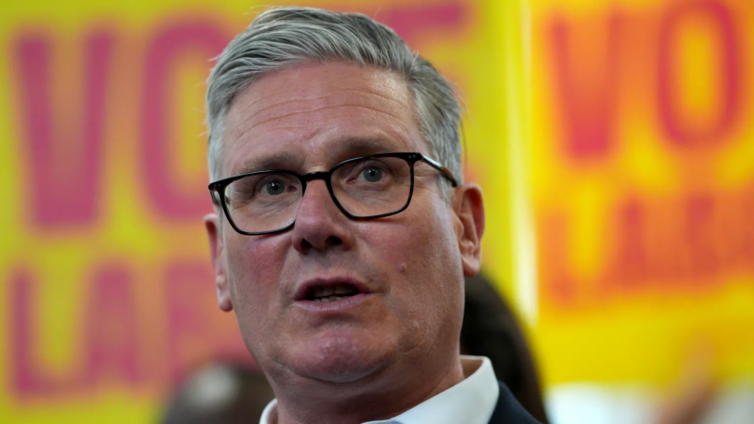
British Prime Minister Keir Starmer launched a high-stakes bid for political survival on Monday, delivering a defiant address aimed at quelling a growing insurrection within the Labour Party. Facing a mounting challenge to his authority following devastating local election losses, the Prime Minister acknowledged public frustration while vowing to steer the United Kingdom through a period of profound economic and geopolitical instability.
A Government at the Crossroads
The Prime Minister’s speech arrived at a critical juncture for an administration hamstrung by stagnant growth and tattered public services. Seeking to regain momentum before the next general election in 2029, Starmer framed his leadership as a necessary force for radical change. He explicitly acknowledged the "toxic culture of cronyism" allegations and the fallout from his decision to appoint Peter Mandelson, a friend of Jeffrey Epstein, as the British ambassador to Washington.
“To meet the challenges that our country faces, incremental change won’t cut it,” Starmer told an audience of supporters. He cited growth, national defense, the U.K.’s relationship with Europe and energy needs as key issues that must be tackled urgently. Addressing his detractors directly, he signaled an awareness of the fragile ground beneath his feet. “I know I have my doubters and I know I need to prove them wrong, and I will,” he said. He further emphasized his commitment to the voters, stating, “You will see hope, urgency and exactly whose side we are on.”
The European Pivot
Central to Starmer’s survival strategy is a fundamental recalibration of Britain’s relationship with the European Union. While stopping short of rejoining the single market, the Prime Minister promised to undo isolationist policies. He specifically targeted the rhetoric of Reform UK leader Nigel Farage and the Conservative Party, arguing they were “defined by breaking our relationship with Europe.”
In contrast, Starmer asserted that his government would be “defined by rebuilding our relationship and by putting Britain at the heart of Europe.” This vision includes a youth mobility deal for those looking to work, live, or study in the EU. “So that we are stronger on the economy, on trade, on defense, you name it,” he promised.
Internal Dissent and Potential Successors
Despite the Prime Minister's rhetoric, the shadow of a leadership contest looms large following heavy losses across England, as well as legislative votes in Scotland and Wales. Labour MP Catherine West has signaled her intent to collect names to demand a timetable for Starmer’s departure. “Working people sent us a message,” West said. “We have to listen to that, and we have to change and we have to do it quickly.” She joined a chorus of 42 Labour lawmakers calling for his resignation as of Sunday evening.
The pressure is further intensified by critiques from within his own inner circle. Former Deputy Prime Minister Angela Rayner accused the leader of presiding over a "toxic culture" and urged a return to "social democratic values." She stated, “what we are doing isn’t working, and it needs to change. This may be the Labour Party’s last chance.” While Rayner, Health Secretary Wes Streeting, and Manchester Mayor Andy Burnham are viewed as potential challengers, former loyalist Josh Simons argued in The Times that Starmer “has lost the country” and “should take control of the situation by overseeing an orderly transition to a new prime minister.”
Market Volatility and Gilt Yields
The political instability has pushed U.K. borrowing costs to the highest levels among G7 nations. Markets reacted sharply to the news of a formal leadership challenge. While yields stood at 4.957% after the speech concluded—up 4 basis points—they surged to 4.98% following Catherine West's announcement on Monday morning.
Kallum Pickering, chief economist at Peel Hunt, noted that domestic friction is a primary driver of the sell-off. “The mere fact that bond yields declined in the U.K. on Friday but didn’t elsewhere suggests that there is still a political component to it,” Pickering told the media. He estimated that if political noise were removed, yields “would probably be lower than they, let’s say [by] 10-15 basis points.”
Implications for the Commonwealth and Ghana
The leadership crisis in Westminster has sparked concerns across Africa, where the UK’s “Africa Approach” remains in its infancy. Under Starmer, the UK has shifted its strategy from being a traditional donor to an investor, a move that recently saw Special Trade Envoy Bell Ribeiro-Addy visit Accra to strengthen bilateral ties. However, this transition is occurring alongside drastic cuts to the foreign aid budget, which is set to fall to 0.3% of GNI by 2027/28.
For Ghana and the wider Commonwealth, the potential departure of Starmer adds a layer of uncertainty to trade and infrastructure projects, such as the Kumasi Airport expansion. Critics argue that the Prime Minister's internal battles have distracted from the UK’s commitment to competing with Chinese and Russian influence on the continent. As Westminster looks inward, African partners are closely watching to see if the UK remains a reliable strategic ally.
The Battle for the Soul of the Nation
Starmer’s speech attempted to paint the current unrest as a choice between his vision and a “dark path” offered by Reform UK and the "eco-populist" Green Party. He warned that the country faces a pivotal moment, describing the climate as “a battle for the soul of our nation.” Looking ahead to Wednesday, Starmer hopes to regain footing through an ambitious legislative agenda to be set out by King Charles III at the State Opening of Parliament.
“People need hope. We will face up to the big challenges and we will make the big arguments,” Starmer insisted. As the Prime Minister attempts to pivot toward the future, the immediate stability of his government remains tethered to his ability to convert this rhetoric into tangible economic relief for a public increasingly fatigued by the status quo. Whether Monday’s pledge of "hope and urgency" can bridge the widening rift within his own party will determine if Starmer leads Labour into the next election or becomes a casualty of its search for a new direction.
Latest Stories
-
Education Ministry extends 2026 SHS placement exercise by one week
3 minutes -
Better roads will create sustainable jobs for Ghana’s youth – Joyce Bawah Mogtari
27 minutes -
Kumasi Expressway to cut travel time, boost economic activity – Joyce Bawah Mogtari
32 minutes -
GOIL could hold fuel prices despite $100 crude oil shock – Edward Bawa
33 minutes -
Fitch lifts Ghana’s 2026 current account surplus forecast to 7.8%
34 minutes -
Do not identify yourself as Ziavi Paramount Chief or Queen – Volta Region House of Chiefs warns
44 minutes -
Sosu demands probe into $260m cocaine shipment seized in France
49 minutes -
Mahama to receive cleared Accra-Kumasi Expressway right-of-way today
54 minutes -
Mahama to cut sod for US$1.3bn Sentuo Airport Garden City on Tuesday
58 minutes -
Ghana, China agree to tighten crackdown on illegal mining
1 hour -
Ghana, INTERPOL make strides in crime combat – CID boss
1 hour -
Fuel prices may rise, but GOIL says 30% transport fare hike doesn’t add up
1 hour -
Minority questions why alleged masterminds behind US$350m cocaine haul remain free
1 hour -
AGI calls for workplace training to boost youth employability
1 hour -
Mahama inspects proposed site for Upper West Regional Airport
1 hour