

Audio By Carbonatix
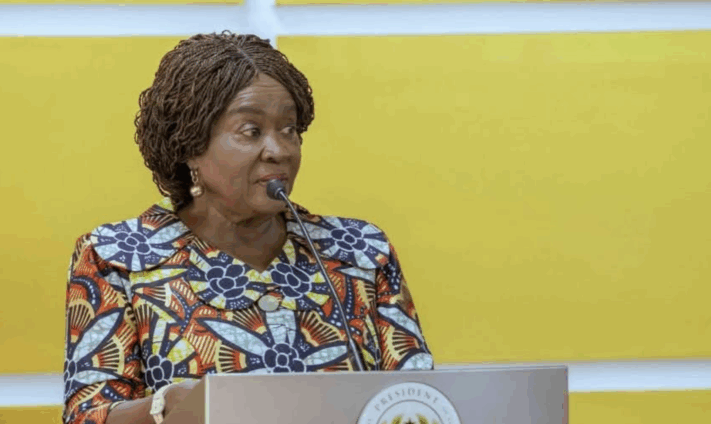
Vice President Professor Jane Naana Opoku-Agyemang has delivered a sobering reality check regarding the nation's financial recovery, warning that recent improvements in macroeconomic indicators must not be mistaken for final victory.
Speaking to an international audience of academics, policymakers, and investors at the 2026 Oxford Africa Conference at the University of Oxford on Saturday, 16 May, the Vice President acknowledged that while structural and institutional reforms are beginning to bear fruit, the nation's broader development goals remain critically incomplete.
Rather than triggering premature celebrations, she argued, these early signs of stability should impose a stricter burden of responsibility on the country's leadership to fortify the economic architecture.
“The foundations will be strengthened, but the work of building an inclusive and future-ready economy is only beginning,” Prof. Opoku-Agyemang cautioned.
Her warning from the United Kingdom aligns closely with a strict domestic policy stance maintained by the Ministry of Finance back in Accra.
Following Ghana's official exit from its three-year International Monetary Fund (IMF) Extended Credit Facility programme, Finance Minister Dr Cassiel Ato Forson has been unyielding in his message to state agencies and market actors: the departure of the Fund does not signal a return to unchecked spending.
Dr Forson emphasised that the conclusion of the structural adjustment programme must not be misinterpreted as a green light for relaxed fiscal management. In his briefing, he pointed out that economic indiscipline remains the single largest risk factor capable of completely reversing the fragile gains recorded over the last 36 months.
Breaking a Historic Cycle
The government's defensive rhetoric is an attempt to break a historical pattern. Dr Forson recalled Ghana’s recurrent economic crises, noting that systemic indiscipline and election-year budget overruns have historically been the primary catalysts driving the West African nation back into the arms of the IMF for emergency bailouts.
By aligning the Vice President's international address with the Finance Minister's domestic caution, the administration appears intent on signalling to global credit rating agencies and bondholders that Ghana is entering its post-bailout era with a commitment to long-term discipline rather than short-term political expediency.
Latest Stories
-
GNPC Explorco advances Voltaian Basin drilling preparations with 13.5km access road
49 seconds -
Minority calls for dedicated sanitation fund to improve waste management in Ghana
24 minutes -
Cabinet approves facility manager for Borteyman Sports Complex – Kofi Adams
51 minutes -
Sanitation is improving; critics may be ‘living in another world’ – Salaga South MP replies Bekwai MP
57 minutes -
Government must do more to tackle sanitation crisis – Bekwai MP
58 minutes -
World Cleanup Day: GFF begins sanitation education in local communities
1 hour -
EU Ambassador, IGP discuss stronger cooperation on policing and security
1 hour -
Africa Nations Volleyball Championship: Ghana set up quarterfinal clash with Cameroon after beating Chad
2 hours -
Meet Dr Benjamin Appiah Osei — Ghana’s three-time tourism awards winner
2 hours -
UEFA & CONCACAF demand Fifa pays $10m to all 211 members
2 hours -
Inter fight back again to snatch draw at leaders Roma
2 hours -
Suzuki proves worthy replacement for Martinez at Villa
2 hours -
Brighton humbling ‘a big lesson’ for Arsenal – Arteta
2 hours -
Arsenal handed first loss by brilliant Brighton
3 hours -
VIDEO: Akwatia MP ‘clashes’ with Kofi Bentil over 3.9-tonne cocaine seizure
3 hours