

Audio By Carbonatix
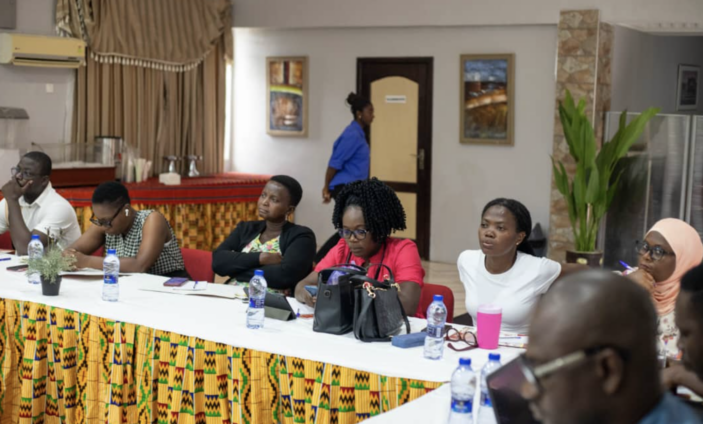
Thirty journalists have undergone a two-day training on the Universal Periodic Review (UPR) process, recommendations and media reporting, aimed at strengthening accountability reporting ahead of Ghana’s 2027 review.
The training, organised by POS Foundation, in partnership with United Nations Population Fund (UNFPA), was on the theme: “Strengthening Media Reporting to Advance Accountability under Ghana’s UPR Process Ahead of the 2027 Review.”
The UPR is a state-driven mechanism of the United Nations that reviews the human rights records of all 194 member states every five years.
It provides an opportunity for countries to outline measures taken to improve human rights conditions and fulfil international obligations.
In Ghana, the process is coordinated through the Ministry of Justice and Attorney General’s Department, while the Commission on Human Rights and Administrative Justice independently monitors human rights and administrative justice issues.
Ghana has undergone four review cycles since May 2008; that is 2008, 2012, 2017 and 2023 and is expected to undergo another review in 2027.
Speaking to journalists at the training, Mr Sylvester Anthony Appiah-Honny, Project Manager at the POS Foundation, advocates for justice and human rights transformation, said Ghana had supported 265 recommendations during the review process, demonstrating “a clear national will to align with some of the highest global human rights standards.”
He disclosed that about 90 Civil Society Organisations had drafted and compiled joint reports under 11 thematic areas for submission to the Human Rights Council.
The thematic areas include disability rights, corruption, media freedom, the right to life, women’s rights, LGBTQ+ issues, freedom of expression, right to information and child rights, among others.
Mr Appiah-Honny said Ghana had made significant progress in areas such as the passage of the Affirmative Action Law, the abolition of the death penalty, efforts to end harmful traditional practices against women through the Anti-Witchcraft legislation, and the implementation of the National Anti-Corruption Action Plan (NACAP).
He noted that UPR data remained an important tool for journalists because it helped track government commitments, identify implementation gaps, support evidence-based reporting and connect policies to the realities of citizens.
According to him, media engagement in the UPR process could deepen accountability and strengthen public awareness of human rights issues.
Mr Appiah-Honny, however, identified technical complexity, resource constraints, political pressure, disinformation and misinformation as some of the key challenges confronting UPR reporting.
He urged media organisations to establish dedicated human rights desks and promote investigative journalism to strengthen UPR reporting in the country.
He encouraged journalists to closely monitor emerging human rights trends, legislative reforms and violations as Ghana prepared for the 2027 review.
Ms Abena Awuku Larbi, a Legal Practitioner and women’s rights activist, who facilitated a session on gender-sensitive reporting, urged journalists to avoid gender stereotyping and use inclusive language in their reportage.
Ms Precious Klu, Project Officer in charge of Gender and Inclusion at the POS Foundation, called on journalists to continue holding governments accountable on human rights issues.
Mr Faisal Bawa, Representative of the UNFPA, said media institutions had a vital role to play in amplifying UPR recommendations and ensuring that duty bearers remained accountable through sustained reporting.
Latest Stories
-
Minority calls for dedicated sanitation fund to improve waste management in Ghana
21 minutes -
Cabinet approves facility manager for Borteyman Sports Complex – Kofi Adams
48 minutes -
Sanitation is improving; critics may be ‘living in another world’ – Salaga South MP replies Bekwai MP
54 minutes -
Government must do more to tackle sanitation crisis – Bekwai MP
55 minutes -
World Cleanup Day: GFF begins sanitation education in local communities
1 hour -
EU Ambassador, IGP discuss stronger cooperation on policing and security
1 hour -
Africa Nations Volleyball Championship: Ghana set up quarterfinal clash with Cameroon after beating Chad
2 hours -
Meet Dr Benjamin Appiah Osei — Ghana’s three-time tourism awards winner
2 hours -
UEFA & CONCACAF demand Fifa pays $10m to all 211 members
2 hours -
Inter fight back again to snatch draw at leaders Roma
2 hours -
Suzuki proves worthy replacement for Martinez at Villa
2 hours -
Brighton humbling ‘a big lesson’ for Arsenal – Arteta
2 hours -
Arsenal handed first loss by brilliant Brighton
2 hours -
VIDEO: Akwatia MP ‘clashes’ with Kofi Bentil over 3.9-tonne cocaine seizure
3 hours -
Ratcliffe ‘must go’ says Man Utd Muslim fan group
3 hours