

Audio By Carbonatix
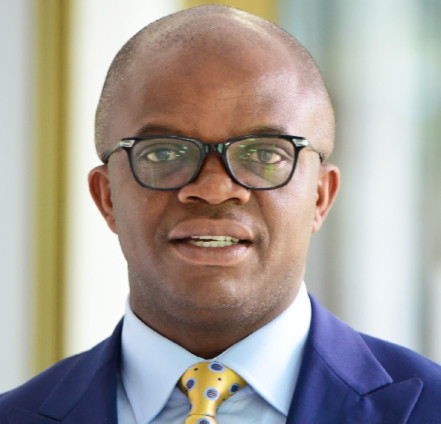
Former Deputy Finance Minister, Stephen Amoah, has called for far-reaching structural reforms to stabilise Ghana’s economy and prevent the country from returning to another bailout programme with the International Monetary Fund (IMF).
The Member of Parliament for Nhyiaeso's remarks come amid discussions surrounding Ghana’s transition from the IMF-supported programme to the Policy Coordination Instrument (PCI), which government officials say is intended to strengthen policy coordination and maintain fiscal discipline without direct financial support.
Dr Amoah argued that Ghana’s economic challenges cannot be solved through arbitrary expenditure reductions alone, insisting that spending cuts must be guided by sound economic analysis and national development priorities.
“There are so many fundamental anomalies that we need to fix first. The way we even embark on expenditure control, to me, I disagree. You cannot just wake up and say you are cutting expenditure by 30%—by what econometric analysis?” he questioned.
According to him, poorly targeted cuts in government spending could negatively affect economic growth if policymakers fail to identify which sectors are critical to the country’s Gross Domestic Product.
“Which of the items do not have strong correlation with our GDP such that when we cut them it won’t impact us?” he asked.
Dr Amoah also criticised government borrowing on the domestic market, warning that high interest rates continue to suppress private sector growth and investment.
“Governments most of the times borrow on our domestic market at a high rate than the private sector; this thing is destroying this country,” he stated.
He further pointed to corruption, inefficiency and wastage within public institutions as major threats to Ghana’s long-term economic stability.
“Wastage, corruption at all levels and in all departments,” he added.
Speaking on Citi FM, the Nhyiaeso MP stressed the need for urgent investment in agriculture to reduce Ghana’s dependence on imports, particularly products that could be produced locally.
“We need to quickly come back and deal concisely with issues of agriculture to the extent that importation of even fruit juice that won’t require complex value chains we deal with them,” he said.
He maintained that strengthening local production and implementing targeted reforms would help build a more resilient and self-sustaining economy.
Latest Stories
-
Cabinet approves facility manager for Borteyman Sports Complex – Kofi Adams
2 minutes -
Sanitation is improving; critics may be ‘living in another world’ – Salaga South MP replies Bekwai MP
9 minutes -
Government must do more to tackle sanitation crisis – Bekwai MP
9 minutes -
World Cleanup Day: GFF begins sanitation education in local communities
27 minutes -
EU Ambassador, IGP discuss stronger cooperation on policing and security
37 minutes -
Africa Nations Volleyball Championship: Ghana set up quarterfinal clash with Cameroon after beating Chad
54 minutes -
Meet Dr Benjamin Appiah Osei — Ghana’s three-time tourism awards winner
1 hour -
UEFA & CONCACAF demand Fifa pays $10m to all 211 members
1 hour -
Inter fight back again to snatch draw at leaders Roma
1 hour -
Suzuki proves worthy replacement for Martinez at Villa
2 hours -
Brighton humbling ‘a big lesson’ for Arsenal – Arteta
2 hours -
Arsenal handed first loss by brilliant Brighton
2 hours -
VIDEO: Akwatia MP ‘clashes’ with Kofi Bentil over 3.9-tonne cocaine seizure
2 hours -
Ratcliffe ‘must go’ says Man Utd Muslim fan group
2 hours -
Ignite Social Enterprise targets global market for locally manufactured Ghanaian products
2 hours