

Audio By Carbonatix
A big challenge we must confront to save our democracy is the phenomenon of selective outrage. Yes, the ugly and destructive partisanship by the duopoly that has hijacked the democracy to benefit party members at the expense of the common good.
We see and hear political actors defend rights only when their allies are affected, while remaining silent or complicit when opponents face the same abuses. This inconsistency erodes trust in institutions and undermines the very principles that democracy is meant to uphold.
In 2024, the denial of bail to Oliver Barker Vormawor, a leader of the Democracy Hub protests, illustrated this problem vividly. The High Court, citing Section 96(5)(c) of the Criminal Procedure Act, refused bail on grounds that he might commit further offences while already facing treason felony charges.
His lawyer rightly argued that the central issue should be whether he would attend trial, noting his consistent court appearances over three years. Yet the court prioritised the risk of reoffending, directing the Circuit Court to begin prosecution within 72 hours or reconsider bail.
At the time, the NPP government defended the decision, while the NDC in opposition condemned it as an abuse of state power. I don't know Oliver to be NDC. The NDC jumped on this only because it served their electoral interests.
Today the tables have turned. The same Section 96 has been invoked to refuse bail to Abronye. Now, the NPP in opposition loudly condemns the ruling, framing it as judicial bias and a clampdown on free speech. Meanwhile, the NDC, now in government, defends the decision. The very same arguments once dismissed are now embraced, depending on who is in power and who is the victim.
I hope these guys are aware their shameless double standards weaken their credibility as individuals and their corporate political parties. They reduce fundamental rights like bail, free speech, and protest to partisan conveniences rather than national principles.
A good deal of citizens notice this hypocrisy, and it deepens cynicism about whether political leaders truly care about justice or only about protecting their own.
Breaking this cycle requires courage and consistency. It means defending liberty even when it benefits opponents and resisting the temptation to weaponise laws like Section 208 or Section 96 against critics.
Almost every NPP leader or communicator I have heard criticise the abuse of Section 207 and 208, once defended their use against citizens including assigns and affiliates of the NDC. Ultimately, I hope political leaders are learning that democracy cannot thrive on selective outrage. It demands principled action, even when inconvenient.
I have for years spoken vehemently against these abuses, even at personal cost. I have lost friends on both sides of the political divide, in the police and on the bench for doing this. I lost friends for criticising their opposition to the sham of prosecution mounted against Oliver and other demonstrators. I led journalists assaulted, mistreated, detained to court and they emerged victorious last week.
I remain convinced that Ghana’s democracy will only mature when leaders act with principle, not expedience.
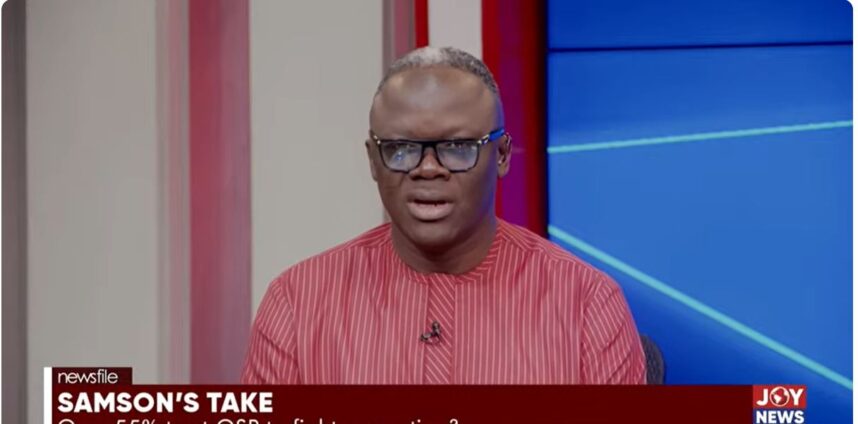
I just realised I wrote about three articles (My Takes) in the week of those arrests in 2024 before escalating my outrage to Samson’s Take on Newsfile at the weekend. And that, is My Take.
I don't talk mere stories. I talk the lived experience.
Pray - Look, our justice system works. Yes, it is a human institution and, it cannot be without flaws. But it works, and when it works as it should, it reminds us that justice is not a mere ritual, it is a living safeguard against wrong and abuse.
I remember it vividly. In 2019, when the Modern Ghana journalists were hauled before the High Court on those trumped‑up criminal charges, the whole thing was riddled with shenanigans. Justice Afia Asare‑Botchway cut through them with remarkable clarity. On the very first day, she told the prosecution she would not entertain such phony charges, making it clear that the court was not going to waste time on a case that didn’t stand against the facts.
That was the reality, not some voluntary withdrawal by the state, but a clear judicial rebuke. The embarrassment was immediate, right there on the very first day we appeared in court. Raymond Bagnabu, Justice Srem‑Sai and Nii Kpakpo Samoa Addo were with me on it, and together we pressed forward with the human rights action against National Security. Eventually, the state succumbed. Yes, the state lost twice - the sham of a criminal case and civil suit.
Some big men in government were not happy with the critical reporting of a particular issue by the Modern Ghana journalists and ordered some pliant officers (party boys in uniform) to arrest and deal with them.
I’ve always admired judges who deliver that kind of swift, no‑nonsense justice. It spares everyone the wasted time and energy of dragging out patently flawed charges, and it affirms the principle that the courts are not a playground for intimidation.
I don't talk mere stories. I talk the lived experience.
Latest Stories
-
Prof. Kwofie urges publishers to use indigenous knowledge systems to decolonise AI
3 hours -
NDC’s two years of economic gains not enough to establish stability – Alan Kyerematen
3 hours -
AFCON 2027Q: Nine new call-up for Cote, The Gambia matches
3 hours -
Ghana’s MSMEs: Burdened by regulation and overtaxed; why the system isn’t working
4 hours -
Patience Akyianu, former Barclays Bank Ghana MD and Hollard Group CEO, reported dead
4 hours -
Mahama pushes ‘health sovereignty’ agenda, says Global South needs control over resources
4 hours -
Mahama: We are reforming systems, fighting corruption and improving use of public funds
4 hours -
Catholic Bishops welcome task force to tackle drug menace, acknowledge inter-agency efforts
4 hours -
Ghana Catholic Bishops demand urgent action against drug trafficking
4 hours -
Tamale: 5 arrested over suspected drug activities; police seize pistols, narcotics
4 hours -
We have lost a great developer – Mankranso residents pay tribute to late DCE
4 hours -
Ghana Law Society sets September 30 for maiden Bar Conference on legal reforms
5 hours -
GPL Week 3: Port City’s Gyetuah bags a brace as 9 outstanding players named NASCO Players of the Match
5 hours -
Visibility without substance is just noise; I don’t seek popularity—Dr Oppong-Fosu
5 hours -
The late Abubakar Sedik was an exceptional DCE – Ashanti Regional Minister
5 hours