

Audio By Carbonatix
The National Commission for Civic Education (NCCE) has urged students and young people to take leading roles in the fight against corruption.
The Commission noted that corruption had eaten deep into the fundamental values of the country and retarded development, and urged young people to ensure integrity, accountability, and respect for the rule of law in society.
The Deputy Upper East Regional Director of the NCCE, Augustine Akugri, said young people must be empowered with the knowledge and values necessary to demand accountability and promote ethical leadership to help tackle corruption in the country.
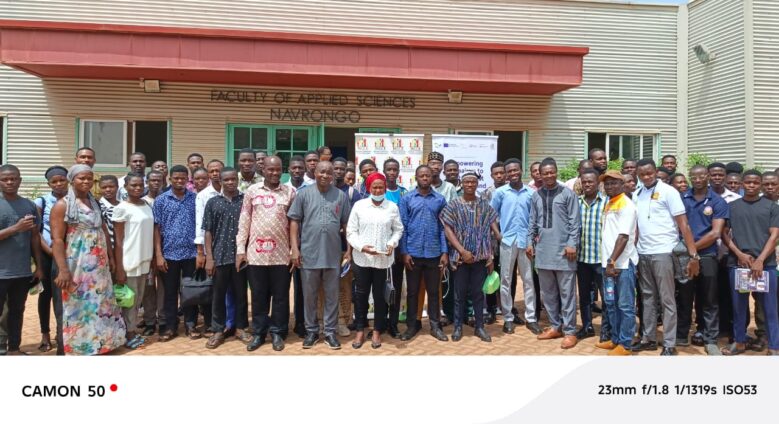
He made the call during a tertiary-level symposium organised by the NCCE in collaboration with the University of Technology and Applied Sciences (UTAS) in Navrongo.
The programme, funded by the Deutsche Gesellschaft für Internationale Zusammenarbeit (GIZ) and the European Union, brought together student associations, university authorities, and civic leaders to discuss ethical leadership, accountability, and the rule of law.
Mr. Akugri noted that weak adherence to ethical standards and limited public understanding of accountability mechanisms continued to affect public trust and institutional credibility in Ghana.
He explained that the engagement formed part of the “Civic Engagements on the Rule of Law and the Fight Against Corruption” initiative under the Participation, Accountability, and Integrity for a Resilient Democracy (PAIReD) programme.
According to him, the programme recognised young people as future leaders and decision-makers and sought to build a generation of youth ambassadors who would promote transparency, integrity, and responsible leadership in their schools, communities, and institutions.
Mr Akugri urged students to actively participate in promoting accountability and responsible civic conduct, stressing that regular civic education was necessary to help young people understand ethical leadership principles and accountability mechanisms.
The Principal Investigative Officer at the Commission on Human Rights and Administrative Justice (CHRAJ) Edmond Alagpulinsa, said ethical leadership was the foundation of good governance and democratic development.
Mr Alagpulinsa explained that ethical leadership required honesty, fairness, integrity, and professionalism, adding that leaders who placed public interest above personal gain inspired confidence and strengthened democratic governance.
He cautioned against influence peddling, which he described as the misuse of power, authority, or personal connections to secure unfair advantages, saying the practice weakened meritocracy, transparency, and justice.
On conflict of interest, he noted that public officials and leaders must avoid allowing personal or financial interests to influence official decisions, since such conduct creates opportunities for corruption and abuse of office.
Touching on the rule of law, Mr. Alagpulinsa said no person was above the law regardless of status or political affiliation and urged citizens to use lawful means in addressing grievances while respecting the rights of others.
He further educated participants on the Whistleblower Act, 2006, explaining that disclosures on corruption and mismanagement could be made to institutions such as the Police, CHRAJ, the Economic and Organised Crime Office, the National Media Commission, chiefs, religious leaders, and District Assemblies.
He encouraged young people to report acts of corruption, abuse of office, and mismanagement of public resources through the Whistleblower Act, 2006, adding that persons whose disclosures led to the recovery of public funds or conviction of offenders could be rewarded under the Whistleblowers Reward Fund.
The Dean of Students of the University, Professor Ohene Boansi Apiah, commended the NCCE and its partners for the initiative and urged students to take the lessons seriously to improve their social and civic responsibilities.
During the open forum, students raised concerns about corruption in recruitment processes, the influence of protocol in securing jobs, and measures being taken by state institutions to address corruption.
The participants pledged to use the knowledge acquired to expose corrupt practices and promote integrity and accountability within their communities and institutions.
Latest Stories
-
Photos: Inside the thrilling NSMQ 2026 Grand Finale as PRESEC, AUGUSCO and Accra Academy battle for glory
5 minutes -
Achimota, five other SHSs pilot waste segregation, clean-air initiative
5 minutes -
More women attempt suicide, but men die by suicide more often – National Suicide Analysis Report
21 minutes -
Three Ghanaian students launch e-commerce platform, Panta, to support small businesses
29 minutes -
KMA passes by-law requiring Metropolitan Chief Executives to occupy official residence
31 minutes -
Zoomlion rolls out disinfection, disinfestation exercise across Volta Region
41 minutes -
Photos: Mahama swears in three new Supreme Court justices
50 minutes -
$260 e-Visa fee could make Ghana less competitive – GHATOF
56 minutes -
New Supreme Court justices pledge fairness, impartiality and fidelity to Constitution
60 minutes -
Mahama urges Supreme Court to communicate decisions with ‘extreme clarity’
1 hour -
Techiman MCE residence abandoned since 2017; Regional Minister sets December deadline
1 hour -
Eni, Vitol sign MoUs with Ghana for two offshore blocks in Tano Basin
1 hour -
Accra residents urged to report open waste burning
1 hour -
Mahama tasks new Supreme Court justices to make justice more accessible
1 hour -
African health manufacturers meet in Addis Ababa for AHMTEC 2026, focus shifts from building capacity to commercial scale
1 hour