

Audio By Carbonatix
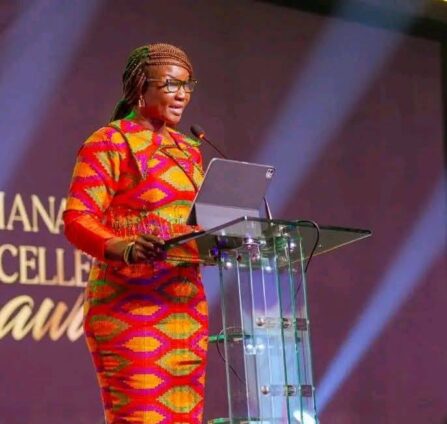
The Senior Presidential Aide and Advisor to President John Dramani Mahama, Joyce Bawah Mogtari, has called on the international community to move beyond the historic recognition of slavery as a crime against humanity and begin charting a path towards meaningful reparative justice.
According to her, while the landmark United Nations resolution represented a major breakthrough for Africa and the descendants of enslaved peoples, the world must now confront the difficult question of what concrete actions should follow.
In a Facebook post on Thursday, June 18, ahead of the High-Level Consultative Conference on the Next Steps to the Landmark United Nations Resolution on the Trafficking of Enslaved Africans, Madam Bawah Mogtari said the global acknowledgement of slavery’s horrors was a significant moral achievement.
She noted that Ghana and Africa, working alongside the international community, had succeeded in securing recognition of a historical reality that had long been overlooked.
“For President John Dramani Mahama, historian and African Union Champion for Reparations and Reparatory Justice, this was a moral victory,” she stated.
Madam Bawah Mogtari explained that President Mahama had championed efforts to ensure the recognition was not merely symbolic but enduring.
She recalled that the President described the resolution as “a pathway to healing” and “a safeguard against forgetting”, stressing the need to tackle the structural inequalities, racial discrimination and economic disparities that continue to stem from centuries of enslavement and exploitation.
She added that, as African Union Champion for Reparations, President Mahama has consistently advocated a broader agenda that includes reparative justice, the return of stolen African artefacts and fairer access to wealth derived from Africa’s resources.
According to her, the upcoming conference in Ghana will provide an opportunity for scholars, historians and policymakers to consider practical next steps, including reparations, the repatriation of cultural and historical artefacts, and the establishment of institutions that preserve the memory of slavery.
“The spotlight is on Ghana,” she said, noting that the conference would help shape global discussions on how to honour the millions whose lives were disrupted by the transatlantic slave trade and ensure that their stories remain part of humanity’s collective memory.
Latest Stories
-
Power restoration fault suspected in Kumasi Central Market fire
5 hours -
The 7-foot giant of Ngleshie Amanfro: Seven-foot Ghanaian Ephraim Saawa dreams of joining the national basketball team
6 hours -
Government promises support for Kumasi Central Market fire victims
6 hours -
Vibes The Movie: Big Ghun’s Ghanaian film earns five nominations at 2026 REFFA
6 hours -
MamaCare CEO warns unresolved conflicts among health workers could undermine maternal and neonatal care
7 hours -
Health professionals urged to translate medical knowledge into practice to save mothers
7 hours -
Retired judge Justice Francis Korbieh charges 1,568 new lawyers to uphold integrity
8 hours -
Conflicts among care providers linked to maternal, neonatal deaths – Expert
8 hours -
GIS marks 10th TIME conference, champions improved teaching practices
8 hours -
BRICS Or Balance? What Ghana’s bid really means
9 hours -
GPRTU wants full TRAFFITECH-GH implementation to start in 2027
9 hours -
How 10-mile walks for basic education birthed a 50-year legal career for Justice Korbieh
9 hours -
Mahama announces plans to import electric wheelchairs for PWDs
9 hours -
KGL U17 Colts 2026: Western beat Prempeh Elite Academy to set up final final with Greater Accra Region
9 hours -
Late Solanke strike salvages 10-man Spurs draw at Man United
10 hours