

Audio By Carbonatix
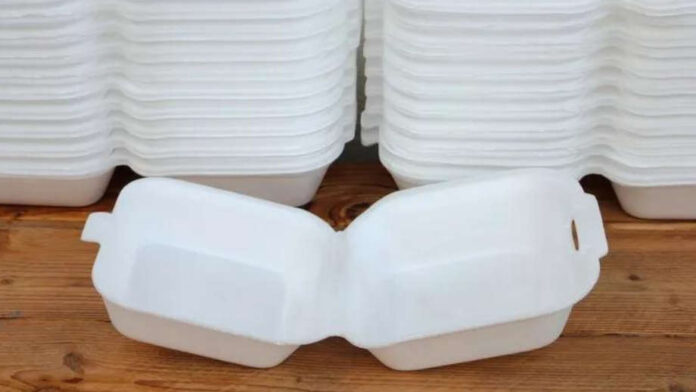
The Environmental Protection Authority (EPA) has defended the government’s decision to ban Styrofoam takeaway packs, insisting the move is aimed at protecting public health and tackling the country’s growing plastic pollution crisis.
The nationwide ban on the production, importation, distribution, sale, and use of polystyrene foam products commonly known as Styrofoam takeaway packs is scheduled to take effect on January 1, 2027.
According to the EPA, the decision follows years of scientific evidence showing that Styrofoam containers pose significant health risks, particularly when used to package hot, oily, or acidic foods.
The authority also cited the increasing environmental burden caused by discarded Styrofoam products, which frequently clog drainage systems, pollute beaches and waterways, and disrupt fishing activities.
Speaking in an interview, the Director of Human Settlements at the EPA, Hope Smith Lomotey, said the ban is not intended to eliminate takeaway food packaging but to encourage the use of safer and environmentally friendly alternatives.
He explained that Styrofoam containers release harmful chemicals when exposed to heat or when they come into contact with oily or acidic foods, making them unsafe for everyday food packaging.
“Anytime heat gets in contact with this styrofoam, it releases chemicals that are harmful to human beings. Immediately oily foods come into contact with it, it releases these toxins, and acidic foods also cause it to release a lot of toxins that are not good for our health,” Mr Lomotey stated.
He noted that popular meals such as kenkey, instant noodles, shito, and even acidic beverages and citrus fruits are among the food items that can trigger the release of these harmful substances.
Mr Lomotey stressed that the government’s decision is based on long-standing scientific evidence rather than precaution, arguing that the health and environmental consequences of continued Styrofoam use can no longer be ignored.
Beyond the health concerns, he said the widespread disposal of Styrofoam has become a major environmental challenge, with large quantities ending up in drains, rivers, beaches, and the sea.
“For human health, it’s not safe. Public health is not safe. Environmentally, we are seeing it in our drains and in the sea. Our fishermen go to sea and harvest some of these plastics and styrofoam. I think we have all reached a point where we have agreed that enough of the problem is enough,” he added.
The EPA maintains that the transition to alternative packaging materials will help reduce plastic pollution while safeguarding public health without disrupting the takeaway food industry.
Latest Stories
-
Private security firms acting as political militias risk licence revocation, prosecution – National Security Coordinator
8 minutes -
Antoine Semenyo makes history as first Ghanaian named in PFA Team of the Year
28 minutes -
Mahama calls for responsive healthcare regulation to improve patient safety
1 hour -
IERPP accuses GoldBod of breaching transparency law, says quarterly trading reports removed from website
1 hour -
Future of Energy Conference: Africa cannot industrialise in the dark – ECOWAS Bank President
1 hour -
Help comes to Alajo as DirectAid brings relief items to flood victims
1 hour -
“Somebody created the loss” – Haruna Mohammed backs Minority’s call for GoldBod probe
1 hour -
Hope for agroecological farmers: Scientific Research supports urine-based weed management as safer alternative to glyphosate
1 hour -
Israeli Film Festival returns to Accra with free screenings to boost cultural exchange
1 hour -
SONABEL considers opening Bagré Dam spillway on Friday amid rising water levels
2 hours -
Ghana Maritime Authority, Humanity First commission 4 boreholes in Wa to end water scarcity and keep children in class
2 hours -
In Photos: Day Two of ‘SYPALA 2026’ focuses on governance, economic freedom and youth leadership
2 hours -
Wontumi withdraws from NPP chairmanship race, urges support for Bawumia
2 hours -
UCC-IEPA, CEGRAD launches free digital skills programme to empower 1,000 women in education
2 hours -
NPP dismisses extortion allegation against Afenyo-Markin, says focus remains on GoldBod losses
3 hours