

Audio By Carbonatix
The Ghana Health Service (GHS) has assured the public that no cholera outbreak has been recorded following the devastating June 29 floods, while urging Ghanaians to continue observing proper sanitation and hygiene practices to prevent the spread of waterborne diseases.
The Service said that although the floods created conditions that could trigger disease outbreaks, ongoing preventive interventions are helping to minimise the risk.
It stressed that early action remains essential, warning that responding to an outbreak would be far more costly than preventing one.
To protect public health, the GHS is conducting a disinfection exercise in flood-affected communities following the nationwide clean-up campaign organised by the government. Health authorities say the exercise is aimed at eliminating disease-causing organisms in public spaces and reducing the likelihood of cholera, typhoid and other sanitation-related illnesses.
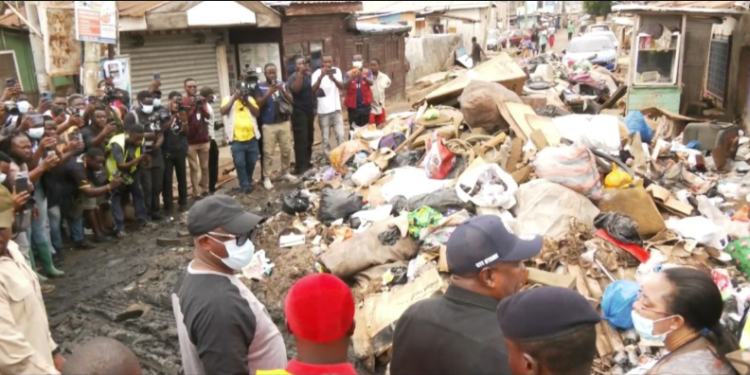
The intervention follows widespread flooding that left heaps of refuse, blocked drains and stagnant water in several communities, raising concerns about possible public health emergencies. The nationwide clean-up exercise, held on July 10 and 11, brought together government institutions, Metropolitan, Municipal and District Assemblies, security agencies, businesses and residents to clear waste and desilt drains.
Speaking during a disinfection exercise at Tema Station Market and the Adabraka Polyclinic on Saturday, July 11, Director-General of the Ghana Health Service, Dr. Samuel Kaba Akoriyea, said no cholera cases had been recorded so far but emphasised the importance of remaining vigilant.
“Fortunately, as of now, we don’t have any registered cholera outbreak. But prevention is key. We don’t need to wait for an outbreak before acting. Treatment is extremely costly,” he said.
Dr. Akoriyea explained that the disinfection campaign, undertaken in collaboration with the Korle Klottey Municipal Assembly and sanitation partner LCB Worldwide, forms part of broader post-flood interventions.
“After cleaning, the next step is disinfection and fumigation to avoid outbreaks of cholera, typhoid and other illnesses,” he stated.
Latest Stories
-
Boakye Agyarko congratulates newly elected NPP constituency executives, calls for party rebuilding
33 seconds -
Davis Ansah Opoku congratulates newly elected NPP Mpraeso constituency executives
18 minutes -
Dennis Miracles Aboagye declares intention to contest NPP National Communications Director position
21 minutes -
Concerned Bantama Youth petition police over alleged threats ahead of NPP constituency elections
2 hours -
Don’t drag Bawumia into NPP internal decisions – Haruna Mohammed
2 hours -
Nkoko Nkitinkiti’s first phase success sets stage for commercial poultry revolution – Eric Opoku
2 hours -
GHS confirms no Cholera outbreak after floods, urges continued preventive measures
2 hours -
NPP to sanction members found guilty of election-related violence
2 hours -
Paul Twum-Barimah congratulates newly elected Dormaa East NPP constituency executives
2 hours -
Massive fire guts alcohol warehouse at Tema Community 26
2 hours -
Suame NPP elects constituency executives peacefully; MP John Darko congratulates winners
3 hours -
US Senator Lindsey Graham dies after ‘brief and sudden illness’, his office says
3 hours -
Bantama Brigade for Peace calls for heightened security ahead of NPP constituency elections
3 hours -
2026 FIFA World Cup: Top four-ranked teams make semi-finals for the first time
3 hours -
Teacher reappears in court for allegedly assaulting student
3 hours