

Audio By Carbonatix
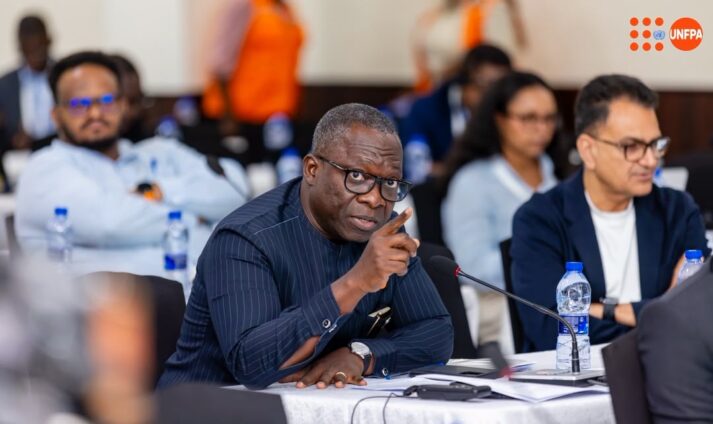
The Regional Director of the United Nations Population Fund (UNFPA) for West and Central Africa, Dr Sennen Hounton, has called on African governments to invest in local manufacturing of contraceptives and essential medical products to reduce the continent’s dependence on external suppliers and strengthen health security.
Dr Hounton said Africa cannot achieve true health sovereignty while relying heavily on imported reproductive health commodities and donor support to meet the needs of women and girls.
He stressed the need for stronger continental cooperation to establish manufacturing facilities capable of producing medical supplies at scale.
"We cannot have sovereignty by tending our hand and asking for others to use their taxpayer money to give us contraception. So we must produce on this continent at scale," he said during a press conference in Accra on Wednesday, July 22.
According to the UNFPA Regional Director, Africa’s continued dependence on countries outside the continent for essential health commodities exposes weaknesses in its health systems and limits its ability to sustainably provide services to its growing population.
"We continue to rely on external partners. As UNFPA, we rely on grants and gifts," Dr Hounton noted.
He argued that African countries must work together to develop local production capacity, particularly for contraceptives and other critical medical supplies.
"But to do that, given the business environment, not one country can do it. African governments should come together and have some factories on this continent and not rely on India and China to produce or in Europe and then to give us," he said.
Dr Hounton explained that regional collaboration would be essential because individual countries may struggle to establish and sustain large-scale pharmaceutical manufacturing on their own.
He said continental partnerships could help create a more resilient healthcare system while reducing reliance on imported products and donor-funded programmes.
The UNFPA official also linked access to contraceptives with broader efforts to improve the lives of women and girls, saying the ability to make informed reproductive choices has significant social and economic benefits.
"The situation, the way to think about it, is life lost and opportunity missed to transform women's lives," he said.
"When a girl can finish her school, can be protected against child marriage, can choose when to become pregnant, when there is access to this contraception, the life can change and the nation can transform."
Dr Hounton further highlighted the importance of sustainable financing for reproductive health programmes, warning that current investments remain inadequate to meet the needs of women and girls across Africa.
"Governments are not yet putting enough resources. They are allocating resources but it's not enough to meet the needs of women and girls across our nation," he said.
He noted that UNFPA is working with partners, including the African Development Bank, to develop financing mechanisms that will enable countries to access more resources for health investments.
"What we are doing with the African Development Bank is creating financing instruments. It's a combination of concessional loans and grants and countries can then have access and invest in the health of their communities," he explained.
Dr Hounton said strengthening local production of health commodities must form part of Africa’s wider agenda to achieve health equity and ensure that people, including those in remote communities, have access to essential healthcare services.
"As you raise capital, you need to be thinking about equity in all these countries, those who are not only living in cities like you and I here, but those who are in the remote areas of our countries and also need to enjoy full and dignified health," he stated.
Latest Stories
-
Engage Now Africa and LDS church commission boreholes for five communities in Upper East communities
5 minutes -
GPL 2026/27: Karela United bank on home form against Hearts of Oak
14 minutes -
NPLs declined to 15.7% in August 2026
32 minutes -
Existing Cedi notes to remain legal tender alongside Heritage Series – BoG
38 minutes -
Consumer, business sentiments positive – BoG
48 minutes -
There’ll be no GH¢500 Cedi note as part of Heritage Series issuance – BoG
1 hour -
Heritage Series Cedi notes to modernise cedi while preserving national identity – BoG
1 hour -
Ghana’s business environment at ‘Inflection Point’ as private Sector takes greater lead — Vish Ashiagbor
1 hour -
At least 2 new airlines could join domestic aviation market by 2027 – GCAA Director General
2 hours -
What if Ghana’s next tourism boom begins with Ghanaians?
2 hours -
Energy Commission to monitor EV charging stations
2 hours -
Invest with confidence, Ghana’s golden era is beginning – Finance Minister
2 hours -
Do Ghana to launch The Great Ghana Day Out on World Tourism Day
2 hours -
Clean up our politics before politics cleans us up
3 hours -
2025 was a turning point, says Abradu-Otoo as NAFCO posts record GH¢91.7m profit
3 hours