

Audio By Carbonatix
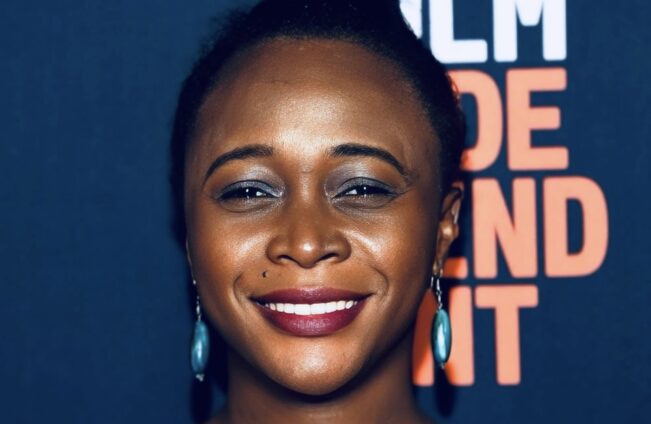
Ghanaian-American filmmaker Leila Djansi has criticised the National Film Authority’s (NFA) appeal for public donations to the Ghana Film Fund, arguing that the fund should generate investment rather than rely on public contributions.
Reacting to the NFA’s fundraising appeal in a Facebook post, Djansi said it was wrong to ask Ghanaians to contribute when structures to make the film industry commercially viable had not been established.
“Back to the NFA. why ask Ghanaians to donate instead of using the government’s allocation to generate more money?” she questioned.
She added: “A Film Fund should be an investment that generates more investment, not a charity that begs for donations.”
The award-winning filmmaker argued that authorities should establish structures that would enable Ghana’s film industry to generate sustainable revenue before seeking public support.
“Again, I ask: what structures have been put in place to sustain the industry and ensure these films generate revenue?” she wrote.
Djansi also rejected the notion that YouTube could serve as the industry’s long-term economic solution.
“YouTube is a platform. It is not an industry. It will not replenish a government film fund,” she stated.
According to her, Ghana should stop modelling its film industry on Nigeria’s because the two countries have different market realities.
“Nollywood should not be Ghana’s standard. Copying Nigeria contributed to the collapse of Ghana’s industry years ago. Doing it again will not produce a different result. What works for Nigeria will not necessarily work for Ghana. You gotta find your own beat.”
She explained that Ghana lacked Nigeria’s population, celebrity ecosystem, distribution network and audience size, making it unrealistic to expect the same results from the YouTube-driven model.
Instead, she proposed using the Film Fund to attract international productions through competitive tax incentives and grants tied to minimum spending thresholds.
“Use the Film Fund to attract foreign productions through competitive tax incentives and grants. Give them a minimum spend. $1.5 million and up,” she said.
Drawing comparisons with film incentive programmes in the United States, Djansi noted that Georgia offers a 35% tax credit for qualifying productions, while New Jersey provides 40%, attracting productions that spend heavily in local economies.
She argued that international productions filming in Ghana would spend money on hotels, transport, catering, construction, equipment, locations and local crews, generating revenue that government could reinvest in the Film Fund.
“That economic activity generates revenue for the country. Government can then reinvest those returns into the Film Fund, creating a cycle of growth instead of a cycle of fundraising,” she wrote.
Djansi also suggested that Ghana should pursue a film industry strategy tailored to its own market, saying: “Instead of chasing Nigeria’s numbers, Ghana should build a model that reflects Ghana’s audience and strengths.”
Her latest comments are consistent with views she has expressed previously. In an opinion article published in March 2025, Leila argued that government should “fix foundations before funding Ghana’s film industry”, insisting that proper industry structures must be established before public money is invested in film production.
She made a similar argument during an interview on Hitz FM last year where she said she did not believe in establishing a film fund without a viable distribution system, warning that relying on YouTube was not a sustainable business model for Ghanaian filmmakers.

Latest Stories
-
IFC, LMI Holdings expand partnership to power Ghana’s industrial growth
3 minutes -
Ashanti Regional Police arrest two foreign nationals over alleged kidnapping and murder of Senegalese goalkeeper Cheikh Toure
5 minutes -
Rein in NIB over attempted arrest of Baffour Awuah – Kyei-Mensah-Bonsu
6 minutes -
Black Queens captain Portia Boakye joins Mexico’s UNAM Pumas
16 minutes -
Attempted arrest of Baffour Awuah was unjustified and dangerous – Kyei-Mensah-Bonsu
17 minutes -
La Shikitele Nii Adjei Koofeh IV denies responsibility for Laboma Beach Resort demolition
22 minutes -
Sentuo Oil Refinery urges government to price Ghana’s local crude oil in cedis
29 minutes -
GNFS honours two officers for rescue efforts during Sogakope floods
31 minutes -
Government pauses Agbogbloshie 24-Hour Economy Market redevelopment for consultations
32 minutes -
Dr Kwabena Bempah Tandoh engages Mim market traders as Parliamentary campaign gathers momentum
37 minutes -
PURC keeps electricity and water tariffs unchanged for fourth quarter of 2026
44 minutes -
Ejisu Police release parents, arrest caretaker over missing five-month-old baby from Asafo Market
57 minutes -
AfCFTA needs efficient payment systems, borders and infrastructure to boost intra-African trade – Wamkele Mene
1 hour -
Kow Essuman confident NPP will reclaim Ablekuma West ‘with a huge margin’
1 hour -
Today’s front pages: Thursday, September 24, 2026
1 hour