

Audio By Carbonatix
Ghana will begin deploying condom vending machines across the country by the last quarter of 2026 as part of efforts to improve access to condoms and strengthen the fight against HIV/AIDS, the Ghana AIDS Commission (GAC) has announced.
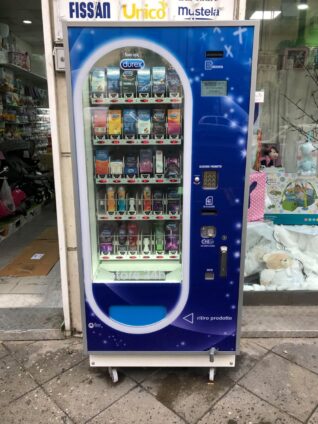
The machines are expected to be installed at strategic public locations, including lorry stations, mosques, stadia and shopping malls, to enable people to obtain condoms privately without direct interaction with vendors.
The Commission is also seeking to extend the initiative to public institutions, including washrooms in ministries, departments, agencies and financial institutions, under its national HIV and wellness policy.
The announcement was made during a dissemination meeting in Accra on the 2026 HIV Estimates and Projections, which reviewed the state of Ghana's HIV epidemic, identified gaps in the national response and outlined future interventions.
According to the Commission, the condom vending initiative forms part of a broader condom and lubricant strategy aimed at increasing access to prevention tools while adapting distribution methods to the needs of different communities.
Speaking at the event, Director-General of the Ghana AIDS Commission, Dr Kharmacelle Prosper Akanbong, said the machines would be designed differently depending on the characteristics of the communities where they would be deployed.
“The machines will not all be the same. Depending on the peculiar characteristics of a local population, the machine deployed could be electronically operated or manually administered,” he said.
Dr Akanbong recalled that Ghana had previously introduced condom vending machines that dispensed packs of three condoms for 50 pesewas, but the programme eventually collapsed after many of the machines were vandalised.
“People were forcefully emptying the machines to take the coins,” he said, adding that the new generation of machines would be designed to minimise the risk of vandalism.
He also assured the public that concerns about condom shortages reported last year had been addressed, stating that the government had procured additional supplies which are now available nationwide.
Also speaking at the meeting, the World Health Organization Country Office Technical Lead for HIV, Tuberculosis and Hepatitis, Dr Kafui Senya, called for sustained efforts to reduce new HIV infections, eliminate stigma and discrimination, and ensure equitable access to prevention and treatment services.
Programme Manager of the National AIDS and STIs Control Programme, Dr Emmanuel Akwoulo Agyigewe Teviu, urged stakeholders to close persistent gaps in HIV prevention and strengthen integrated, people-centred care, while Governing Board Chair of the Ghana AIDS Commission, Kakra Essamuah, reaffirmed the government's commitment to strengthening Ghana's national HIV response.
Latest Stories
-
Black Stars: It’s our decision to leave Kudus to recover – Queiroz
5 minutes -
Sammy Gyamfi backs Mahama’s directive to restore NACOC’s at ports
8 minutes -
Queiroz provides insight into Kudus’ decision to withdraw from Black Stars squad
19 minutes -
I’m not changing after 47 Years – Queiroz fires back at critics
28 minutes -
Nkrumah Never Dies: Celebrating the visionary who awakened a continent
2 hours -
Hassan Ayariga calls for Ghanaian ownership in strategic investment deals
2 hours -
Black Stars: Thomas-Asante receives late call-up for September-October games
2 hours -
NPP Techiman South demands immediate release of detained Nurse Salomey Awiti Baffoe
3 hours -
‘Let’s stop the politics’ — Dafeamekpor calls for united fight against drug trafficking
3 hours -
Chief Justice Baffoe-Bonnie leads new 11-member Council for Legal Education and Training Board
3 hours -
Decades of silent diplomacy: Baba Issifu Kamara at 70
3 hours -
30% transport fare hike still on the table, talks resume Tuesday – GPRTU
3 hours -
KATH marks 70th anniversary with inter-directorate games
4 hours -
Black Stars: Godwin Attram replaces Desmond Ofei as assistant coach
4 hours -
Nkrumah never dies
4 hours