

Audio By Carbonatix
Statesman and former diplomat Dr. Mohamed Ibn Chambas has said Ghana's greatest challenge is not a lack of educated people but a deficit in ethical and responsible leadership, urging educational institutions to place greater emphasis on character formation alongside academic excellence.
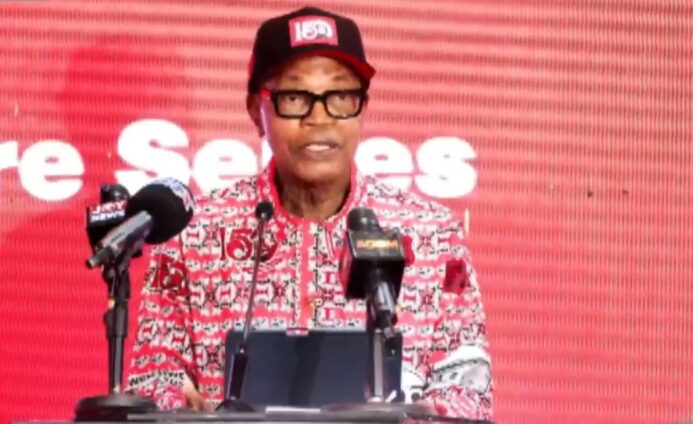
Delivering the second Mfantsipim Sesquicentennial Lecture in Accra on Wednesday, July 29, Dr Chambas observed that while the country has produced many highly qualified professionals, national development continues to be undermined by a shortage of leaders who uphold integrity, accountability and a strong sense of civic responsibility.
"Ghana does not suffer from a shortage of educated people. It sometimes suffers from a shortage of ethical and responsible citizens and leaders," he said.
According to him, occupying positions of influence comes with profound responsibilities, regardless of one's profession. He noted that whether an individual serves as a judge, physician, engineer, entrepreneur, diplomat, parliamentarian, teacher, religious leader or community leader, society expects competence to be matched by integrity and responsibility.
Dr. Chambas stressed that academic qualifications alone cannot solve the country's governance and development challenges.
He argued that degrees by themselves cannot eliminate corruption, professional credentials cannot automatically guarantee justice, and technical expertise alone is insufficient to build public confidence in institutions.
He maintained that responsible citizenship remains indispensable to national progress, calling for renewed investment in value-based education across all levels of the educational system.
According to him, schools must intentionally cultivate values such as integrity, patriotism, discipline, honesty, forbearance and selfless service, describing these virtues as essential to producing leaders capable of transforming society.
"Academic excellence without moral responsibility ultimately impoverishes society," he stated, warning that knowledge separated from ethical principles could become dangerous.
He further cautioned that power exercised without accountability inevitably breeds corruption, underscoring the need for educational institutions to shape not only the intellect of students but also their conscience.
"Education must therefore seek not only to sharpen the intellect but also to shape the conscience," Dr. Chambas said.
He urged graduates and professionals to use their knowledge in service of the nation, insisting that Ghana's future depends as much on the character of its citizens as on their academic and professional achievements.
Latest Stories
-
Ghana gaining notoriety for drugs – Bawumia demands bipartisan probe
8 minutes -
Government urges SMEs to embrace digitalisation for growth and job creation
11 minutes -
Ghana’s university libraries urged to lead change in digital age
15 minutes -
NPP National Delegates Conference: Nhyiaeso MP calls for unity and peace
28 minutes -
Cargill Ghana renovates, equips ICT laboratory for Ahmadiyya Basic School
30 minutes -
GH¢6,500 cocoa promise has turned out to be a scam – Bawumia
31 minutes -
Firefighters battle blaze behind Amasaman China Mall
32 minutes -
We’ll pursue accountability despite intimidation – Afenyo-Markin
36 minutes -
‘Ghana Jollof’: Restoring the flavor
44 minutes -
SSNIT outlines plans to transform Labadi beachfront into tourism hub
45 minutes -
Today marks the beginning of a glorious chapter of the NPP – Bawumia
56 minutes -
‘Justice has prevailed’ – Atta Akyea reacts to Baffour Awuah’s GH¢10m bail
1 hour -
I’m above board, no dirt can stick on me – Baffour Awuah
1 hour -
Prince Adu-Owusu: The things the heart sees
1 hour -
Galamsey is a complex national challenge that deserves seriousness, not slogans – Bawumia
1 hour