

Audio By Carbonatix
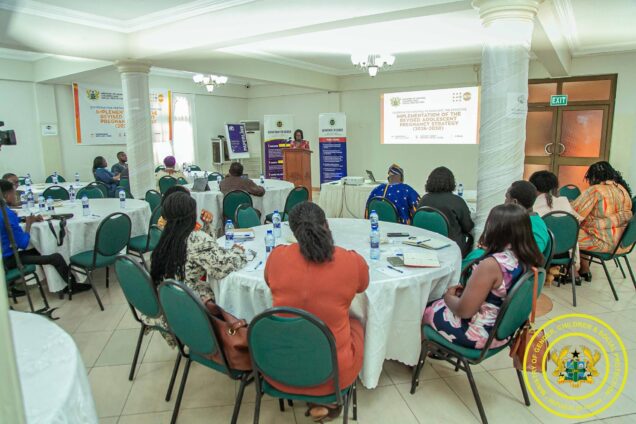
The Ministry of Gender, Children and Social Protection (MoGCSP), in partnership with the United Nations Population Fund (UNFPA), has brought together key stakeholders to strengthen coordination for the implementation of the Revised Adolescent Pregnancy Strategy (2026–2030).
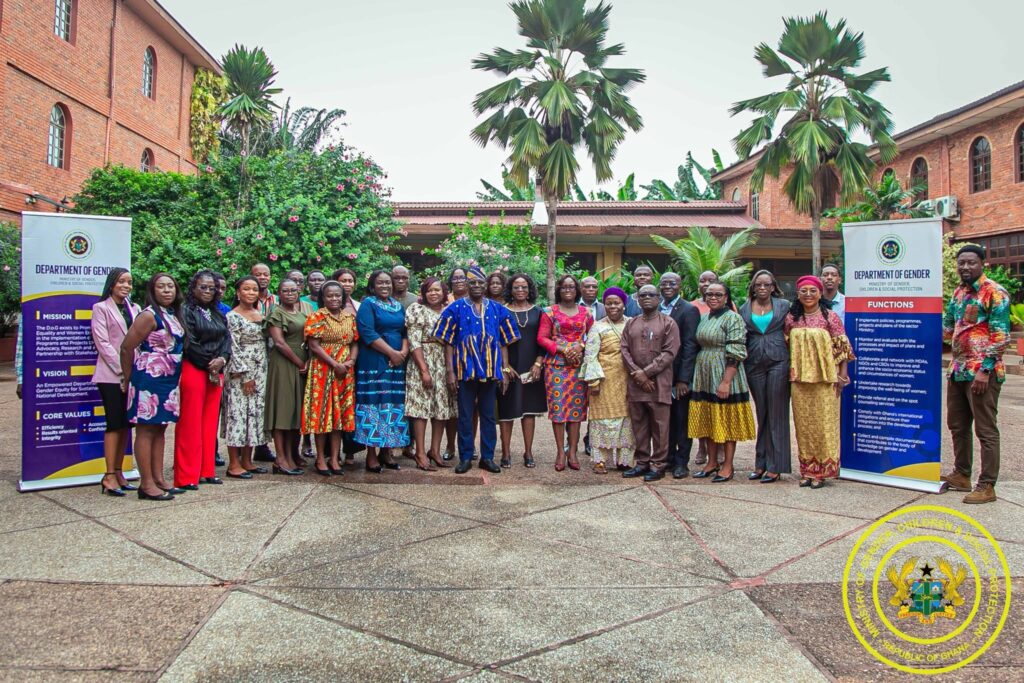
The stakeholder coordination meeting, organised through the Ministry’s Department of Gender, aimed to build a shared understanding of the revised strategy, clarify the responsibilities of implementing institutions and develop practical measures to ensure its successful rollout.
Participants included representatives from government agencies, development partners, civil society organisations, academia, traditional and religious leaders, youth groups and the media.
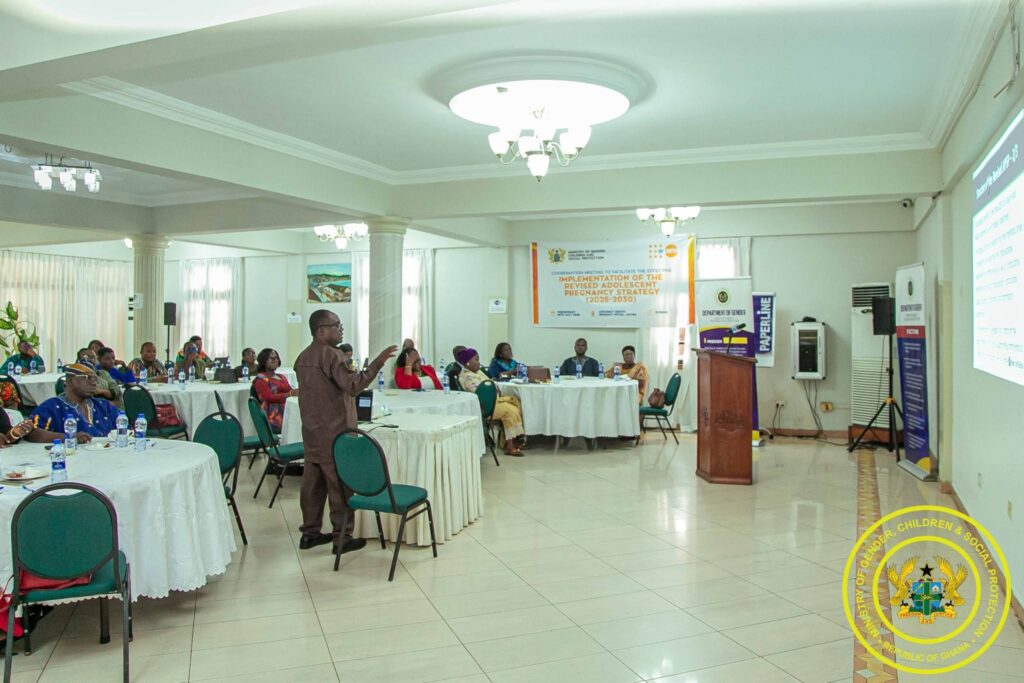
The engagement focused on improving collaboration among stakeholders, identifying possible implementation challenges and agreeing on actions to support efforts aimed at preventing adolescent pregnancies and promoting the wellbeing and rights of young people.
Speaking on behalf of the Ministry, the Chief Programme Officer at the Department of Gender described adolescent pregnancy as a major national development concern with implications for education, healthcare, gender equality, child protection and economic growth.
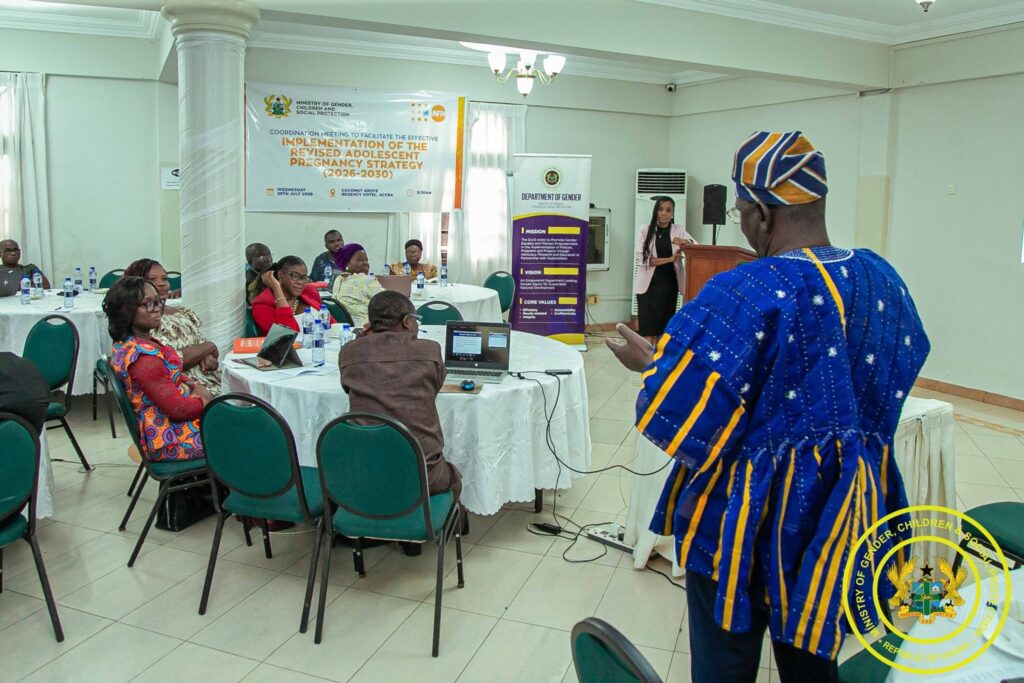
She noted that about 15 per cent of girls aged 15 to 19 have experienced pregnancy, with more than 100,000 teenage pregnancies recorded annually, highlighting the need for coordinated and evidence-based interventions.
According to her, the Revised Adolescent Pregnancy Strategy (2026–2030) was developed based on lessons from the implementation of the previous strategy and provides a broader framework for preventing adolescent pregnancies, improving adolescent health and protecting the rights of young people.
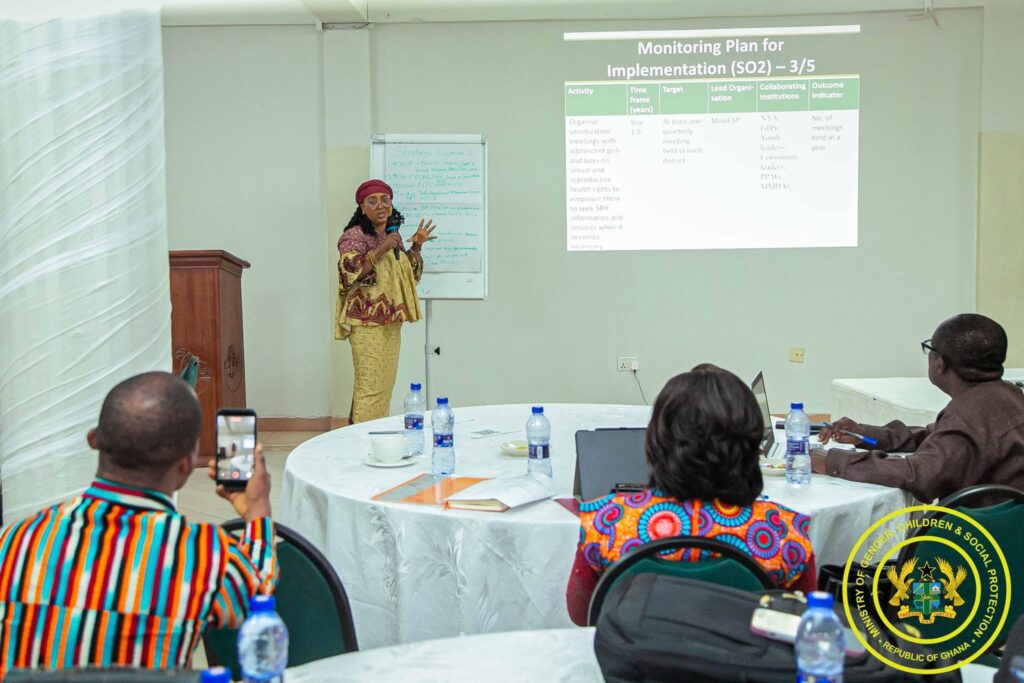
She stressed that achieving the objectives of the strategy would require strong institutional collaboration, clearly defined roles and sustained commitment from all stakeholders.
She also expressed appreciation to UNFPA and other development partners for their technical and financial support towards the development of the revised strategy, reaffirming the Ministry’s commitment to ensuring that adolescents have access to quality education, good health and opportunities to transition into productive adulthood.
A consultant from the University of Ghana, Prof. Stephen O. Kwankye, who presented an overview of the strategy, explained that the document builds on lessons from the 2018–2024 Adolescent Pregnancy Strategic Plan while addressing emerging priorities.
He highlighted that one of the key objectives of the revised strategy is to empower adolescents and support efforts to delay early sexual activity as part of measures to reduce unintended pregnancies.
The meeting concluded with discussions, group sessions and presentations, allowing stakeholders to share experiences, identify challenges and develop recommendations to strengthen the implementation of the Revised Adolescent Pregnancy Strategy (2026–2030).
Latest Stories
-
Ghana gaining notoriety for drugs – Bawumia demands bipartisan probe
8 minutes -
Government urges SMEs to embrace digitalisation for growth and job creation
11 minutes -
Ghana’s university libraries urged to lead change in digital age
15 minutes -
NPP National Delegates Conference: Nhyiaeso MP calls for unity and peace
28 minutes -
Cargill Ghana renovates, equips ICT laboratory for Ahmadiyya Basic School
30 minutes -
GH¢6,500 cocoa promise has turned out to be a scam – Bawumia
31 minutes -
Firefighters battle blaze behind Amasaman China Mall
32 minutes -
We’ll pursue accountability despite intimidation – Afenyo-Markin
36 minutes -
‘Ghana Jollof’: Restoring the flavor
44 minutes -
SSNIT outlines plans to transform Labadi beachfront into tourism hub
45 minutes -
Today marks the beginning of a glorious chapter of the NPP – Bawumia
56 minutes -
‘Justice has prevailed’ – Atta Akyea reacts to Baffour Awuah’s GH¢10m bail
1 hour -
I’m above board, no dirt can stick on me – Baffour Awuah
1 hour -
Prince Adu-Owusu: The things the heart sees
1 hour -
Galamsey is a complex national challenge that deserves seriousness, not slogans – Bawumia
1 hour