

Audio By Carbonatix
A woman should never have to choose between enduring abuse and feeding her children. Yet for countless women across sub-Saharan Africa and beyond, that is the painful decision they face every day.
Financial dependence has quietly become one of the strongest chains holding women in abusive marriages, toxic relationships, and unhealthy environments. Bruises heal, but years spent believing there is nowhere else to go leave scars that are far more difficult to erase.
This is why the conversation about women's empowerment must move beyond slogans and ceremonies. It must become a practical conversation about money, education, skills, and economic independence. Because a woman without money is often a woman without power, without choices and without a safe exit.
When dependence becomes captivity
Violence against women remains one of the world's most persistent human rights challenges. Nearly one in three women globally has experienced physical or sexual violence during her lifetime. Sub-Saharan Africa continues to record one of the highest prevalence rates of intimate partner violence, with about 32 per cent of women experiencing such abuse during their lifetime.
Behind every statistic is a woman whose dreams have been interrupted by fear.
Many stay, not because they do not recognise the abuse, but because leaving appears even more frightening. They ask themselves difficult questions. Where will I sleep? How will I feed my children? Who will pay their school fees? How will I survive without him?
These are not signs of weakness. They are the realities of economic dependence.
An abusive partner often understands this imbalance of power. Financial control becomes another form of violence. Bank accounts are monitored. Employment is discouraged. Businesses are sabotaged. Every request for money becomes an opportunity to humiliate, threaten or manipulate.
Over time, dependence becomes captivity.
The tragedy is that prolonged exposure to abuse rarely ends with emotional pain alone. Survivors frequently experience depression, anxiety, chronic illnesses, low self-esteem and social isolation. Children raised in violent homes also suffer. Even when they are not directly assaulted, they absorb fear, instability and unhealthy relationship patterns that can follow them into adulthood.
Financial independence creates choices
Economic empowerment cannot prevent every abusive relationship, but it gives women something priceless: options.
A financially independent woman is more likely to walk away from persistent abuse because survival is no longer tied to someone else's wallet. She can rent a room if necessary. She can pay legal fees. She can provide food for her children while rebuilding her life. She has the dignity of choice.
The same principle applies beyond marriage.
Women who are financially stable are better positioned to leave exploitative workplaces, reject degrading treatment, escape manipulative friendships and resist pressure to remain in environments that compromise their safety or values. Financial security creates room for healthy decisions instead of desperate ones.
This is not an argument against marriage or partnership. Healthy marriages thrive on love, mutual respect and shared responsibility, not financial imprisonment. Economic empowerment should strengthen relationships, not threaten them. When both partners contribute according to their abilities, relationships become partnerships rather than power struggles.
Raising girls to stand on their own
Parents have an equally important responsibility.
The greatest inheritance many parents can give their daughters is not expensive weddings or family property. It is education, character and the confidence to stand on their own feet.
Teach girls to value education as a lifelong investment. Encourage them to acquire practical skills alongside academic qualifications. Introduce them to financial literacy early. Saving, budgeting, investing and entrepreneurship should become normal conversations at home.
Raise daughters who understand that kindness should never replace self-respect and that love should never demand the surrender of dignity.
Moral values matter just as much. Integrity, discipline, resilience, humility and hard work remain powerful assets in building sustainable careers and businesses. Financial independence without sound character can easily become reckless independence. The goal is not simply to earn money but to build a life anchored in wisdom and responsibility.
A future built on choice, not dependence
Society also has a role to play. Governments must invest in quality education for girls, expand access to vocational training, strengthen laws protecting survivors of domestic violence, and create economic opportunities for women. Financial institutions should develop products that support women entrepreneurs, while employers must ensure equal opportunities for career advancement.
Communities must stop asking abused women, "Why did you leave?" and begin asking, "What support do you need to rebuild your life?"
No woman deserves to remain where her spirit is crushed because poverty has stolen her choices.
Money is not everything. It cannot buy genuine love, peace or happiness. But it can buy transport to a safer place. It can pay rent. It can keep children in school. It can provide healthcare, and the breathing space needed to begin again.
Sometimes, money buys the chance to survive.
Every girl deserves to grow into a woman who knows that her future is not limited by dependence. Every woman deserves the freedom to choose peace over fear, dignity over abuse and hope over helplessness.
Because a woman with financial independence possesses far more than money. She possesses the power to choose her own life.
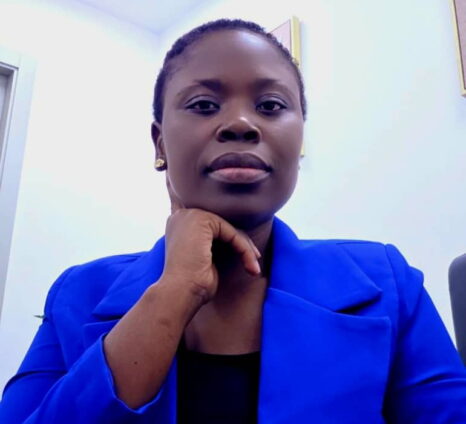
The writer is a children’s rights advocate and the founder of The Raissa Child Protection Initiative.
Latest Stories
-
Mahama directs Finance Minister to allocate GH¢1bn for Housing Fund in 2027 Budget
5 minutes -
NPP celebrates Bawumia on birthday, prays for 2028 election victory
5 minutes -
Mahama recounts ‘exhausting and frustrating’ struggle to find a home as a young spouse
11 minutes -
‘Take damaged banknotes to commercial banks for replacement’ – BoG warns against repairing cedi notes for resale
18 minutes -
Lebanon’s Hezbollah gets $200 million from Iran to help displaced, sources say
18 minutes -
Bisa Kdei to launch annual Highlife music event ‘The Convention’
19 minutes -
BoG cautions public against digital financial fraud, ‘double-your-money’ schemes
20 minutes -
WPL 2026/27: Ampem Darkoa Ladies to start title defence against Northern Ladies
31 minutes -
WPL 2026/27: Hasaacas Ladies face Army Ladies in opening round as GFA announce Southern Zone fixtures
43 minutes -
Eduwatch calls for urgent resolution of teachers’ strike and reforms
44 minutes -
Media worker, journalist remanded over alleged GH¢800k fraud
46 minutes -
Safeguard all personal, financial information, including Mobile Money PINs, ATM PINs – BoG to general public
48 minutes -
Gov’t launches roadmap to implement Social Protection Act, Regulations and Affirmative Action Regulations
48 minutes -
Photos: Pete Edochie meets GoldBod CEO Sammy Gyamfi over African youth mentorship initiative
50 minutes -
Black Maidens: Ghana’s envious record at U-17 Women’s World Cup ahead of seventh appearance
1 hour