

Audio By Carbonatix
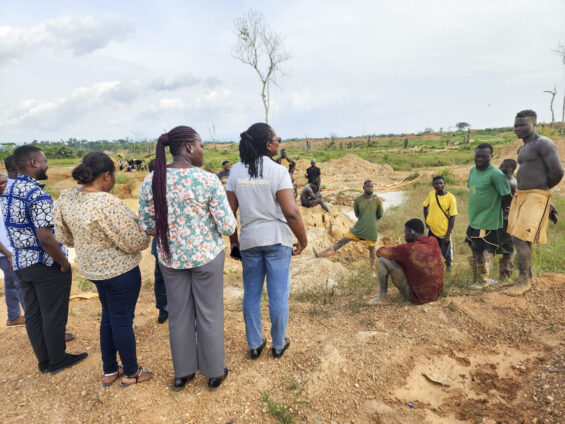
A recent study conducted by Solidaridad West Africa and the Minerals Commission across four mining communities, Pameng, Asamang, Akwaboaso and Abrenya, in the Atiwa West District of the Eastern Region has revealed that school children are increasingly abandoning classrooms for mining sites in search of quick income to support their families.
The study conducted in April 2026, as part of broader efforts to tackle child labour in Ghana's small-scale gold mining sector, revealed that children between the ages of 10 and 17 are engaged in hazardous tasks at abandoned and unregulated mining sites, exposing them to unsafe pits and machinery, mercury and other toxic chemicals, exploitation, and abuse.
While poverty remains a significant driver, the study highlights that child labour is equally influenced by behavioural and social factors such as peer pressure, the desire for quick income, weak parental supervision, and the growing perception that education offers limited immediate benefits.
Some children reported earning between GH₵100 and GH₵1,000 on productive days, although earnings vary considerably depending on the nature of the work and access to mining proceeds. This trend is further reinforced by social influences, including role-modelling from financially successful miners and exposure to social media.
"I have worked at my father's mining site for two years and can earn up to GH₵1,000 a day supervising ore washing," said a 16-year-old participant in the study.
The study indicated that while some families may see this as a source of income, it often leads to child labour, interrupted education, and fewer opportunities for children in the future. This development not only threatens the safety of children today but also the social and economic future of entire generations.
A Growing Threat to Education and Childhood
Across the district, school attendance and enrollment are sharply declining. The findings were echoed by the Atiwa West District Education Directorate, which expressed concern about the growing impact of illegal mining on education outcomes across the district.
According to the Directorate, children’s involvement in illegal mining activities is prevalent across communities in the district, with many parents benefiting from the income generated by their children.
This, it said, has contributed to increased absenteeism, school dropouts, and a growing perception among children that education is less valuable than immediate financial gain.
The Directorate also raised concerns about related social challenges, including drug abuse, teenage pregnancy and prostitution, which are linked to the broader challenges of illegal mining.
The Long-Term Consequences
Education experts warn that the effects of children leaving school for mining extend far beyond the classroom, with lasting consequences for families, communities, and the country's future.
"When children leave school for mining, the consequences extend far beyond lost classroom time. Education equips young people with the knowledge, skills, and opportunities to build better lives. Without it, many children are more likely to remain trapped in low-paying and hazardous work, limiting not only their own potential but also the future development of their communities and the nation," said John Kwasi Osafo, District Director of Education, Atiwa West District.
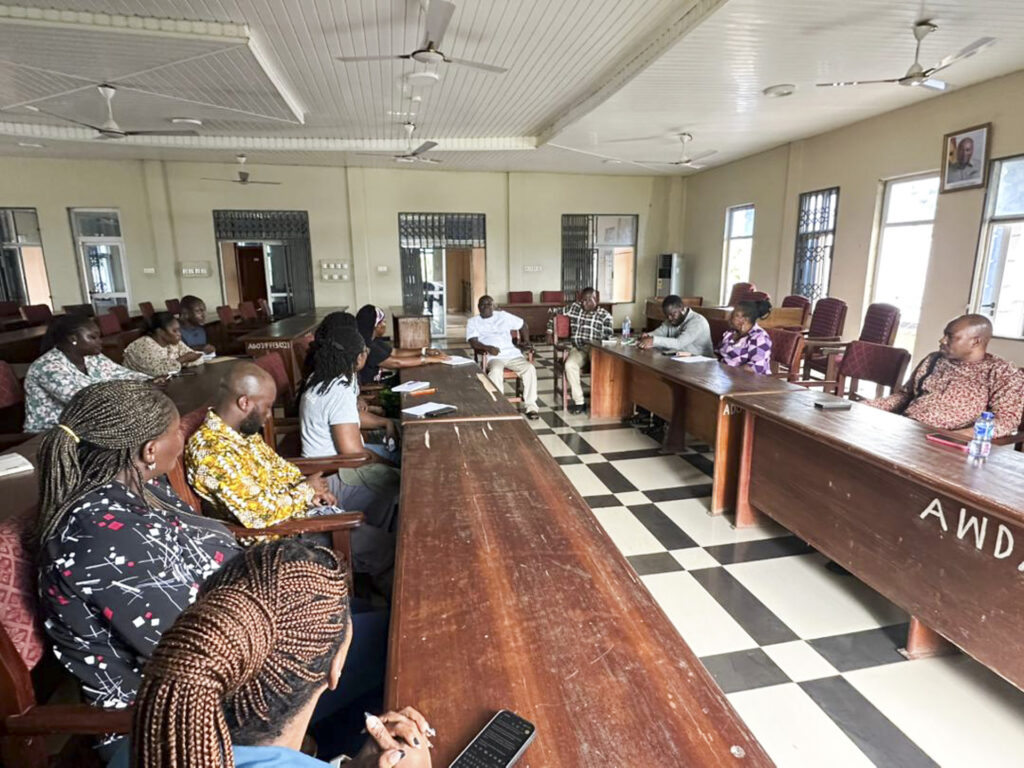
The study used a rapid participatory approach, including key informant interviews and focus group discussions with local government authorities, education officials, traditional and religious leaders, teachers, parents, youth, and children, as well as field observations.
Addressing the Root Causes of Child Labour
In 2023, Solidaridad supported the Gender Unit of the Minerals Commission to develop a Child Labour Eradication Framework (CLEF) for Ghana's small-scale gold mining sector. As part of efforts to implement the framework's recommendations, Solidaridad and the Minerals Commission are piloting an incentive-based child labour-free community initiative in the Atiwa West district. To support the pilot, the study was conducted to understand the dynamics of child labour in the selected communities, including existing structures and mechanisms for addressing it.
Monalynn Anokye-Bempah, Principal Officer at the Gender Unit of the Minerals Commission of Ghana, indicated that the Commission's collaboration with Solidaridad West Africa seeks to identify and eliminate child labour risks, encourage school attendance and retention, reward communities for maintaining child labour-free standards, strengthen local child protection systems, build sustainable livelihood alternatives for families, and foster community ownership in protecting children.
Rosemary Addico, Programme Manager for Responsible Gold at Solidaridad, emphasised the importance of addressing the root causes of child labour through collaborative, community-led solutions.
“Ending child labour in mining communities requires more than enforcement. It also calls for collective action to address the social and economic factors that place children at risk. At Solidaridad, we are committed to working with government, communities, the private sector, and development partners to promote sustainable, community-led solutions that protect children and create lasting livelihood opportunities for families."
The pilot will support the rollout of key recommendations from the Child Labour Eradication Framework, including the establishment of Community Child Protection Committees to help safeguard children from child labour.
.
Latest Stories
-
Power restoration fault suspected in Kumasi Central Market fire
4 hours -
The 7-foot giant of Ngleshie Amanfro: Seven-foot Ghanaian Ephraim Saawa dreams of joining the national basketball team
5 hours -
Government promises support for Kumasi Central Market fire victims
5 hours -
Vibes The Movie: Big Ghun’s Ghanaian film earns five nominations at 2026 REFFA
5 hours -
MamaCare CEO warns unresolved conflicts among health workers could undermine maternal and neonatal care
6 hours -
Health professionals urged to translate medical knowledge into practice to save mothers
6 hours -
Conflicts among care providers linked to maternal, neonatal deaths – Expert
7 hours -
GIS marks 10th TIME conference, champions improved teaching practices
7 hours -
BRICS Or Balance? What Ghana’s bid really means
8 hours -
GPRTU wants full TRAFFITECH-GH implementation to start in 2027
8 hours -
How 10-mile walks for basic education birthed a 50-year legal career for Justice Korbieh
8 hours -
Mahama announces plans to import electric wheelchairs for PWDs
8 hours -
KGL U17 Colts 2026: Western beat Prempeh Elite Academy to set up final final with Greater Accra Region
9 hours -
Late Solanke strike salvages 10-man Spurs draw at Man United
9 hours -
Gender Ministry to monitor welfare of Nana Akua Addo’s children amid domestic violence case
9 hours