


Audio By Carbonatix
The defending champions of the National Public Speaking Competition (NPSC), Sunyani Senior High School (SUSEC), have taken the first step toward retaining their national title after winning the Bono Region’s Zone 2 contest.
At the same time, Twene Amanfo Senior High/Technical School emerged winners of Zone 1.
The two schools will now represent the Region at the next stage of the 2026 NPSC, an initiative under the auspices of the Speaker of Parliament of Ghana, and organised by DeeDee Global in partnership with the Ghana Education Service (GES).
Held at a packed SUSEC auditorium, the Bono Regional contest brought together students from selected senior high schools, all seeking the opportunity to advance and represent the region at the national level.
This year’s competition is centred on the theme “Stolen Futures: Drug and substance abuse among adolescents," drawing attention to the personal and societal consequences of substance abuse and the urgent need to protect young people from losing their futures to addiction.

The competition featured three rounds, where contestants first delivered speeches on assigned topics, followed by panel discussions, and then worked on a given issue, presenting their collective views. One of the key topics was “Parents-Teacher Partnership in the Fight Against Adolescent Drug Abuse.”
In Zone 1, Twene Amanfo SHTS narrowly edged Sacred Heart SHS, scoring 246.5 points against Sacred Heart’s 246 points. SDA SHS followed with 213 points, while Odumaseman SHS recorded 201 points. Wenchi SHS and Berekum Presbyterian SHS were absent.
The Twene Amanfo orators delivered a passionate presentation on whether the Bono Region could become Ghana’s first “drug-smart region.”
They argued that achieving a drug-smart region would require more than government intervention, stressing the importance of education, parental support, community involvement, skills training, entrepreneurship, rehabilitation and counselling.
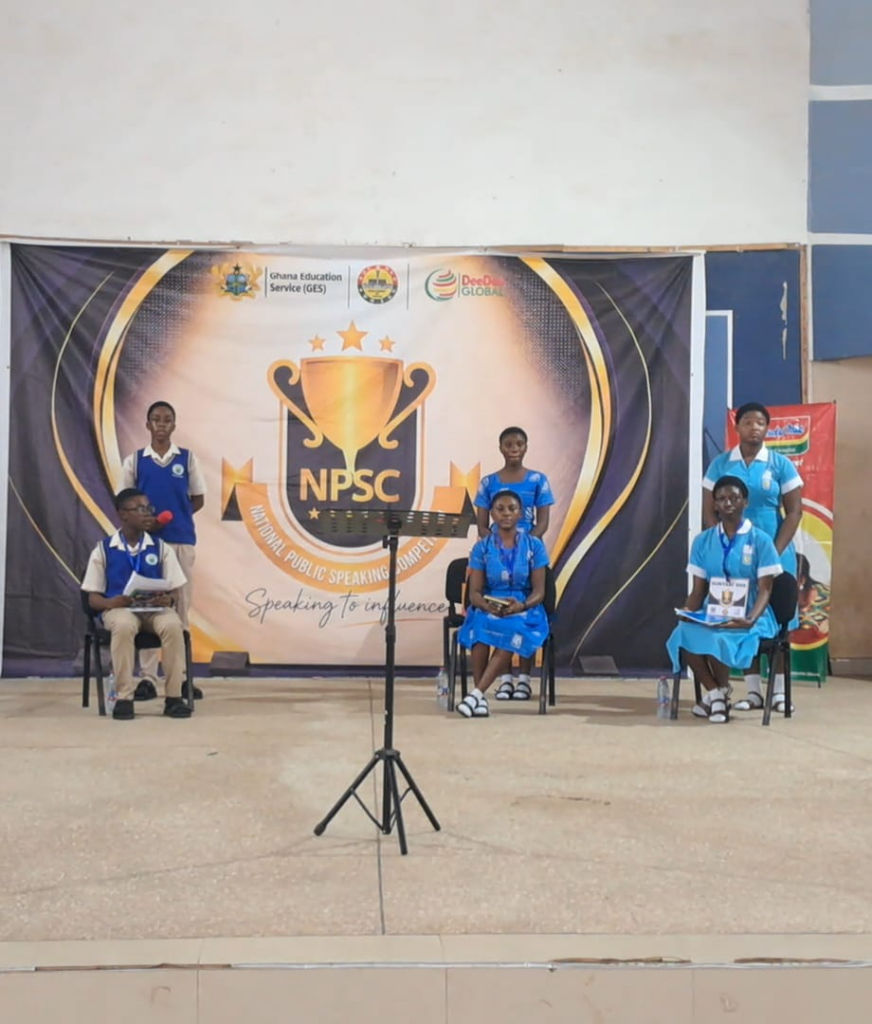
“It's about life, the future of our nation,” he declared, challenging the region to choose prevention and action over silence.
Speaking after the contest, a team member of the orators, Joseph Darko Amponsah, said the team was determined to work harder as it prepares for the next stage, with the ultimate ambition of winning at the national level.
In Zone 2, the defending champions demonstrated why they remain a formidable force in the competition.
SUSEC emerged winners with 256 points, narrowly defeating St James Seminary SHS, which scored 255 points. Nkoraman SHS recorded 234.5 points. Koase SHS, Dormaa SHS and Berekum SHS were absent.
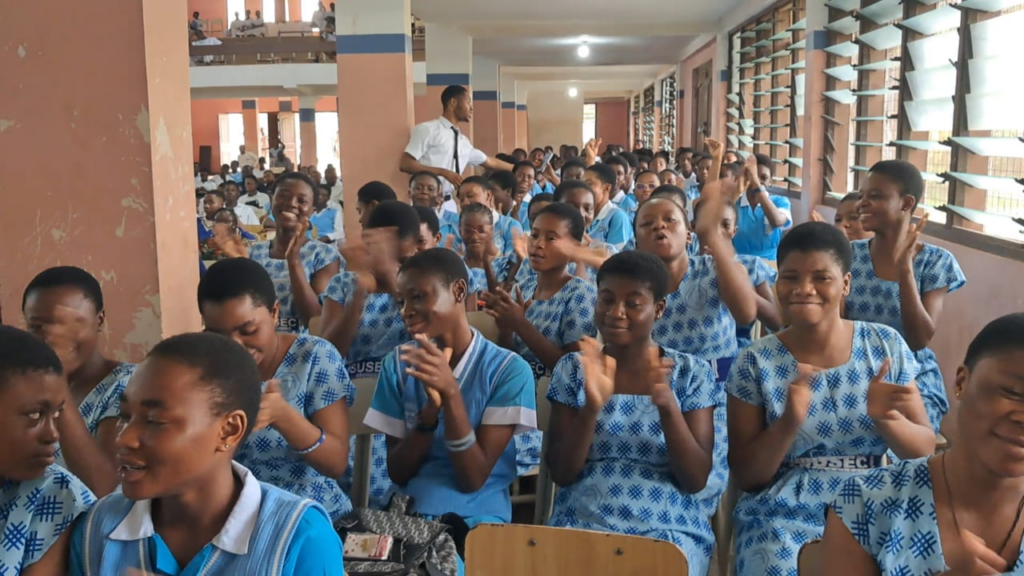
The contest focused on issues including "student prefects as the first line of defence against drug abuse in schools."
SUSEC’s lead orator, Kerl Amodaah, impressed the audience with an argument that student leaders are often uniquely positioned to identify early signs of drug abuse among their peers.
She proposed basic drug-awareness training for prefects, stronger school drug-prevention policies, confidential reporting systems, rehabilitation support and protection for student leaders who report suspected drug-related activities as a solution.
“A badge is not more than a symbol of authority. It is a call to responsibility,” Amodaah said, urging prefects to become “an eye that notices, a voice that warns and a hand that reaches out” before a student’s situation worsens.
As defending champions, however, SUSEC know that expectations will be high at the next stage.

Amodaah rejected the idea that the title defence was creating undue pressure, saying the team’s experience at the national competition gave them confidence. But she acknowledged that remaining at the top would be harder than reaching it.
She said the team would return to training to improve its teamwork, speeches, timing and pace.
“We are going to defend our title,” she said confidently, while warning competing schools that SUSEC intends to retain what it won.
Speaking on behalf of Gabriel Antwi, the Bono Regional Director of the Ghana Education Service, Bono Regional Director of Culture George Asare described public speaking as a critical 21st-century skill that develops confidence, critical thinking and leadership while giving young people a platform to address issues affecting their communities.

Meanwhile, Dr Kwasi Sarfo of the University of Energy and Natural Resources has advocated for a review of the qualification criteria for defending champions.
Under the current arrangement, defending champions are required to compete in the zonal competition, putting their opportunity to defend the title at the national stage at risk.
He said granting defending champions automatic qualification would also create an additional slot for the region with the defending champion.
Latest Stories
-
27-year-old spiritualist arrested over alleged attempt to use 11-year-old girl for ritual
7 minutes -
Galamsey could trigger major health crisis within five years — Medical experts warn
20 minutes -
Defending champions SUSEC, Twene Amanfo SHTS secure Bono Zone 2 spots in 2026 NPSC
32 minutes -
ICU-Ghana General Secretary Morgan Ayawine named Africa’s Most Respected CEO in Labour Leadership
34 minutes -
GTEC orders university administrators back to work, gives VCs 48 hours to name defiers
42 minutes -
Chief arrested for allegedly engaging in illegal mining in Tano North
44 minutes -
Fighting fires, fighting for breath: The hidden health toll on Ghana’s firefighters – and the support that still falls short
50 minutes -
Presbyterian Church of Ghana clarifies role of Christians in stool/skin offices
53 minutes -
‘There is no emergency’ – Godfred Dame criticises vacation hearing in Abdul-Hanan case
57 minutes -
Eco SIM and sustainability, making mobile technology greener
1 hour -
Daily Insight for CEOs: Building a future-ready organization
1 hour -
The Hunger Project-Ghana commissions ICT Centre at Domi Achiansa Epicenter to bridge digital divide.
1 hour -
Afro-Arab Drive Green expands EV fleet to boost jobs through energy transition
1 hour -
Sunyani Paramount Chief warns chiefs against cemetery land sales and encroachment
1 hour -
Trump envoy Kushner arrives in Israel after rare Hamas talks on Gaza peace plan
1 hour