

Audio By Carbonatix
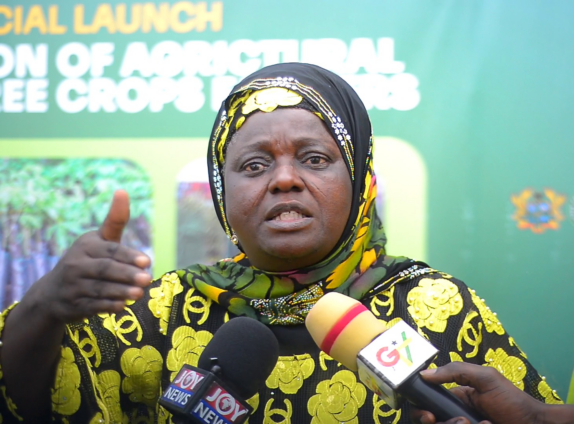
President of the Ghana Shea Butter Employers Association, Rabiatu Abubakari, says Ghana is losing millions of cedis in revenue as a large proportion of raw shea nuts are exported instead of being processed locally.
She is calling for stronger government support to protect the local shea butter industry and create more economic opportunities for farmers and processors.
The shea butter industry is facing serious challenges, with producers complaining about limited access to finance, inadequate storage facilities, and the exportation of raw shea nuts.
President of the Ghana Shea Butter Employers Association, Rabiatu Abubakari, says the situation is depriving Ghana of much-needed revenue and jobs.
“We are losing millions of cedis because our shea nuts are being exported in their raw form instead of being processed here in Ghana,” she noted.
She says attempts by local producers to secure loans to expand their businesses have often been unsuccessful.
“When we go to the banks for loans, most of the time we are declined, and even when the loans are available, the interest rates are too high for us to sustain the business.”
According to her, exporters are taking a significant proportion of Ghana's raw shea nuts outside the country, leaving local processors with limited supplies.
“About 70 percent of the shea nuts are taken out of the country, and this affects our local processing and the income of the farmers,” said Rabiatu.
She wants the government to use the 24-hour economy initiative to promote local processing while reducing the exportation of raw shea nuts.
“If the government wants to put shea butter into the 24-hour economy, then we need to reduce the export of the raw shea nuts and encourage more processing here.”
She also wants investment in storage facilities, since shea is a seasonal crop.
“Shea is seasonal, so we need proper storage facilities to keep enough nuts for processing throughout the year.”
The association has welcomed support from the Tree Crops Development Authority through the provision of farm inputs but says more needs to be done.
Rabiatu Abubakari is therefore appealing for increased government investment in financing, storage, and local processing to make the shea industry more sustainable and ensure that more value remains in Ghana.
Latest Stories
-
Ghana must build nuclear talent, not just reactors – Lands Minister
5 minutes -
Israeli army orders criminal investigation into killing of Palestinian girl Hind Rajab in Gaza
5 minutes -
Gov’t is reviewing tax laws to keep pace with changing economy – Vice President
27 minutes -
Two remanded over alleged theft of GH¢932,040 fuel, tanker fire
37 minutes -
NPP lacks credibility to make impact in 2028 election – Mustapha Gbande
37 minutes -
Prudential Bank equips young professionals with practical personal finance skills at National Youth Mentorship Summit
38 minutes -
‘They found the wrong target’ – Sammy Gyamfi hits back at Afenyo-Markin
38 minutes -
GoldBod ‘losses’: I’m ready to face Parliament – Sammy Gyamfi
49 minutes -
GJA to lead nationwide media tour of galamsey-affected communities
54 minutes -
Ghana enters Phase 2 of IAEA nuclear power programme – Lands Minister
54 minutes -
I’m not afraid of any intimidating tactics – Sammy Gyamfi fires back at critics
1 hour -
Youth development must be mainstreamed across all sectors – NYA CEO
1 hour -
National Apprenticeship Programme surpasses 10,000 target, reaches 14,000 beneficiaries – NYA
1 hour -
AMA orders aboboyaa, tricycles to install reflectors, avoid major highways
1 hour -
GACC flags persistent corruption risks despite progress in 2025
2 hours