

Audio By Carbonatix
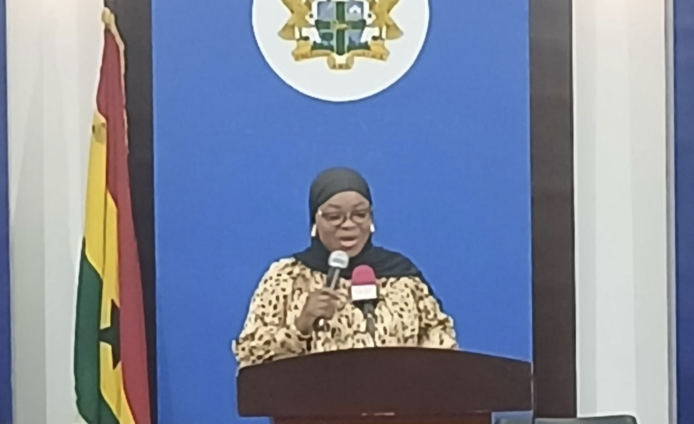
The Government and the media must sustain their partnership to safeguard Ghana’s democratic gains and strengthen accountability, Shamima Muslim, Deputy Government Spokesperson, has said.
She said the relationship between politics and journalism had, despite occasional tensions, contributed significantly to Ghana’s democratic development, including the country’s return to constitutional rule in 1992 and the sustenance of eight successive peaceful elections.
She made the call at a symposium organised by the Ghana Journalists Association (GJA) in Accra on Wednesday to mark its 77th anniversary, on the theme: “Building on our Legacy, Advancing Ethical Journalism and Shaping the Future of Digital Media.”
Ms Muslim, who was speaking on behalf of Mr Felix Kwakye Ofosu, the Minister of Government Communications, said Ghana’s democratic journey provided clear examples of what could be achieved when the media and political actors worked in the national interest.
The media’s role in voter education, public debate and holding state actors accountable was central to the return to multiparty democracy and the adoption of the 1992 Constitution, she said.
“After Ghana’s independence, one of our beautiful experiences together is the collaboration that returned Ghana to constitutional rule in 1992. The media’s role in voter education, in public debates, in holding state actors accountable was central to the return to multi-party democracy and the 1992 Constitution,” Ms Muslim said.
“That foundation has sustained eight successive peaceful elections.”
She also cited the passage of the Right to Information Act as another example of sustained collaboration between the media, civil society and political actors.
Ms Muslim said media advocacy over more than two decades contributed to the passage of the law, which had strengthened citizens’ ability to demand accountability from duty-bearers.
She also highlighted the media’s contribution to peace journalism, national health campaigns, anti-corruption efforts, constitutional review processes and public education on elections.
She said coordinated media campaigns during public health emergencies had helped disseminate timely information, counter misinformation and build public confidence in institutions.
On press freedom and the safety of journalists, Ms Muslim acknowledged the tensions that sometimes emerged between government and the media, but said Ghana had comparatively maintained a strong record.
She urged stakeholders to protect that achievement through continued vigilance and sensitivity to issues affecting media freedom.
She, however, expressed concern about the growing threat of misinformation and fabricated content, which sought to tarnish the image or otherwise of people.
She called for stronger verification and protection of information integrity, describing it as a “democratic and national imperative.”
Journalism must embrace technology without surrendering human judgement, stressing the importance of facts, fairness and equity, Ms Muslim said.
She urged the GJA to use its 77th anniversary not only to celebrate its achievements but also to reflect on the media ecosystem it would leave for future generations.
“The future Ghana needs is journalism that is free in the truest sense in its voice, that can be relied upon, that can be believed and trusted,” she added.
Mr Albert Kwabena Dwumfour, GJA President, urged journalists to prioritise truth, accuracy and public trust over speed, popularity and the number of followers they commanded.
He said journalists must exercise discipline in verifying information before publication, particularly in an increasingly complex media environment characterised by misinformation, disinformation, fabricated content and rapid technological change.
“Do not measure your success only by how many people see your story. Measure it by whether the story is true,” Mr Dwumfour said.
Mr Chris Holliday, Deputy British High Commissioner to Ghana, who spoke on behalf of the diplomatic corps, said the media constituted “national infrastructure” because journalists connected citizens through facts and ideas in much the same way roads physically connected people.
He advocated the equipping of journalists with the skills required to confront emerging challenges, particularly artificial intelligence, misinformation and attempts to manipulate public understanding.
“The biggest risk may not be censorship, but manipulation,” he warned.
Latest Stories
-
IMF urges tighter controls over GoldBod programme amid concerns over BoG losses
7 minutes -
Appointments Committee to vet Zanetor Agyemang-Rawlings today
11 minutes -
GMA strengthens competencies of seafarer examiners, instructors
14 minutes -
‘Crime is crime’ – Mahama Ayariga cautions MPs against shielding politicians from prosecution
20 minutes -
IMF cautions Ghana against early return to international capital markets
25 minutes -
GoldBod ‘losses’ have helped stabilise Cedi, contain inflation – Mahama Ayariga
31 minutes -
NDC formally notifies Speaker of James Agalga’s appointment as Majority Leader
36 minutes -
DGPP’s GH¢21.89bn ‘loss’ is accounting adjustment, not cash expense – Sources
40 minutes -
Tuba murder: Court adjourns case to September 28, as police prepare to forward docket to AG
42 minutes -
Debt restructuring key to Ghana’s economic recovery – IMF
47 minutes -
Let’s wait and see – Agalga refuses to take sides on extortion allegation as OSP probe begins
48 minutes -
FDA intensifies drive to ensure iodised salt reaches consumers
53 minutes -
HTU partners Praise Export to boost student training, employability
58 minutes -
Samuel Abu Jinapor proposes independent body to fight galamsey
1 hour -
Government moves to review Minerals and Mining Act to strengthen regulation
1 hour