

Audio By Carbonatix
Minister-designate for Local Government, Chieftaincy and Religious Affairs, Mahama Ayariga, has called on Metropolitan, Municipal and District Assemblies (MMDAs) to strengthen their internally generated funds and become more financially self-reliant to effectively drive development at the local level.
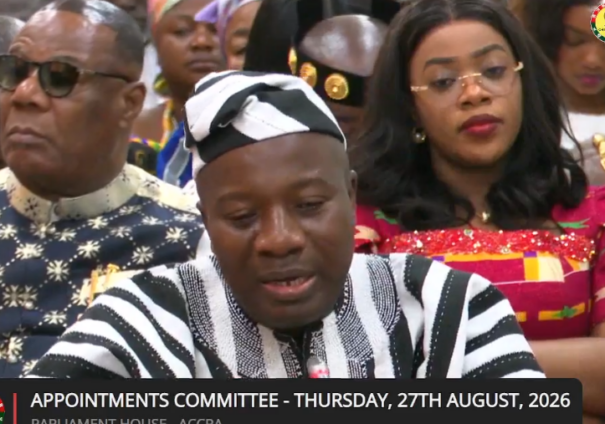
Appearing before Parliament’s Appointments Committee on Thursday, August 27, Mr Ayariga argued that Ghana’s constitutional framework envisages assemblies generating sufficient revenue to finance their administrative operations, while transfers from central government are largely intended to support development.
“The first thing that we have to understand is the intention of our Constitution: that assemblies should be self-financed.”
He explained that an assembly’s ability to generate revenue is also one of the considerations for granting an area assembly status.
“Your capacity to be self-financed is one of the criteria for whether or not you should be granted assembly status. So you’re supposed to self-finance it first.”
According to him, the District Assemblies Common Fund and other central government transfers should complement local revenue mobilisation rather than become the primary source of funding for the day-to-day administration of assemblies.
“The revenue that is sent to you as Common Fund money is for development.”
The Bawku Central MP said MMDAs have several avenues through which they can raise revenue, including property rates, market revenues and other local charges.
He believes the potential of property rates, in particular, has not been fully exploited.
“You can collect revenue, rates, on every single floor.”
He added that assemblies could also generate significant income from markets and other economic activities within their jurisdictions.
Mr Ayariga also linked local government financing to Ghana’s rapid urbanisation, arguing that growing urban centres have significant economic potential that can be harnessed to strengthen local economies.
“We are urbanising, and we are moving to the urban centres. The agglomeration has huge economic potentials.”
He cited major international cities as examples of places where local governments have developed strong financial bases by leveraging economic activity within their jurisdictions.
According to him, Ghana must identify and properly harness similar opportunities emerging from its growing urban centres.
He said a major priority for him, if approved as Minister, would be to establish a comprehensive urban structure capable of identifying the key elements required for effective local development.
“The first major thing I will do as minister is to put in place an urban structure, as to really identify all the elements necessary for the council.”
He said effective urban planning, combined with stronger revenue mobilisation, could give assemblies greater capacity to finance projects and provide essential services without relying excessively on central government support.
Mr Ayariga maintained that empowering local authorities financially would ultimately strengthen decentralisation and enable communities to have greater control over their own development.
Latest Stories
-
New airport projects to ease congestion, improve passenger experience—Mahama
20 seconds -
Start waste segregation at household level – Zanetor
4 minutes -
Zanetor to resign as Pan-African Parliament Vice-President if approved as minister
5 minutes -
Landfills must have non-permeable bases to prevent groundwater contamination – Zanetor
6 minutes -
‘No Supreme Court seat is vacant’ — Afenyo-Markin objects to rushed Supreme Court nominees’ vetting
9 minutes -
Who’s Millicent Amankwah Yeboah, the 34-year-old first time MP married to Mahama Ayariga?
15 minutes -
I bring 30 years of experience to make Dr Bawumia President – John Boadu on NPP National chair position
19 minutes -
Ghana must move beyond spectator role in climate initiatives – Zanetor
27 minutes -
Adamu, Kipruto unopposed for top PANASA positions
34 minutes -
Ghana must leverage AfCFTA to unlock climate finance, green technology – Zanetor
38 minutes -
Surprise at vetting as Mahama Ayariga reveals Sunyani West MP is his wife
43 minutes -
Ministers have no business meddling in chieftaincy disputes – Ayariga
43 minutes -
Bawku peace talks showing encouraging signs – National Peace Council
52 minutes -
Anger in Cameroon over femicide after eight women killed in a week
52 minutes -
‘If you started running, they shot you’ – inside Nigeria’s growing kidnapping crisis
53 minutes