

Audio By Carbonatix
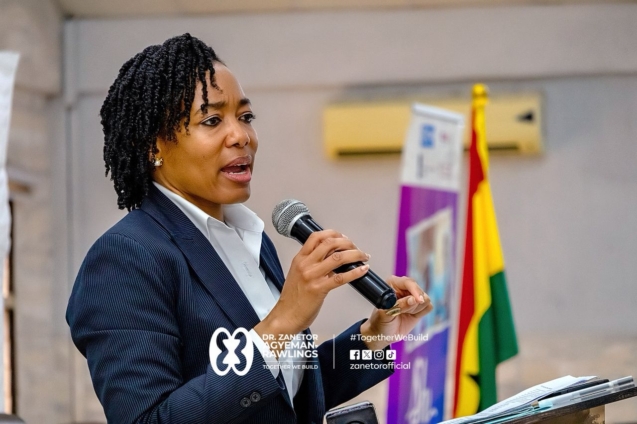
Minister-designate for Environment, Science and Technology, Dr Zanetor Agyeman-Rawlings, has urged the Environmental Protection Agency (EPA) to maintain the January 1, 2027 deadline for the ban on the production, importation, distribution, sale and use of polystyrene foam products, commonly known as Styrofoam or takeaway packs.
She said the environmental risks associated with the widespread use and improper disposal of polystyrene products were too significant to be overlooked, stressing the need for decisive measures to curb their impact.
Dr Agyeman-Rawlings made the call on Thursday, August 27, when she appeared before Parliament’s Appointments Committee in Accra for her vetting as Minister-designate.
She said the proposed ban was necessary to support broader efforts to tackle Ghana’s growing waste management challenges and promote more environmentally sustainable practices.
According to her, the EPA had already begun public education activities ahead of the implementation of the ban, citing a recent awareness campaign in Kumasi as part of preparations towards the policy.
“Mr Chairman, I believe that the EPA, just a couple of days ago, was actually in Kumasi raising awareness of the impending ban on styrofoam.
"I believe that the dangers around the use of polystyrene cannot be glossed over, and it has to be done,” she said.
Dr Agyeman-Rawlings also called for a change in public attitudes towards the use of disposable packaging, recalling a time when people commonly carried their own containers when purchasing food.
“Not to belittle the issue, but I remember as children, when you wanted to go for Auntie Naa’s rice, you took your own pot to go and buy the rice,” she said.
She questioned how the practice of using multiple layers of plastic packaging had become commonplace, saying the issue ultimately required a change in behaviour.
The National Democratic Congress (NDC) Member of Parliament (MP) for Korle Klottey said that while behavioural change could take time, incentives and penalties could be used to encourage compliance.
“Obviously, behaviour change is something that can take time, but it can be incentivised, or you can put penalties in place,” she said.
Dr Agyeman-Rawlings stressed that the effectiveness of the ban would ultimately depend on proper enforcement and the seriousness with which authorities addressed the environmental challenges posed by polystyrene products.
Latest Stories
-
Mali music star Salif Keïta cancels South African concerts over ‘xenophobic violence’
4 minutes -
Minority won’t participate in what we consider an illegality – Annoh-Dompreh defends walkout
35 minutes -
Supreme Court nominees weren’t appointed to fill vacancies – Dafeamekpor
1 hour -
EPA launches second awareness campaign ahead of Styrofoam ban
1 hour -
Africa targets 3 million more health workers by 2035 – WHO explains what it could mean for patients
1 hour -
Maintain January 2027 deadline for Styrofoam ban – Zanetor urges EPA
2 hours -
Key moments in trial of Lindsay Clancy, the mother accused of murdering her three children
2 hours -
Supreme Court can depart from previous decisions when necessary – Justice Sophia Essah
2 hours -
Collapsed glacier likely caused deadly Nepal-Tibet floods, scientists say
2 hours -
The Cyrus Lesson: Why Ghana must look beyond religion in choosing its next leader
2 hours -
I have no problem with public tribunals; they’re constitutional – Anthony Forson
3 hours -
GRA boss supports mothers’ hostel, donates pickup to Upper Denkyira East Police
3 hours -
NSMQ 2026: St. John’s School beat Benkum SHS, Nandom SHS to secure quarter-finals spot
3 hours -
Minifootball Association of Ghana unveils women’s national team ahead of inaugural AFCON
3 hours -
Appointments Committee recommends approval of three Supreme Court nominees
3 hours