

Audio By Carbonatix
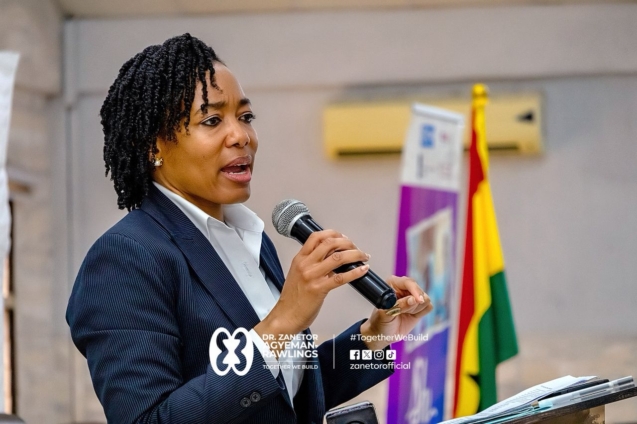
Minister-designate for Environment, Science and Technology, Dr Zanetor Agyeman-Rawlings, has urged the Environmental Protection Agency (EPA) to maintain the January 1, 2027 deadline for the ban on the production, importation, distribution, sale and use of polystyrene foam products, commonly known as Styrofoam or takeaway packs.
She said the environmental risks associated with the widespread use and improper disposal of polystyrene products were too significant to be overlooked, stressing the need for decisive measures to curb their impact.
Dr Agyeman-Rawlings made the call on Thursday, August 27, when she appeared before Parliament’s Appointments Committee in Accra for her vetting as Minister-designate.
She said the proposed ban was necessary to support broader efforts to tackle Ghana’s growing waste management challenges and promote more environmentally sustainable practices.
According to her, the EPA had already begun public education activities ahead of the implementation of the ban, citing a recent awareness campaign in Kumasi as part of preparations towards the policy.
“Mr Chairman, I believe that the EPA, just a couple of days ago, was actually in Kumasi raising awareness of the impending ban on styrofoam.
"I believe that the dangers around the use of polystyrene cannot be glossed over, and it has to be done,” she said.
Dr Agyeman-Rawlings also called for a change in public attitudes towards the use of disposable packaging, recalling a time when people commonly carried their own containers when purchasing food.
“Not to belittle the issue, but I remember as children, when you wanted to go for Auntie Naa’s rice, you took your own pot to go and buy the rice,” she said.
She questioned how the practice of using multiple layers of plastic packaging had become commonplace, saying the issue ultimately required a change in behaviour.
The National Democratic Congress (NDC) Member of Parliament (MP) for Korle Klottey said that while behavioural change could take time, incentives and penalties could be used to encourage compliance.
“Obviously, behaviour change is something that can take time, but it can be incentivised, or you can put penalties in place,” she said.
Dr Agyeman-Rawlings stressed that the effectiveness of the ban would ultimately depend on proper enforcement and the seriousness with which authorities addressed the environmental challenges posed by polystyrene products.
Latest Stories
-
GLS focused on members’ welfare, not rivalry with GBA — Dafeamekpor
7 minutes -
Takoradi NPP members welcome mew executives, call for unity and hard work
14 minutes -
Ashanti Regional NPP Chairman optimistic about party victory in 2028
20 minutes -
NPP urged to prioritise regional balance in national appointments
25 minutes -
World Bank revises Africa’s growth upwards to 4.3%
31 minutes -
BoG cautions public against 20 unlicensed mobile loan apps
36 minutes -
Mahama announces GH¢1bn allocation for revolving National Housing Fund
41 minutes -
Big Push: Major asphaltic works begin on Sunyani Inner-Ring project
49 minutes -
Japan beer giants raided over alleged price-fixing cartel
1 hour -
Jaguar unveils new electric car after ‘woke’ ridicule
1 hour -
Ambulances were uninsured and grounded when we took office – Health Minister
1 hour -
Gold prices recover from two-month low as dollar rally stalls
2 hours -
Hormuz transits at lowest in over two months after attacks, data shows
2 hours -
Bezos says Blue Origin likely to pursue IPO in coming years
2 hours -
Samsung flags $80 billion profit on AI boom, highest quarterly for any tech company
2 hours