

Audio By Carbonatix
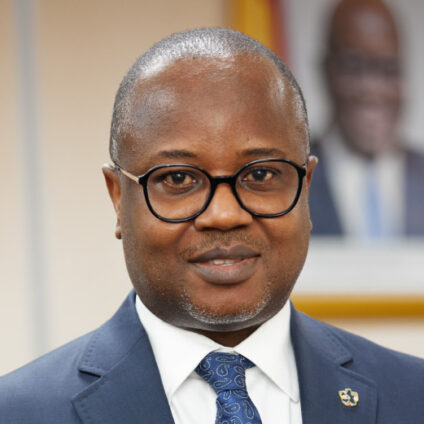
Ghana’s debt sustainability challenges persisted and in several episodes intensified, particularly during periods without an International Monetary Fund (IMF) programme, a former First Deputy Governor of the Bank of Ghana, Dr. Maxwell Opoku-Afari has disclosed.
According to him, despite repeated recourse to the Fund for “policy credibility” and for liquidity or solvency support, debt sustainability remained fragile.
“Notably, several key Debt Sustainability Analysis (DSA) indicators breached their respective thresholds over 2010–2022”, Dr. Opoku-Afari disclosed in a paper titled “How not to Miss a Crisis: Lessons from Ghana”.
His article mentioned that the present value (PV) of public debt-to-Gross Domestic Product (GDP), which remained below the 55.0% threshold in the early 2010s, rose sharply after 2014 and persistently exceeded sustainable levels— reaching nearly 93% by 2022.
“During the 2015–2019 Fund programme, debt accumulation moderated, although the ratio remained above the benchmark”.
Similarly, the PV of external debt-to-GDP exceeded the 40% threshold from 2015 onward, reflecting in part the effect of exchange-rate depreciation on foreign-currency liabilities. The 2015–2019 Fund programme coincided with a modest reduction in this indicator, but it rose again during the COVID-19 period.
Dr. Opoku-Afari pointed out that subsequent debt restructuring reduced the foreign-debt burden and improved this metric. “Over the full period, however, the PV of external debt-to-exports remained below the 180 per cent benchmark”.
Again, liquidity indicators also weakened, whilst debt service-to-exports exceeded the 15% threshold from 2015, while debt service-to-revenue breached the same benchmark as early as 2013 and rose to more than 40% of government revenues by 2022.
Taken together, the former First Deputy Governor said these breaches point to systemic fiscal fragility, with solvency and liquidity risks reinforcing each other and ultimately contributing to debt distress and the need for restructuring.
In 2022, Ghana defaulted on its debt obligations, compelling the country to seek IMF support. This triggered the Economic Credit Facility (ECF) programme from the Fund.
Latest Stories
-
Agalga assumes office as Majority Leader, pledges consensus building
5 minutes -
GEXIM shifts lending focus to high-impact businesses – CEO
6 minutes -
Northshore Apparel Hub positions Ghana for global garment market – GEXIM CEO
10 minutes -
Northshore Apparel Hub to strengthen Ghana’s garment and apparel exports – GEXIM CEO
12 minutes -
Ashanti Region introduces virtual labour ward as 92% of KATH maternal deaths involve referrals
17 minutes -
NSMQ 2026: Bright SHS stuns GSTS, snatches seed to book quarter-final spot
19 minutes -
Media freedom must be matched with responsibility – Bagbin
20 minutes -
Photos: Mahama cuts sod for seven-storey car park, commercial complex at Accra International Airport
22 minutes -
Burkina Faso’s SONABEL begins 2026 Bagré Dam spillway discharge
22 minutes -
KATH records 30% drop in maternal deaths for first time in a decade
26 minutes -
Every leader must leave a lasting legacy – Gomoa Fetteh Chief
29 minutes -
UG expands distance learning, online programmes to widen access to higher education
30 minutes -
MMFL unleashes foreign coaching firepower for JoySports Invitational
33 minutes -
NPRA urges Ghana’s informal sector workers to enrol on Tier-3 pension scheme
35 minutes -
Newmont commissions GH¢28m sports complex in Kenyasi to boost youth development
39 minutes