

Audio By Carbonatix
Ghana will host a high-level side event during the 81st Session of the United Nations General Assembly in September 2026. The gathering will maintain international momentum and assess progress achieved since the adoption of the United Nations General Assembly reparations resolution in 2025.
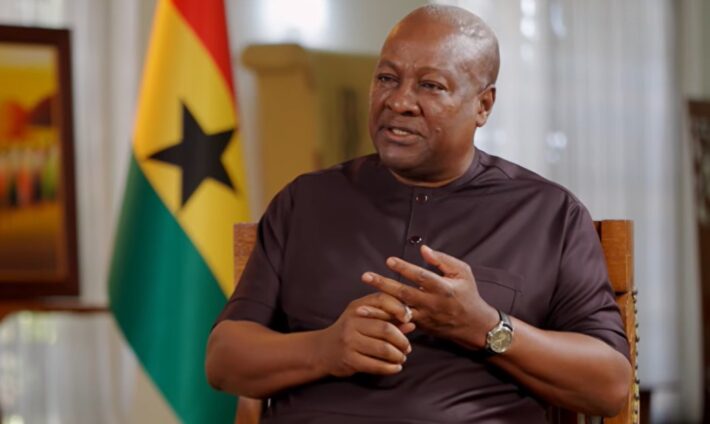
Panelists and stakeholders will present updates covering political, legal, historical, and cultural dimensions. Elaborating on the upcoming diplomatic engagement, President John Dramani Mahama stated, "As a follow-up, Ghana will host a high-level side event during the 81st UN General Assembly Session this September to receive progress reports from our established panels".
Extending a broad diplomatic invitation to his peers, the President added, "I have invited all Heads of State to join us as we continue to lead the charge for justice, restitution, and dignity for Africa and people of African descent worldwide".
Strategic Announcements in Luanda
President Mahama announced the United Nations initiative while addressing African heads of state at the 21st Extraordinary Summit of the African Union in Luanda, Angola. He used the platform to update continental leaders on the international reparations agenda, noting his recent designation as the African Union Champion for Reparations. The address outlined strategic next steps for the global campaign following recent multilateral milestones.
Outcomes of the Accra Consultative Conference
The upcoming United Nations side event builds directly upon the Next Steps Conference held in Accra in June 2026. That convening gathered African heads of state and international experts to chart a unified course for the global reparations movement.
During the Accra sessions, Ghana broadened the scope of the national and continental agenda. Officials officially incorporated indentured labour as a recognised historical injustice alongside chattel slavery.
Institutional Frameworks and Expert Panels
The Accra conference established specialised bodies to drive technical and legal work forward. These entities include a High-Level Advisory Council on Reparatory Justice, a Global Experts Panel on the Restitution of Cultural Heritage, and a Global Legal Panel on Reparatory Justice.
These specialised panels will deliver detailed findings at the September United Nations General Assembly side event. The structure aims to transition broad political advocacy into concrete, legally sound global outcomes, bridging historical accountability with contemporary international law.
Latest Stories
-
Nepal rescuers blast hillside in search of hydropower workers as families wait anxiously
9 minutes -
Teachers who pass promotional exam to get January 2026 start date after gov’t resolves promotion dispute – Apaak
12 minutes -
NSMQ 2026: St. John’s School rally from slow start to book semi-final spot
12 minutes -
Promotion pay row: Gov’t gives teachers September to complete salary adjustments
23 minutes -
Financial irregularities plummet by 62.9% as state tightens fiscal controls
24 minutes -
DVLA to expand mobile services to underserved communities in Ghana’s Eastern Corridor of the Northern Region
40 minutes -
GUTA urges GPHA to act swiftly to end Tema Port congestion to avert rising business costs
40 minutes -
Port congestion could undermine 24-hour economy policy – GUTA
41 minutes -
NSA opens three-day window to resolve national service biodata mismatches
50 minutes -
Abu Jinapor highlights increased gold exports after Domestic Gold Purchase Programme
55 minutes -
NPP UK branch calls for independent audit into gold purchasing operations and parliamentary probe
1 hour -
Zanetor Agyeman-Rawlings pledges decisive action on climate change, galamsey and environmental degradation
2 hours -
Bawumia was brainchild behind Domestic Gold Purchase Programme – Samuel Jinapor
2 hours -
Fuel prices set to go up from September 1, Petrol to sell at GHC 16.69 and Diesel, GHC 17.90 – COMAC
2 hours -
Our World Our People withdrawn due to curriculum duplication, not politics – Adutwum’s spokesperson
2 hours