

Audio By Carbonatix
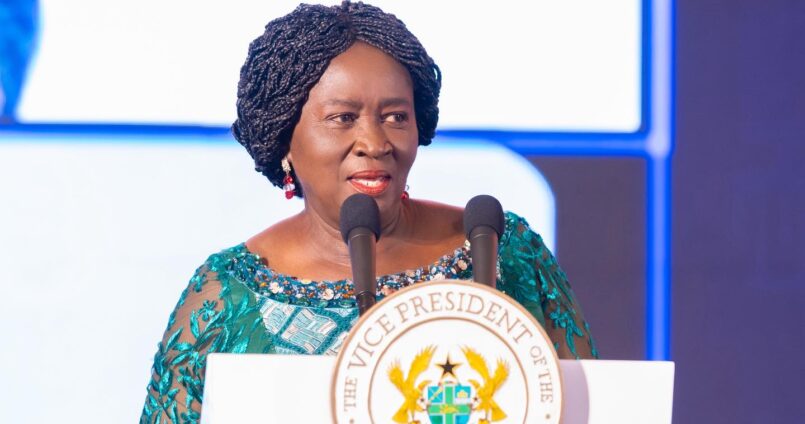
Vice President Professor Naana Jane Opoku-Agyemang says Ghana will deepen its engagement with the African diaspora as part of efforts to advance the global campaign for reparatory justice.
She says the United Nations’ recognition of the trafficking and enslavement of Africans as the “gravest crime against humanity” must now be followed by sustained action, including stronger historical, cultural and economic links between Africa and its diaspora.
“Ghana will continue to strengthen the relationship between Africa and her diaspora through historical understanding, cultural exchanges of different kinds, investments and sustained engagement,” Prof. Opoku-Agyemang said.
She was speaking at a ceremony in Accra following the adoption of UN General Assembly Resolution 82/50 on March 25.
The resolution was the product of efforts led by Ghana with support from the African Union, Caribbean partners and the wider international community.
Prof. Opoku-Agyemang said the resolution had brought greater clarity to the historical record and elevated the issue to the highest level of international deliberation.
However, she stressed that recognition must lead to responsibility.
“Recognition creates responsibility,” she said.
Her comments follow the Next Steps Consultative Conference on Reparatory Justice convened by President John Dramani Mahama in Accra in June.
The conference focused on what should follow the historic UN recognition, with discussions turning increasingly towards education, preservation, restitution, legal pathways and sustained international engagement.
Prof. Opoku-Agyemang acknowledged that the path towards reparatory justice would be complex.
“There will be differences about the form that justice should take and how responsibility should be addressed,” she said.
However, she cautioned that disagreements over the form of justice should not delay action.
“Complexity is not a good reason for inaction,” she stressed.
She said the UN resolution cannot restore the lives lost or return generations separated by the slave trade.
“A resolution cannot repair centuries of injustice. It cannot restore lives or return lost generations,” she said.
However, she said the declaration provides a shared foundation for the next stage of the reparatory justice campaign.
Prof. Opoku-Agyemang said Ghana’s engagement with the diaspora must therefore extend beyond remembrance to sustained cooperation in areas that strengthen the historical and contemporary relationship between Africa and its people abroad.
Latest Stories
-
Why Muzic Mensah walked away from gospel and embraced highlife
10 minutes -
Ayariga rallies public, private sector support for Jamestown waste evacuation
23 minutes -
NSMQ 2026: Three schools, one trophy – PRESEC, AUGUSCO and Accra Academy set for grand finale
1 hour -
Government directs TDC to comply with TMA development control authority
2 hours -
Recognition of reparatory justice creates responsibility for Ghana – Vice President
2 hours -
KNUST SHS defeats Osei Adutwum SHS to win Luv FM High School Debate
2 hours -
Afenyo-Markin, A-Plus unite to restore peace after New Winneba clashes
2 hours -
A-Plus, Afenyo-Markin to visit families affected by New Winneba violence
2 hours -
A-Plus urges calm as authorities move to end New Winneba tensions
2 hours -
Customs explains red, green channels at Accra International Airport
2 hours -
Agyeman‑Rawlings calls for stronger child protection in armed conflict
2 hours -
History made! Accra Academy book first-ever NSMQ final spot after dominant semi-final display
3 hours -
Woman’s decomposed body found in gutter near Haatso DVLA office
3 hours -
Residents of Akaa, surrounding communities demand improved network coverage
3 hours -
‘Chief Justice’s role is to administer justice, not protect any agenda’ – Haruna replies Franklin Cudjoe
3 hours