

Audio By Carbonatix
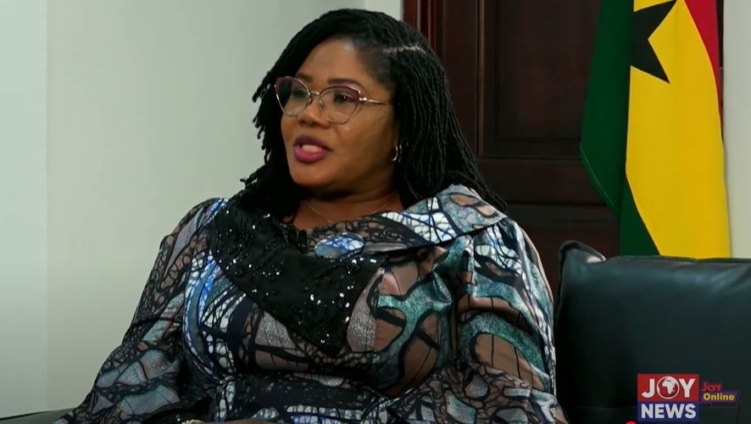
The government is working with the Attorney-General to take ownership of the proposed child marriage bill to facilitate its passage and implementation, the Minister for Gender, Children and Social Protection, Dr Agnes Naa Momo Lartey, has said.
She explained that the bill suffered a setback in the Eighth Parliament after it was introduced as a private member’s bill, with its financial implications presenting an additional challenge to its passage.
Speaking at the Government Accountability Series on Wednesday, September 16, Dr Lartey said the Attorney-General had taken steps to have the government formally own the bill to make the legislative process easier and faster.
“The bill suffered in the last Parliament, that is the Eighth Parliament. The Attorney-General took it up for government to own it. That is what we want to do,” she said.
She said the government’s involvement was necessary because of the financial implications associated with legislation introduced as a private member’s bill.
“Because of the financial implications of the bill coming as a private member’s bill, we are encouraging all the MPs who are supporting the bill to work with the AG, so that government can own it and make the process easier and faster, and therefore also getting it implemented will be better for us,” she said.
Legislation alone not enough
Dr Lartey stressed that passing the bill would not, on its own, be sufficient to eliminate child marriage.
She said the practice often occurs within homes and communities, requiring sustained engagement beyond the enactment of legislation.
“Legislation alone would not be sufficient to eliminate child marriage,” she said.
According to the Minister, the Ministry is engaging community opinion leaders, religious leaders and traditional authorities to strengthen public awareness and build support for efforts to end the practice.
She said the Ministry was also working with relevant stakeholders to support the reintegration of vulnerable persons who may not feel safe returning to their communities.
Dr Lartey said those interventions would continue alongside efforts to secure the passage and implementation of the child marriage bill.
She maintained that a combination of legislation, community engagement and support for vulnerable persons would be necessary to address the practice.
Latest Stories
-
DVLA expands nationwide operations with 29 new offices in 18 months
11 minutes -
Ningo Prampram needs jobs, not excuses
17 minutes -
Education Minister hints at possible extension for new SHS students
18 minutes -
Road deaths must no longer be accepted as inevitable – DVLA Board Chairman
28 minutes -
Book and research allowance to be paid by end of September – Education Minister to TUTAG
29 minutes -
Fuel Price Hikes: Ad hoc interventions won’t solve transport fare concerns – Energy analyst
38 minutes -
Eight children among 21 killed after war-damaged Gaza building collapses, rescuers say
42 minutes -
AFCON 2027Q: Côte d’Ivoire name squad for Black Stars and Somalia clashes
44 minutes -
GBA President Efua Ghartey calls for Constituent Assembly to deliberate on 1992 Constitution reforms
45 minutes -
Made In Africa: Prof. Douglas Boateng to address the continent’s largest supply chain and industrialisation professional gathering
48 minutes -
Rising fuel prices making it difficult for drivers to survive – GPRTU
55 minutes -
US accuses Russia of trying to kill Ukrainian allies overseas
57 minutes -
GPRTU to maintain 30% proposed fare hike despite latest fuel increase – Deputy PRO
1 hour -
Brutality against journalists is a No-No: Ghana must protect the fourth estate
1 hour -
Daily Insight for CEOs: Creating a high-performance culture
1 hour