

Audio By Carbonatix
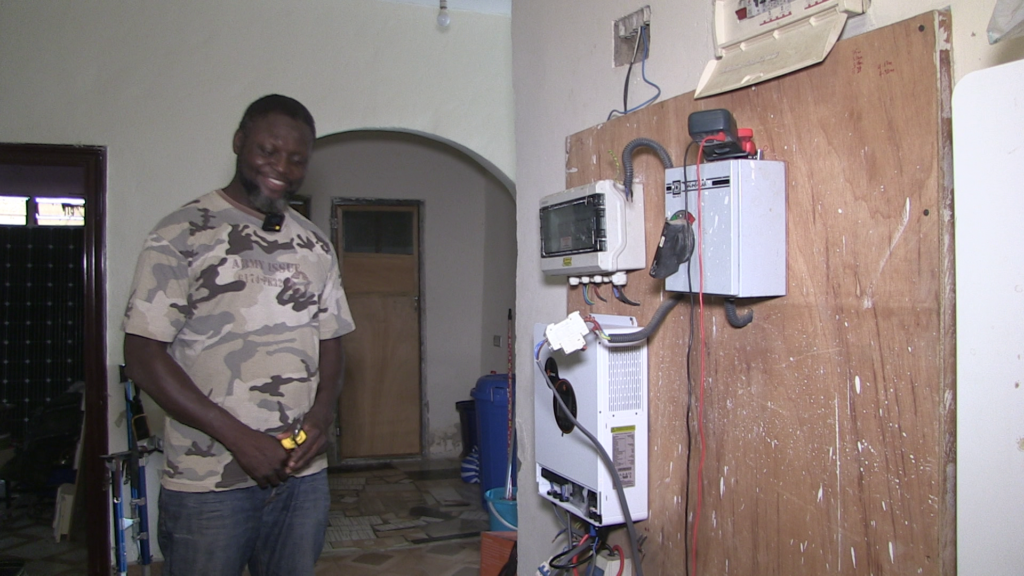
When the electricity goes off at Nazir Ali’s home in Achiase in the Ashanti Region, the house keeps running.
His solar installation powers the lights, fans, refrigerators and other appliances. The ECG connection is still active, but Nazir says he uses it mainly as a backup and relies primarily on the solar system.
He has been using solar power since 2018. Nearly eight years on, he says the decision has changed the way his household uses electricity.
“I think installing solar panels is a no-brainer,” he says.
His experience offers a glimpse into one of the questions facing Ghana as the country looks for ways to expand renewable energy, how much electricity can households generate for themselves, and what difference could that make to a power system still heavily dependent on thermal generation?
But before solar became a question of national energy policy, it was a personal decision for Nazir, one that cost him about $7,000 at a time when the technology was still expensive in Ghana.
A $7,000 decision
Nazir’s interest in solar began long before he installed panels at his current home.
While studying and undertaking practical training in Germany, he encountered charity projects in developing countries that used solar power and water pumps.
In 2003, he saw how a solar system could be combined with a borehole to provide both electricity and water.
“That was where I realised, as far back as 2003, that once you have a borehole, you can use solar power to pump the water. It means you have your own power supply and your own water source, so you do not have to depend entirely on external services,” he says.
That idea became relevant to him. When he built his current home, solar was part of the plan from the beginning.
“Everywhere I live, I would like to have this system,” he says.
He installed the system in 2018, after Ghana had experienced several years of severe electricity shortages. Nazir says solar was still relatively unfamiliar in Ghana and the equipment was considerably more expensive than it is today.
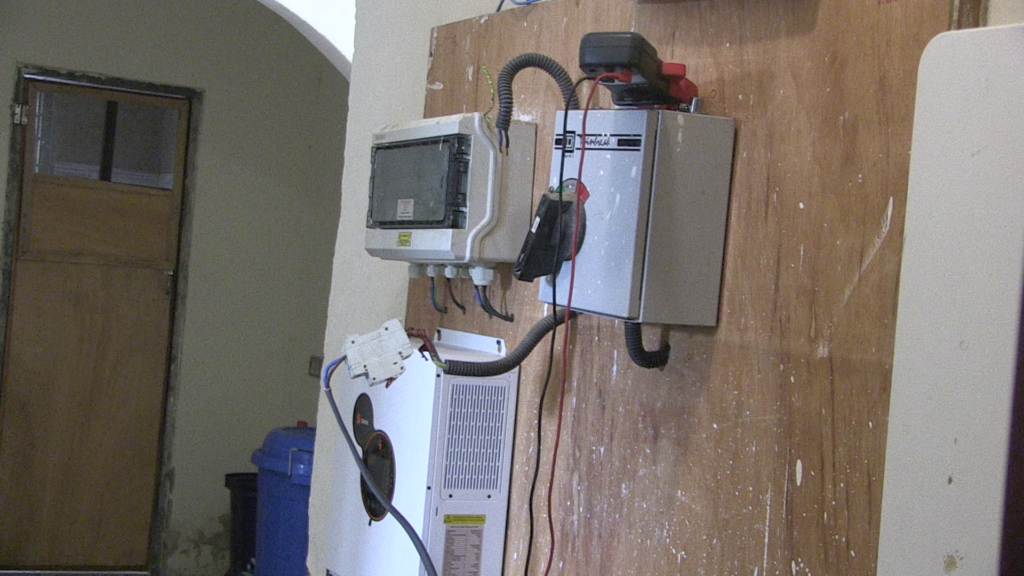
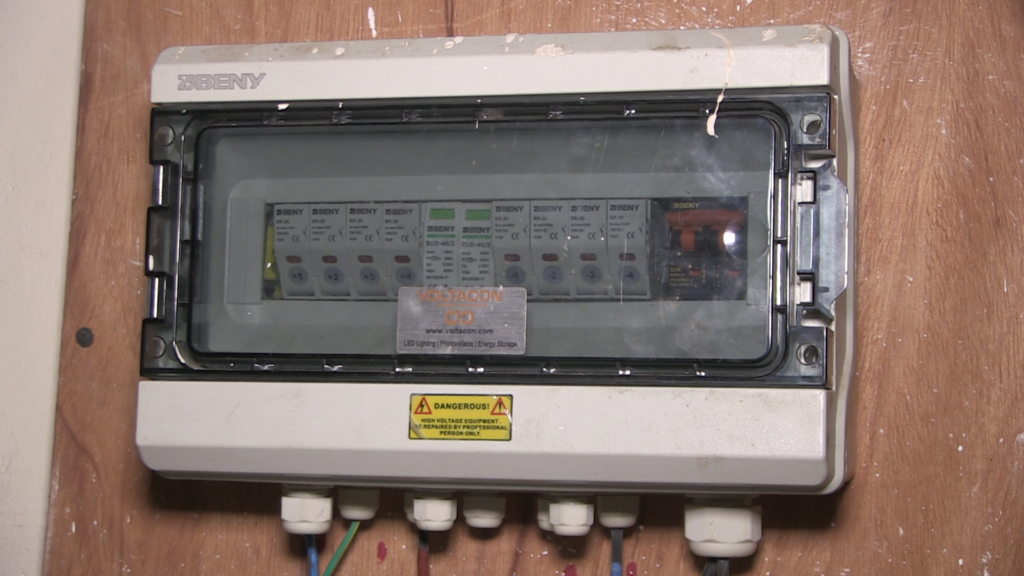
Because he installed the system himself, he estimates that the installation cost about $7,000. The amount covered the solar panels, hybrid inverter, batteries, combiner boxes, cables, safety breakers and installation. He says the components were imported.
“Solar was very expensive because Ghana did not know much about solar,” he says.
Eight years later, he believes the investment has paid off.
“I think it has been worth the investment. I have been using it for eight years, and if I calculate the amount of electricity I have consumed during that period, I believe it has paid off,” he says.
There was no earlier ECG bill to compare with the solar system because it was installed from the outset. Nazir says he has not paid ECG or another power supplier for electricity generated by the system.
“The system has saved us quite a lot,” he says.
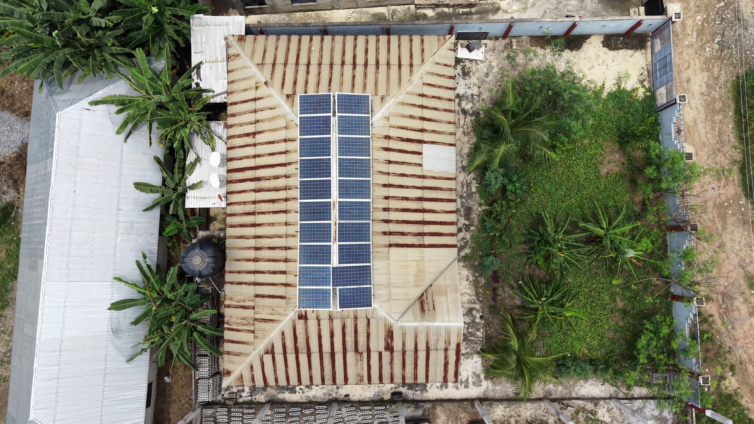
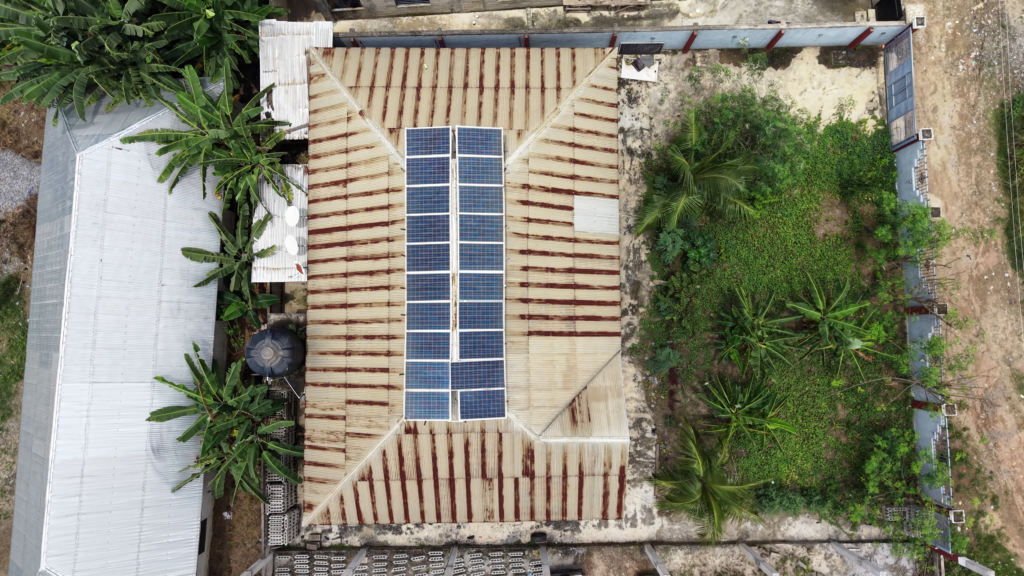
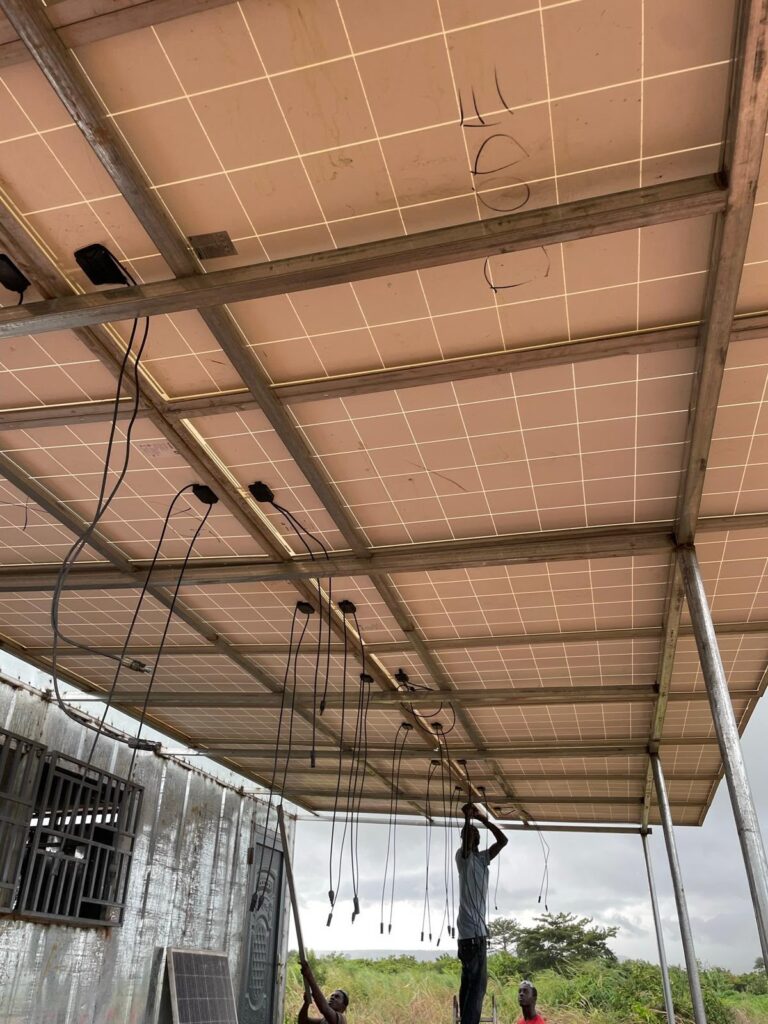
The installation is built around 20 solar panels rated at about 255 watts each, giving the array a capacity of roughly 5.1 kWp. A 10 kWh battery bank stores electricity, while a 5 kW hybrid pure-sine-wave inverter manages the system.
Nazir says it generates between 600 and 800 kWh of electricity in a typical month, averaging about 700 kWh.
That electricity powers about 40 LED downlights, around 20 other bulbs, six 50-watt floodlights, six ceiling fans and CCTV cameras. It also supplies electric stoves, a washing machine, water kettle, microwave, blender, rice cooker, an American fridge/freezer and a 1,000-litre chest freezer, among other appliances.
When there is a power outage, outdoor lights powered by the system continue to illuminate the area around the house. The borehole provides water, while neighbours also come to charge phones and other appliances.
Solar is cheaper, but still costly
The economics of solar have changed since Nazir installed his system. He says more companies have entered Ghana’s solar market and equipment is now more readily available. But the cost of a complete system can still be a barrier for households.
When he recently checked prices from solar equipment shops, he says he was quoted about GH¢1,500 for a 600-watt panel. He says larger 800-watt panels cost more.
He also found that a 16-kilowatt-hour battery was selling for about GH¢56,000 when he last checked. These are prices he says he was quoted, rather than a nationwide market average.
For households unable to afford a complete system, Nazir believes solar does not have to be an all-or-nothing investment.
A household could begin with panels, then add an inverter and battery as money becomes available. Another option is to use solar for essential appliances while leaving heavier loads on ECG.
“A 2-kilowatt or 3-kilowatt system can handle them,” he says.
His own experience with batteries has also shaped his view. The system initially used a gel battery, which lasted only about a year. He later changed to lithium iron phosphate batteries, which he describes as a game changer.
He estimates that solar panels can remain useful for about 25 to 30 years and batteries for around 10 years. Reaching those periods, he says, does not necessarily mean a component must immediately be discarded because its capacity may simply have fallen.
“The old component can still be used for other purposes, perhaps on a farm or somewhere with lower energy requirements. You can always reassign these components to other uses instead of allowing them to go to waste,” he says.
He has taken the same approach to the family’s remote farm, where solar powers a pump drawing water from a borehole. Farmers around the area also depend on that water.
“Everywhere I live, I would like to introduce solar into my life,” he says.
For Nazir, the appeal is not only the electricity it produces but the services that electricity makes possible.
The bigger energy question
Ghana’s electricity system remains heavily dependent on thermal generation. In 2025, thermal plants supplied 66.8% of the country’s electricity, compared with 32.4% from hydropower and 0.8% from other renewables, according to the Energy Commission. Thermal generation rose 23.7% year-on-year, while hydro output fell 11.5%.
For Prof Samuel Gyamfi, Director of the Regional Centre for Energy and Environmental Sustainability at the University of Energy and Natural Resources, the case for expanding renewable energy is tied to Ghana’s dependence on fossil fuels.
“We have been talking about renewable energy because, as a country, we need to change the direction of our energy use, particularly because of the amount of energy we currently obtain from fossil fuels,” he says.
Gyamfi says Ghana has considerable solar resources that could provide a significant amount of the energy needed by households.
“In short, we have a lot of energy from the sun. What we need to do is convert that resource into useful energy using energy conversion technologies such as solar PV systems,” he says.
But solar output changes with sunlight. “The major issue we have to address is that the sun does not shine all the time. Solar energy is intermittent,” he says.
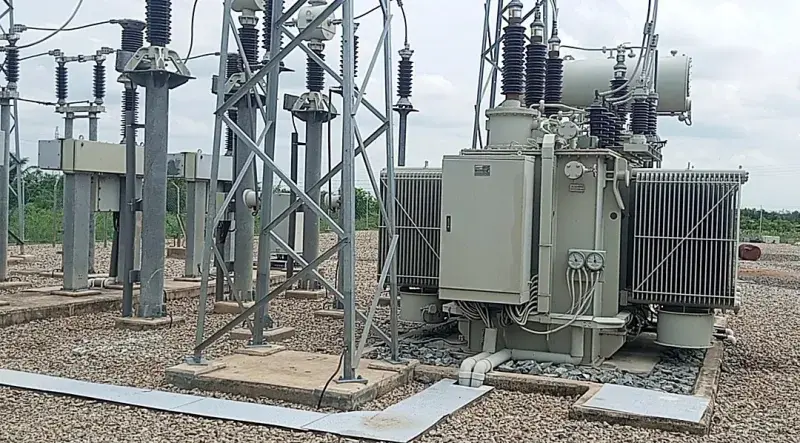
That means a larger contribution from solar would have to be supported by storage, grid upgrades and ways of managing changes in electricity supply and demand.
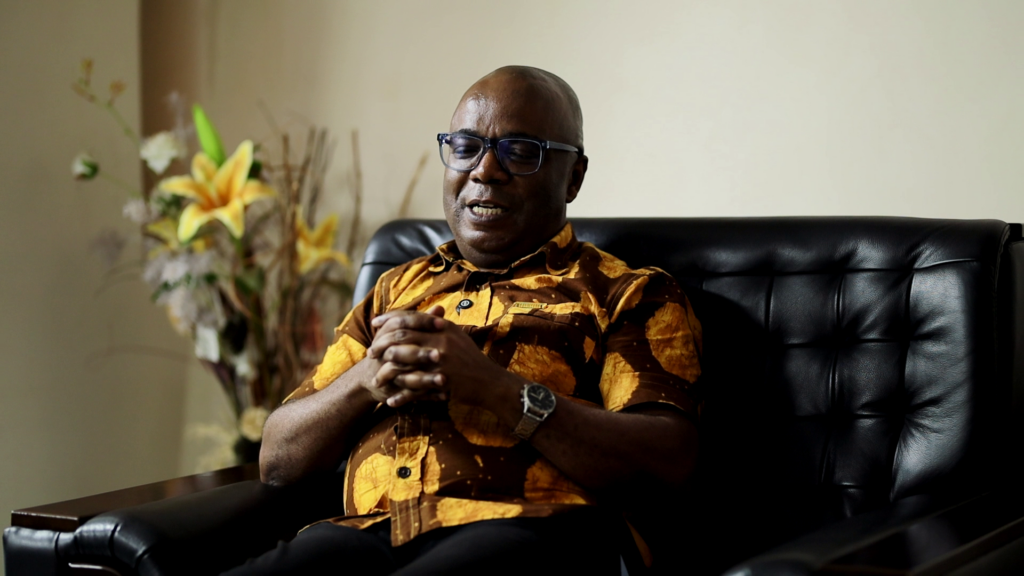
“As a country, therefore, we need to upgrade our grid infrastructure to accommodate renewable energy,” Gyamfi says.
“One way is to invest in energy-storage systems such as batteries, which can provide electricity when solar energy is not available,” he adds.
He also sees households as an important part of the equation because they account for a large share of electricity consumption.
“Close to half of electricity consumption, around 46 to 48%, is in the residential sector,” he says.
“If households are able to install their own solar PV systems, they can reduce the amount of electricity they draw from the grid. That would allow more grid capacity to be available for industrial and commercial needs,” he adds.
Household generation could also reduce the amount of electricity that needs to travel long distances through the national grid.
“If households generate their own electricity, there would be less need to transmit all the power from generation points such as Bui to places such as Sunyani or Kumasi,” Gyamfi says.
But he says utilities would also have to adapt if customers began buying less electricity from the grid.
“Utilities can cope with this. There are innovative ways of managing the changes, and utilities need to be prepared for them,” he says.
There is another potential benefit. Because household solar generation takes place close to where electricity is consumed, less power may need to be transmitted over long distances.
But greater household generation also raises questions about how electricity utilities will operate and how surplus power generated by households can be handled. This is where net metering becomes important.
Net metering and the changing role of households
Ghana has a Net Metering Code issued by the Energy Commission in 2023. Under the framework, renewable-energy customers connected to the distribution network can receive credits for electricity they supply to the grid, with those credits set against electricity they subsequently take from the distribution utility.
Prof. Gyamfi explains the principle in practical terms. “Under net metering, households install solar PV systems that are connected to the electricity grid. When they generate more electricity than they need, the excess can be fed into the national grid,” he says.
“When they need additional electricity, they can draw power from the grid,” he adds.
The mechanism is different from a feed-in tariff, where electricity supplied to the grid is paid for.
“With net metering, the system is based on balancing the electricity supplied to and taken from the grid,” Prof. Gyamfi says. “Instead, the electricity supplied is accounted for as a credit against electricity taken from the grid.”
But having a regulatory framework is not the same as having a fully operational system available to households across the country.
Prof. Gyamfi says net metering is yet to be fully implemented in Ghana. The Energy Commission’s own recent description of its nearly-zero-energy building says it plans to export surplus electricity to the national grid once net metering is fully in place.
For a household such as Nazir’s, batteries provide a way to store electricity generated during the day for use later. A fully functioning net-metering arrangement could provide another option for eligible grid-connected solar customers with surplus generation.
The broader challenge, Prof. Gyamfi says, is ensuring that Ghana’s electricity system can adapt as more households generate their own power.
The environmental cost of going solar
Solar photovoltaic systems produce no direct greenhouse-gas emissions while generating electricity, although the manufacture, transportation and disposal of panels, batteries and other equipment have environmental costs.
The environmental benefit therefore depends partly on what the solar generation replaces. Gyamfi says solar PV has a substantially lower emissions profile during electricity generation than fossil-fuel generation, even though the equipment itself has an environmental footprint.
“But during the electricity-generation phase, solar PV has much lower emissions than fossil-fuel generation,” he says.
There is another issue as installations grow, what happens to panels, batteries and other equipment at the end of their useful lives?
“Before we move further towards widespread solar PV installation, we need systems in place to deal with equipment when it reaches the end of its useful life. That is an issue we need to address as a country,” Gyamfi says.
The wider adoption of solar therefore involves investment, regulation, storage, grid upgrades, technical skills and proper management of equipment when it is no longer usable.
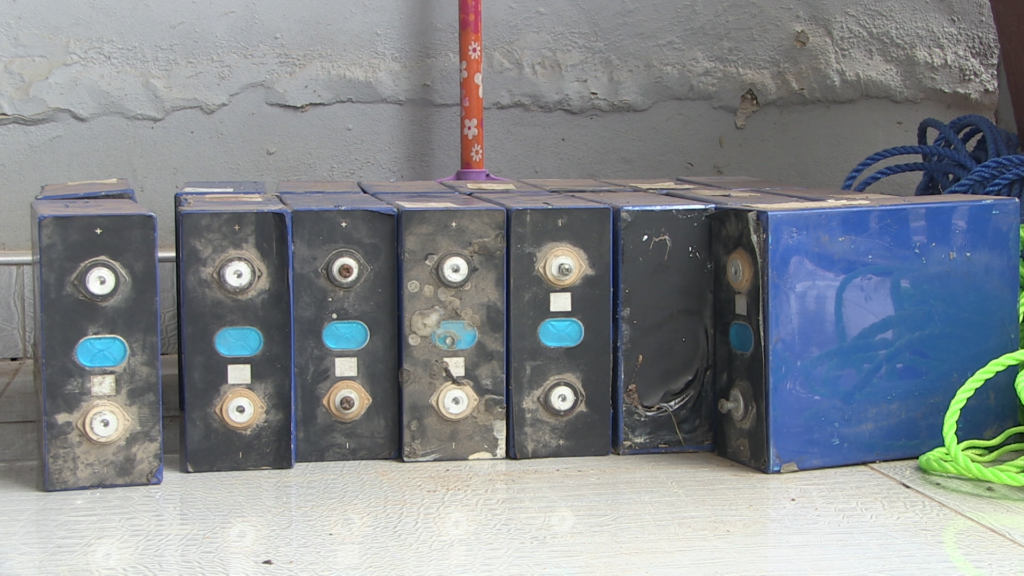
Nazir’s experience does not provide a template for every household. His initial investment was substantial, his system is larger than what many homes would require, and he installed it himself. Costs, electricity demand, sunlight, system design and storage needs differ from one home to another.
His experience does, however, point to one possible response to the problem of equipment reaching the end of its primary use.
Nazir believes older components that no longer provide their original capacity can sometimes be moved to farms or other places with lower energy requirements rather than being discarded immediately.
His home also shows what distributed solar can look like in practice, electricity generated where it is consumed, less reliance on grid supply and a system that has remained in use for almost eight years.
At his farm, the same technology serves another purpose. It powers a pump that draws water from a borehole in a remote location, with farmers around the area relying on that source.
For Nazir, that is the practical value of the investment he made eight years ago. It keeps his home running, but it also keeps water moving where the grid does not reach.
Latest Stories
-
Minority caucus demands parliamentary recall over US$1bn drug seizures linked to Ghana
2 seconds -
Bono FDA seizes 57,000 pieces of unregistered baby diapers at major markets
6 minutes -
World Cup: Kofi Adams rejects claims of visa overstays by Ghana delegates
13 minutes -
Residents and chiefs of Jema protest over detention of Techman nurse; demands her release
27 minutes -
“Sometimes it’s deliberate to allow the cedi to depreciate a little” – Governor assures of control
33 minutes -
One million tonnes of waste to be evacuated from Agbogbloshie in 90 days – Mahama
34 minutes -
UCC confers honorary doctorate on Kwesi Pratt Jnr
41 minutes -
Inheritance is not succession: REBRAND Masterclass ’26 to challenge founders on legacy
44 minutes -
Young entrepreneurs urged to use digital platforms to cut business start-up costs
45 minutes -
If GBA can’t comment on perception of partisanship, our democracy is in trouble – NPP communication member
46 minutes -
One Family, Many Farewells – At Lashibi Funeral Homes
50 minutes -
Mahama orders immediate dissolution of National Cathedral Board of Trustees
55 minutes -
CRC recommendations: Dr Asah-Asante calls for early preparation of gov’t team, rejects five-year term
56 minutes -
My support for SHS students goes beyond kindness; it’s a dream come true – Gideon Boako
60 minutes -
President Mahama declares war on filth, says “Ghana must be clean again”
1 hour