

Audio By Carbonatix
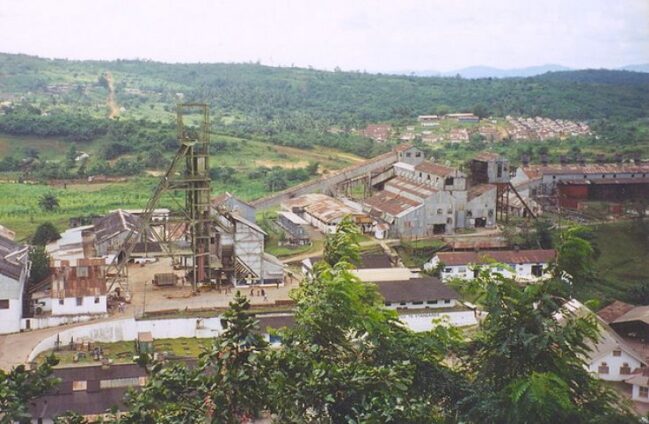
Tarkwa‑Nsuaem is sitting on a goldmine — literally. Mineral royalties are supposed to fund schools, roads, and hospitals for the district’s residents. But three years after the Mining Districts Development Scorecard (MDDS) baseline. – a tool developed by CDD‑Ghana (Centre for Democratic Development), the numbers tell a different story: budgets are up, projects are underway, but transparency and accountability remain murky. Who really benefits from Tarkwa‑Nsuaem’s wealth? Administrative data provide some answers — and a lot of questions.
Revenue: Growth on Paper, Uncertainty in Reality
Between 2023 and 2025, Tarkwa‑Nsuaem’s revenue has fluctuated. In 2023, the assembly recorded GH¢ 9.23 million, down from GH¢ 14.12 million in 2022. The 2025 budget anticipates an IGF of GH¢ 35.1 million plus GH¢ 12.6 million in grants.
On paper, these numbers suggest growth. But there’s a catch: the portion derived from mineral royalties is unclear. Administrative reports and district budgets combine all revenue streams, making it nearly impossible to see how much mining is actually contributing to development.
The MDDS baseline highlighted similar concerns. Back then, royalty inflows were inconsistently reported, and delays in transfers from the Office of the Administrator of Stool Lands (OASL) sometimes disrupted planned spending. Fast-forward to today, and while reporting systems have improved, Tarkwa‑Nsuaem’s royalty tracking still lags.
Transparency: More Accessible, But Still Partial
Tarkwa‑Nsuaem shows some progress on transparency. The 2025 Composite Budget and 2024 Annual Progress Report (APR) are publicly available. The Municipal Chief Executive (MCE) now provides regular updates on Mineral Development Fund (MDF) projects, allowing citizens to see that some funds are being spent.
Yet, the picture is only partially clear. Mineral royalties remain buried in general revenue totals, and project-level spending is rarely detailed. Without a breakdown of how much is allocated to classrooms, sanitation facilities, or roads, residents are left guessing. Transparency has improved, but it stops short of full accountability.
Development Projects: Progress with Questions
Administrative data show that Tarkwa‑Nsuaem continues to implement MDF-funded projects. Classrooms are being built, sanitation facilities upgraded, and minor roads repaired. These initiatives indicate that the district is using mineral revenues for development — the ultimate goal of mining allocations.
However, assessing efficiency is challenging. District reports provide totals but not line-item expenditures. Are projects completed on time and within budget? Are funds reaching intended beneficiaries? Without detailed records, these questions remain largely unanswered. This aligns with the MDDS baseline, which identified inconsistent project implementation as a key concern.
In short, progress exists, but the efficiency and impact of spending are difficult to measure.
Persistent Challenges in Accountability
Several challenges continue to hinder effective monitoring of mining revenue use in Tarkwa‑Nsuaem. First, district budgets do not clearly separate mineral royalties from general Internally Generated Funds (IGF), making it difficult to track exactly how mining contributes to local development.
Second, project-level transparency remains limited. While the district implements projects funded by the Mineral Development Fund (MDF), there is no comprehensive record showing how much is spent on individual initiatives. This makes it challenging to evaluate whether resources are being allocated efficiently and reaching their intended targets.
Third, delayed reporting remains a problem. Some Annual Progress Reports and financial statements are released months — sometimes years — after the fiscal period they cover. These delays further limit the ability of residents, civil society, and journalists to monitor spending in real time.
Additionally, there is a lack of open data infrastructure. Unlike some other districts that provide downloadable datasets for public use, Tarkwa‑Nsuaem has no centralized platform for tracking revenues and expenditures over time.
Finally, capacity constraints pose a challenge. Local assemblies may lack the technical expertise to fully implement reporting standards, limiting both the clarity and timeliness of financial disclosures.
Taken together, these challenges mean that while administrative reporting has improved, full accountability is still out of reach for Tarkwa‑Nsuaem.
Trends Over Three Years
Looking across the 2020–2025 period, several trends stand out. The MDDS, conducted by CDD‑Ghana, established the baseline in 2020–2022, revealing gaps in royalty tracking, project implementation, and financial transparency.
Comparing the new administrative data against this baseline shows gradual improvement in some areas, but persistent challenges remain.
Revenue mobilization has been largely stagnant; while total revenue shows growth in projections, the actual portion from mineral royalties is unclear.
Transparency has improved gradually, with budgets and reports more accessible online, but detailed breakdowns of mining revenue and project spending remain limited.
Some MDF projects continue, but without line-item reporting, it is hard to assess whether funds are optimally used. And accountability remains weak, with delayed reporting and insufficient detail limiting oversight.
The Bottom Line
Three years after the MDDS baseline, Tarkwa‑Nsuaem presents a story of incremental progress shaded by persistent uncertainty. Administrative data show that budgets and APRs are more accessible, and development projects continue to be implemented.
Yet the lack of disaggregated data on mineral royalties and project-level spending leaves residents and policymakers in the dark about how mining wealth is actually being used.
The district’s experience sends a clear message: making numbers public is not enough. For mining revenue to deliver on its promise, Tarkwa‑Nsuaem needs clear, timely, and disaggregated reporting of both income and expenditures.
Without it, residents cannot fully hold leaders accountable, and the developmental potential of Ghana’s mining wealth remains only partially realized.
Latest Stories
-
Mysterious illness leaves children struggling to walk, hear as Mafi Kope community appeals for urgent medical help
8 minutes -
Ghana begins free rabies vaccination for 25,000 pets
15 minutes -
Ghana Navy strengthens operational readiness with specialist seaman gunners training
19 minutes -
Nkrumah’s legacy must be measured by action, not ceremonies – Armah-Kofi Buah
24 minutes -
Kwesi Pratt Jnr questions Ghana-US defence cooperation agreement over sovereignty concerns
31 minutes -
Nkrumah’s legacy must drive African unity, self-reliance and environmental protection – Armah-Kofi Buah
35 minutes -
Nkrumah’s inspiration should unite Africans despite political differences – Dr Opoku Prempeh
38 minutes -
Some dissolved NSA board members could be reappointed – Kofi Adams
57 minutes -
Mahama leaves for New York to attend 81st UN General Assembly
59 minutes -
Aston Villa beat Mohammed Kudus’ Tottenham 3-1 as Spurs struggles continue
1 hour -
Auditor-General’s COVID audit omissions worrying for anti-corruption fight – CDD-Ghana
1 hour -
Bawa-Rock supports over 300 Obuasi Town Hall fire victims with GH¢1.5m package
1 hour -
Western regional security council steps into Betterland-Gwira mining dispute
1 hour -
Photos: Nkrumahfest 2026 draws dignitaries as Ghana celebrates Kwame Nkrumah’s legacy
1 hour -
Flames, smoke seen near Riyadh airport after Saudi warning of aerial attack threat
1 hour