

Audio By Carbonatix
Ghana’s food-service industry has changed significantly over the past decade. Eating outside the home, ordering meals for delivery and choosing quick-service restaurants have become increasingly common, particularly in urban areas where busy work schedules, commuting and changing lifestyles are influencing how people eat.
What was once a relatively small market dominated by a few established restaurants has developed into a more competitive sector, with local and international operators offering everything from burgers and pizza to fried chicken, rice dishes and traditional Ghanaian meals.
The growth is also changing what consumers expect from restaurants. Convenience remains important, but customers are increasingly looking for affordability, consistency, variety and accessibility.
Digital ordering and delivery have further changed the relationship between restaurants and their customers.
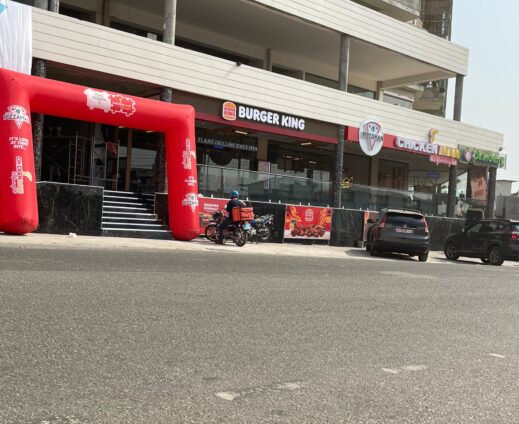
One of the Ghanaian businesses that has grown alongside this transformation is Pizzaman Chickenman.
From a Local Business to a National Presence
Pizzaman Chickenman has expanded considerably from its early operations, developing a restaurant network that extends beyond Ghana’s major commercial centres.
Its growth reflects a broader trend in Ghana’s food-service sector: the emergence of locally developed brands capable of building recognisable identities and serving consumers across different regions.
The company's menu also reflects the intersection between international fast-food culture and local tastes.
Pizza and chicken sit alongside dishes such as jollof and fried rice, allowing the brand to operate within a category that is familiar to Ghanaian consumers while retaining the characteristics of a quick-service restaurant.
That combination is becoming increasingly important in Ghana's food market, where consumers may be interested in international food formats but still want meals that reflect familiar tastes.
Competition Is Changing the Industry
The expansion of Ghana's fast-food sector has also increased competition.
International chains have brought established systems, global branding and standardised products to the market, while Ghanaian operators have developed their own approaches to pricing, menus, locations and customer engagement.
For local businesses, competing in this environment requires more than opening restaurants. They have to manage supply chains, maintain consistency across outlets, understand changing consumer preferences and find ways of incorporating technology into their operations.
Pizzaman Chickenman is one example of a Ghanaian company attempting to scale within this environment.
Its expansion, together with the introduction of digital ordering through its Chris B App, reflects the wider movement towards technology-enabled food services. Customers increasingly expect to be able to discover menus, place orders and arrange delivery without necessarily visiting a restaurant.
Fast Food and the Ghanaian Economy
The expansion of the sector is also about more than what consumers eat.
Restaurants require workers across a range of functions, including food preparation, hospitality, logistics, administration, technology and delivery. They also create demand for agricultural products, packaging, transportation and other services.
As local restaurant companies expand, their operations can therefore form part of a wider domestic value chain.
For Ghanaian businesses, building sustainable food-service companies also presents an opportunity to retain more value within the local economy. But expansion comes with its own challenges, including rising operating costs, food prices, energy expenses, rent and the difficulty of maintaining quality across a growing network of outlets.
These pressures mean that growth in the sector cannot be measured simply by the number of restaurants being opened.
The Changing Ghanaian Consumer
Perhaps the most significant development is the changing behaviour of the consumer.
For many Ghanaians, particularly in urban centres, eating habits are increasingly shaped by time, convenience and accessibility. A customer may choose between cooking at home, buying from a traditional food vendor, ordering through a delivery platform or visiting a quick-service restaurant.
Price remains an important consideration, but so are waiting times, location, portion sizes, consistency and the ability to order conveniently.
This has created space for different types of businesses to operate within the same food ecosystem.
The growth of Pizzaman Chickenman can therefore be viewed within this broader shift. Its expansion illustrates how a Ghanaian fast-food company has responded to changing consumer habits while building a recognisable national brand.
A More Competitive Future
The next phase of Ghana's fast-food industry is likely to be shaped by competition, technology and consumer behaviour.
Restaurants will have to balance affordability with rising production costs while maintaining food quality and service standards. Digital ordering, delivery and data-driven customer engagement are likely to become increasingly important, while locally adapted menus will continue to influence competition.
For Ghanaian businesses such as Pizzaman Chickenman, the challenge will be sustaining growth while maintaining the operational systems and customer relationships that made expansion possible in the first place.
The story of Ghana's fast-food industry is ultimately bigger than any single restaurant brand. It reflects changing lifestyles, evolving consumer expectations and the growing ability of Ghanaian businesses to build companies around everyday consumer needs.
Latest Stories
-
Tears in Damongo court as accused persons show alleged torture wounds while in police custody
56 seconds -
Telecel Business Runaway in Takoradi equips SMEs with practical tools for growth
6 minutes -
Education Ministry to meet teacher unions on Monday as strike begins over promotion arrears
11 minutes -
Gender Minister calls for stronger financing, accountability to improve lives of Africa’s children
15 minutes -
Shoot to maim illegal miners if ‘shoot to kill’ is opposed – Kwame Jantuah
16 minutes -
24-hour Economy Secretariat to support 2026 Inter Tourism Expo
17 minutes -
Ghana must produce more of what it imports to create jobs – Mahama
22 minutes -
New cocoa producer price looms as COCOBOD seeks funding for 2026/27 season
25 minutes -
From paddle and sail to smart ships: What maritime industry means to the world and why Ghana must turn policy into practice
26 minutes -
McDAN warns SMEs against founder-dependent growth, urges stronger systems
28 minutes -
‘Feel free to invest; golden era for Ghana is beginning’ – Ato Forson
29 minutes -
Ghana outlines plans to expand port infrastructure and strengthen maritime sector
41 minutes -
EPA shuts down Ponlok Company over smoke emissions, poor waste management
42 minutes -
Nii Armah Ashitey enters NDC National Chairmanship race
43 minutes -
Ghana prepares to reopen diplomatic mission in Ireland
48 minutes