

Audio By Carbonatix
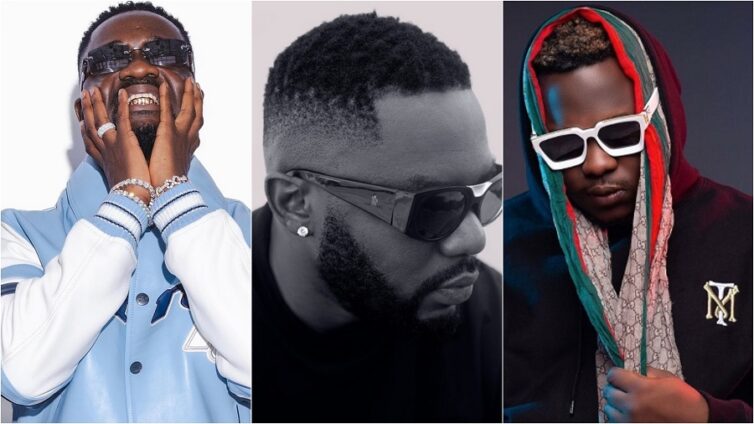
Ghanaian lawyer and lecturer, Bobby Banson, has compiled a list of Ghanaian rappers who have distinguished themselves in the Ghanaian music industry.
In an article dubbed “The Debate Over the Crown: Who is Ghana’s Greatest Rapper?”, Bobby gives his criteria for the list, citing consistency, commercial success, investment in young craft, lyrical dexterity, industry relevance and generational distinction as some of the factors.
Read the full article below:
Over the years, there has been a persistent debate about which rapper deserves to wear the crown as the greatest rapper in Ghana. It is a debate that has generated strong opinions, passionate arguments and, at times, more heat than light.
I have followed Ghanaian music closely, and the rap genre intimately, for many years. I have also had the opportunity to work closely with some of the names I will set out below. My view is that this debate cannot meaningfully be settled by simply relying on personal preference, popularity or who happens to be having the biggest moment at a particular point in time.
For an argument of this nature to have any real substance, there must be a set of criteria against which the various artistes can be assessed. While no criteria can be completely objective when dealing with art, I believe the criteria below come as close as possible to providing a reasonable and consistent framework for the discussion.
The Criteria
I have considered five principal factors:
1. Consistency/Longevity
How consistently has the artiste remained relevant and active over the course of their career? This considers not merely the length of a career, but the ability to remain creatively relevant across different periods of Ghanaian music.
2. Commercial Success
This considers the artiste’s ability to translate their music into measurable commercial success, including records, albums, streams, performances, audience reach and the ability to sustain a commercially viable career.
3. Investment in Young Craft
Greatness should not be measured solely by what an artiste achieves individually. There is also value in what they contribute to the development of the next generation. This includes mentoring, collaborations, providing opportunities and actively contributing to the growth of younger artistes.
4. Lyrical Dexterity
At the heart of rap is the craft itself. This criterion considers wordplay, delivery, storytelling, rhyme schemes, punchlines, flow, versatility and the ability to communicate ideas effectively through the art of rap.
5. Industry Relevance
This considers the artiste’s broader influence and relevance within the Ghanaian music industry, including their ability to shape conversations, influence trends, command respect from peers and audiences, and remain significant beyond individual songs or projects.
I appreciate that reasonable people may disagree with the weight assigned to each criterion. However, the important point is that the same broad criteria should be applied consistently.
Generational Distinction
I also do not think it is fair to place every Ghanaian rapper, irrespective of when they emerged, into one box and assess them as though they entered the industry under the same circumstances.
The music industry has changed dramatically across generations. The platforms available to artistes, the economics of music, the nature of promotion and distribution, the role of streaming, social media and even the definition of commercial success have all evolved.
For that reason, I have separated the artistes into two broad categories: the older generation and the younger generation.
This is not intended to suggest that one generation is inherently better than the other. Rather, it recognises that context matters when assessing artistic careers.
My Top Rap Artistes from Ghana — As of now
On the premises set out above, I set out my current list of Ghana’s leading rap artistes.
Older Generation
- Sarkodie
- Omar Sterling
- Okyeame Kwame
- Reggie Rockstone
- Obrafour
- Lord Kenya
These are artistes whose careers have, in different ways, contributed significantly to the development, evolution and commercialisation of Ghanaian rap. Their contributions cannot be assessed merely by looking at their biggest records. Their longevity, influence, craftsmanship and place within the broader history of Ghanaian hip-hop and hiplife must also be considered.
Younger Generation
- Medikal
- Kweku Smoke
- Strongman
- Lyrical Joe
The younger generation presents a different dimension of Ghanaian rap. These artistes have had to operate in an industry transformed by streaming, social media, digital distribution and a much more competitive attention economy.
Their inclusion therefore reflects not simply the music they have produced, but their ability to establish distinct identities, maintain relevance and demonstrate the technical and commercial qualities necessary to command attention in the contemporary era.
The names that could have made the list
There are, of course, several artistes who could reasonably have made either list but, for various reasons, did not make my final selection.
Those names include:
EL, Obibini, M.anifest, Kofi Kinaata, Amerado, Flowking, Chris Waddle, Tinny and Trigmatic.
Their omission should not be interpreted as an assertion that they lack the credentials or artistic merit necessary to be considered among Ghana’s important rappers. Each has made contributions worthy of consideration.
Rather, the exercise is about applying the criteria I have set out and determining who, at this particular point in time, best satisfies the totality of those criteria.
I will defer the detailed reasons for the inclusion and exclusion of each of these names for another day. That discussion deserves its own conversation.
The conversations behind the list
In putting this list together, I have also drawn heavily from conversations and discussions I have had on this subject over the past ten years with people who have been deeply involved in Ghana’s music industry.
Among those conversations, my discussions with Hammer of The Last Two have been particularly influential.
Hammer is someone whose contribution to Ghanaian music, particularly the development of hip-hop and hiplife, gives his perspective considerable weight in any conversation about the evolution of rap in Ghana. Over the years, our discussions on the craft, the artistes, the industry and what ultimately constitutes greatness have informed my thinking on this subject.
This list is therefore not simply a compilation of my favourite rappers.
It is an attempt to approach a longstanding debate with a framework that goes beyond fandom.
Ultimately, the question is not simply, “Who is your favourite rapper?”
The more interesting question is:
“When longevity, commercial success, investment in the next generation, lyrical ability and industry relevance are considered together, who has done enough to earn the crown?”
That is the debate I am interested in having.
Latest Stories
-
National Investment Quiz: Corpus Christi, Wesley Girls, advance to semi-finals
14 minutes -
Is Ghana losing the fight to protect children online?
24 minutes -
Ghana Institution of Surveyors pushes for Governing Council Bill, conference reforms
24 minutes -
Professional collaboration key to Ghana’s land, property development – Western Regional Minister
34 minutes -
UPSA holds first session of 18th Congregation.
40 minutes -
Why demand another country’s medical records? – Mahama on Ghana’s rejection of ‘humiliating’ US health compact
44 minutes -
Mentorship critical to survival and growth of MSMEs – Sinapi Aba Trust
44 minutes -
Nsawam Adoagyiri MP joins residents to oppose Agbogbloshie waste relocation to his constituency
56 minutes -
New monitoring system rolled to step up fight against child labour in Ghana
58 minutes -
Patrick Donkor
59 minutes -
GHS, Oxfam sensitise young people in Ekon on contraception, reproductive health to mark World Contraception Day
1 hour -
Let private sector drive economic transformation – Alan Kyerematen
1 hour -
GoldBod changes gold assay regime, makes XRF testing definitive from October 1
1 hour -
Ghana sees geopolitical tensions as opportunity to end dependence – Ablakwa
1 hour -
Empower community radio stations to strengthen public engagement – Former Sports Minister
1 hour