

Audio By Carbonatix
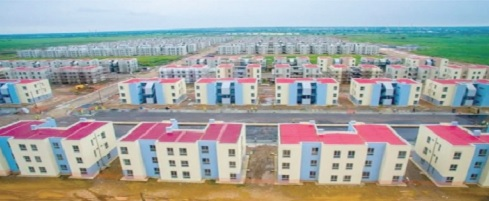
The government says only about five per cent of Ghanaians can afford to secure housing without assistance. According to the government, about 60 per cent of the population requires state-facilitated support to access decent housing, while another 30 per cent remains unable to secure housing even with government subsidies.
The figures were contained in a joint statement issued by the Ministry of Works, Housing and Water Resources and the Ministry of Local Government, Chieftaincy and Religious Affairs to mark World Habitat Day 2026.
The observance was held under the theme “Adequate Housing for All.”
The ministries said the country's housing challenge was being driven by several factors, including high land prices, rising construction and infrastructure costs, and limited access to affordable housing finance.
“These realities underscore the need for deliberate interventions to make housing more accessible and affordable to all,” the ministries stated.
As part of efforts to address the housing deficit and improve access to homeownership, the government is implementing the National Mortgage Scheme in partnership with the National Housing Fund and Republic Bank.
Under the scheme, mortgage financing is available at an interest rate of approximately 8.4 per cent per annum, with repayment periods of up to 20 years.
The ministries said the initiative was designed to support Ghanaians who have traditionally been excluded from the formal mortgage market.
They said the scheme would provide more people with an opportunity to own decent homes by improving access to relatively affordable long-term mortgage financing.
Beyond mortgage financing, the government is also implementing broader policies aimed at addressing housing and urban development challenges.
These include the National Urban Policy and Implementation Plan 2026–2035 and the National Slum Upgrading and Prevention Strategy and Implementation Plan 2026–2035.
The ministries said the policies were intended to provide a more coordinated approach to housing, urban development and the improvement of living conditions in communities.
They stressed, however, that adequate housing should not be measured simply by the number of houses constructed.
According to the ministries, decent housing must also provide access to essential services and infrastructure, including potable water, sanitation, roads, electricity, drainage and public spaces.
The government said tackling Ghana's housing challenge would require sustained investment and targeted interventions, particularly for households that cannot afford homes through conventional means.
It reiterated its commitment to expanding access to housing while improving the conditions in existing communities.
“Government remains committed to expanding access to decent, affordable and sustainable housing throughout the country,” the ministries stated.
Latest Stories
-
From despair to dance: Family of nurse Salomey Baffoe rejoices after GH¢100k bail granted
11 minutes -
Kejetia Phase III pricing talks loom as government moves to restart stalled works
48 minutes -
Nchiraa Yam festival: Two killed, 14 injured as police restore calm
55 minutes -
I draw inspiration for my songs from Reggae music – Lyrical Joe
56 minutes -
AI must not replace human judgment in public spending – BoG Governor
59 minutes -
Ghana should withdraw from 2027 AFCON – Kojo Addae Mensah
1 hour -
Team Ghana departs Accra for Angola ahead of Karting Africa Trophy
1 hour -
AIT President Prof Clement Dzidonu urges lifelong learning as AI reshapes work and education
1 hour -
FWSC to meet striking teacher unions on Tuesday
1 hour -
NPP won’t force candidates to step down – Miracles Aboagye
2 hours -
Black Stars: Building in the sinking sands
2 hours -
Low inflation on paper, high cost of living: How Presidents Mahama and Trump are facing stark economic reality
2 hours -
NPP will negotiate with popular non-politicians to secure winnable candidates – Miracles Aboagye
2 hours -
Only 5% of Ghanaians can afford housing without support – Gov’t
2 hours -
Nigeria launches rescue after military plane crashes with 32 aboard
2 hours