


Audio By Carbonatix
Through JEG Edment Farms, Ghanaian entrepreneur Erica Elikplim Dumashie is developing an agricultural enterprise that combines commercial farming, farmer development, food security and community impact.
For many rural farming communities in Ghana, the people who produce food are also among those most vulnerable to food insecurity. A poor harvest can reduce household income. Limited market access can make it difficult for farmers to earn from what they produce. When a member of a farming household becomes seriously ill, medical expenses can consume resources that would
otherwise be used for food, farm inputs, or education. For families whose livelihoods depend heavily on agriculture, one unexpected setback can affect the entire household.
It is this relationship between agricultural livelihoods, food security, economic opportunity and community wellbeing that has shaped the work of Ghanaian entrepreneur Erica Elikplim Dumashie, founder of JEG Edment Farms.
Dumashie’s journey into agriculture did not begin with a traditional farming background. She studied Political Science for both her bachelor's and master's degrees, an academic path that exposed her to questions of governance, development, inequality, institutions, and access to resources.
Those questions eventually led her toward a different kind of work. Rather than asking only why rural communities experience persistent economic and social challenges, Dumashie began asking what could be built at the community level to address them.
Could agriculture be more than a means of producing food?
Could a farm operate as a sustainable business while also creating opportunities for farmers, women and young people?
Could commercial agricultural activity help finance practical interventions that strengthen the communities surrounding it?
Those questions became the foundation for JEG Edment Farms.
From Political Science to Agriculture
Dumashie's transition into agribusiness reflects a broader understanding of food security.
Food security is not simply a question of whether food exists. It also involves whether people have the economic and physical ability to obtain adequate, safe and nutritious food consistently. For Dumashie, this distinction became important.
Food can be produced in a community while some households remain unable to afford it. A farmer can cultivate a successful crop while still lacking financial resilience to withstand illness, poor market conditions or another failed season.
She therefore began to view food insecurity not as an isolated agricultural problem, but as part of a wider system involving income, access to productive resources, markets, knowledge, health and community resilience. That perspective influenced the way she approached entrepreneurship.
Instead of establishing an agricultural operation focused solely on production and sales, she sought to create an enterprise in which commercial agriculture and community development could operate together. That vision became JEG Edment Farms.
Building JEG Edment Farms
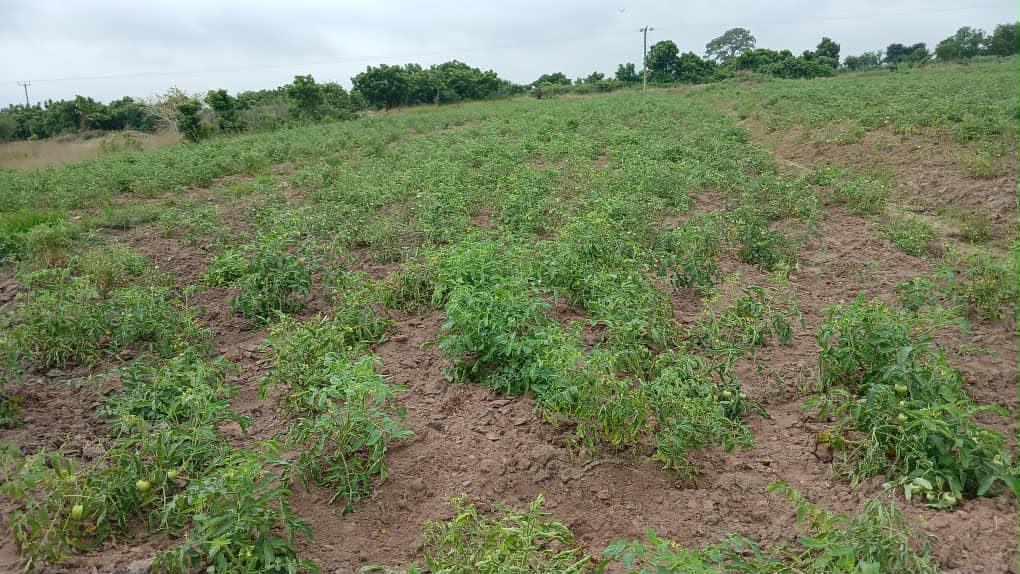
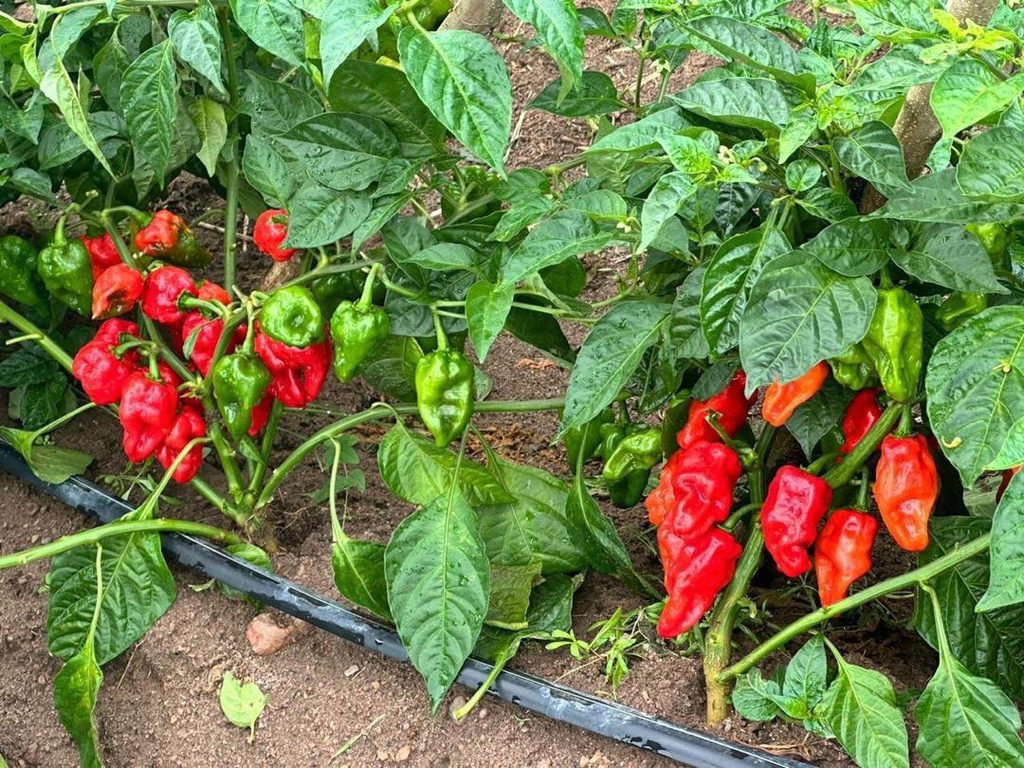
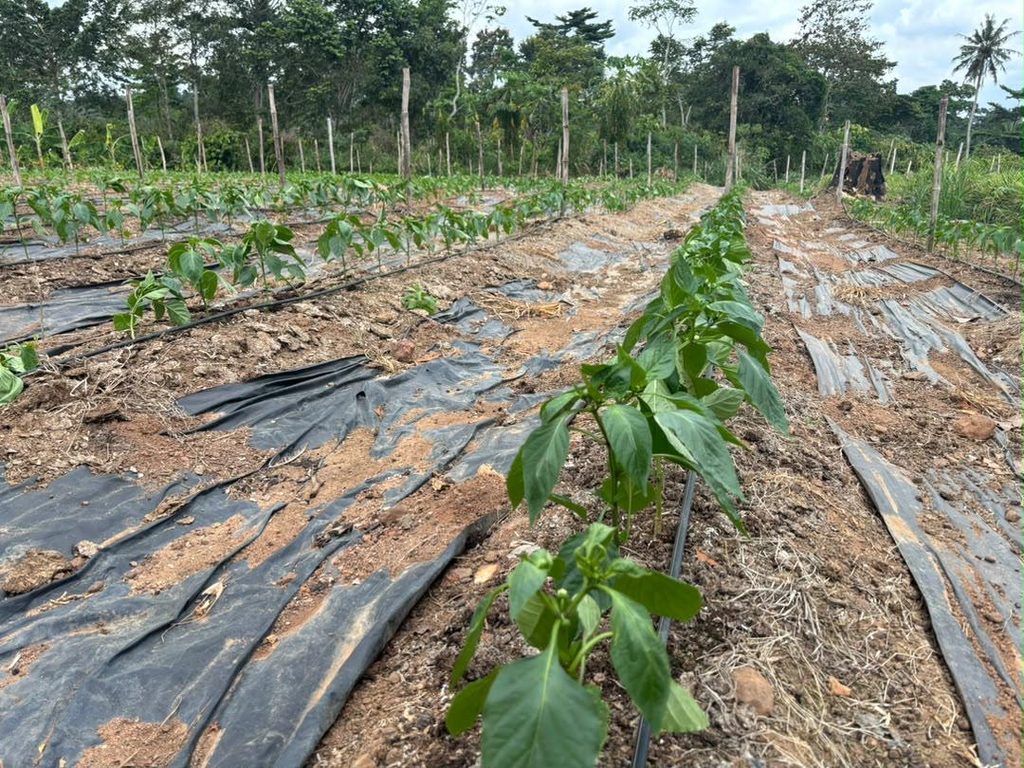
Dumashie founded JEG Edment Farms in Ghana as a social enterprise built around commercial agricultural activity and a wider community-oriented mission. The enterprise has grown into a substantial farming operation spanning more than 30 acres and producing crops including tomatoes, peppers, and okro. Its produce is supplied to local markets, households, and wholesale buyers, creating a commercial foundation for the business. The organisation has also grown into an employer, with more than 15 employees involved in its operations. For Dumashie, those developments are important because they demonstrate that social entrepreneurship must have an economic foundation. A social enterprise cannot depend entirely on donations if it is expected to create lasting change.
It must be able to produce, sell, employ people, manage resources, and adapt to market conditions.
At JEG Edment Farms, the commercial farm provides the operating foundation from which Dumashie has developed additional programs aimed at strengthening food security and agricultural livelihoods. This combination of commercial activity and social purpose is central to the enterprise she has built.
Creating a Model Around Food Security
One of Dumashie's defining ideas is that food security requires more than simply increasing agricultural output. The people producing food must themselves have the capacity to maintain productive livelihoods. That philosophy has influenced the activities developed around JEG Edment Farms.
A portion of agricultural produce is made available to vulnerable households, including people who may struggle to meet their food needs during difficult periods. The enterprise has also supported aspiring farmers through agricultural guidance, inputs, seedlings, mentorship and other forms of practical assistance. For Dumashie, these activities are not intended to create permanent dependency.
The broader objective is to move people from vulnerability toward productive participation in the agricultural economy. That distinction is central to her understanding of social entrepreneurship. Food assistance can address an immediate need. Agricultural training, productive inputs, market knowledge and entrepreneurial support can help address the underlying economic conditions that create vulnerability in the first place.
The two approaches can therefore work together.
Treating Farmers as Entrepreneurs
A significant part of Dumashie's approach is her decision to treat farmers not simply as beneficiaries of development programmes, but as entrepreneurs and economic actors. Farmers need more than technical knowledge about planting and harvesting.
They need access to markets. They need productive inputs. They need financial knowledge.
They need information that allows them to make decisions about crops, timing, costs, and potential returns.
They need opportunities to develop businesses that can survive beyond a single harvest.
JEG Edment Farms has therefore incorporated agricultural education, mentorship and practical guidance into its wider activities.
Farmers and aspiring agricultural entrepreneurs can receive guidance in areas including soil health, pest management, irrigation, farm planning and crop production. The enterprise's seedling nursery also forms part of this approach by supporting access to planting materials suited to local agricultural conditions. Dumashie has placed particular emphasis on women and young people.
Through training, farming inputs, mentorship and other forms of support, the enterprise seeks to make agriculture a more accessible entrepreneurial pathway for people who may otherwise have limited access to capital, productive resources or business opportunities.
For young people in particular, Dumashie sees agriculture as an economic opportunity rather than simply a traditional occupation.
Her goal is to demonstrate that farming can be approached as a structured business capable of generating income, employment and community value.
Linking Commercial Agriculture to Community Needs
One of the distinctive features of Dumashie's approach is her effort to reduce the separation between commercial farming and community development.
In many settings, agricultural businesses focus on production and sales while humanitarian organisations address food insecurity, and public institutions address health and social services.
Dumashie's approach seeks to connect these different dimensions. The farm remains a commercial enterprise.
At the same time, its activities are deliberately connected to the needs of farmers and rural households. This can include sharing farm produce with vulnerable households, supporting aspiring farmers with productive resources, providing agricultural knowledge and developing partnerships with community leaders, public institutions and other stakeholders.
The underlying principle is that an agricultural enterprise can have responsibilities that extend beyond its balance sheet without abandoning commercial discipline.
Dumashie describes this philosophy in simple terms:
“We cannot solve food insecurity by talking to farmers who are too sick to farm. We cannot build food systems on the labour of people who cannot afford to see a doctor. These are not two problems. They are one.”
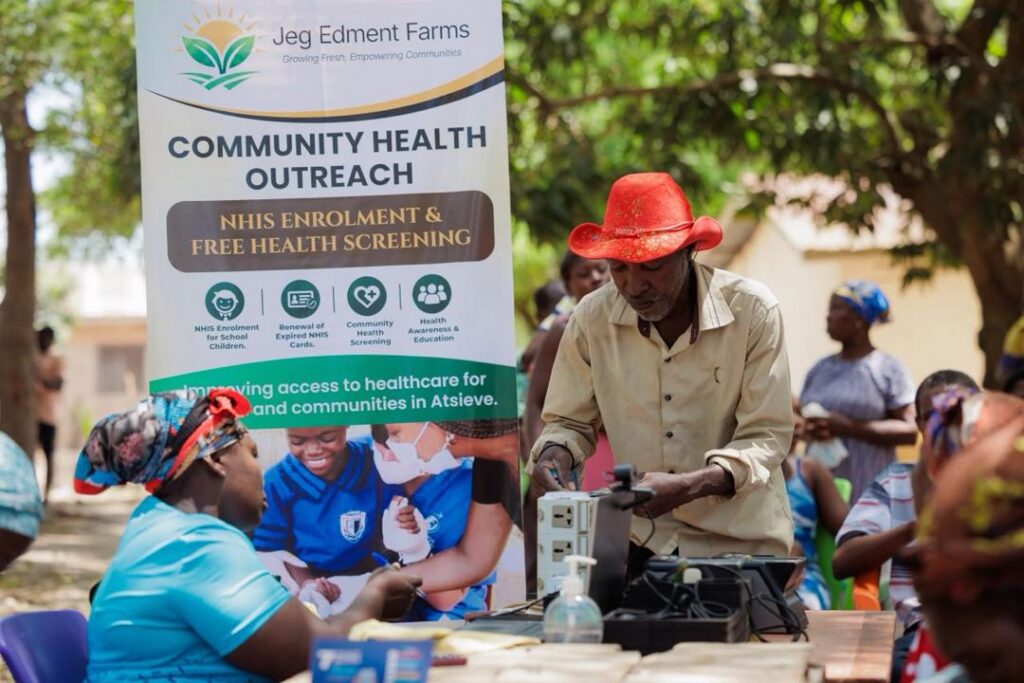
The statement reflects her broader view that agricultural productivity depends on the wellbeing and resilience of the people who produce food.
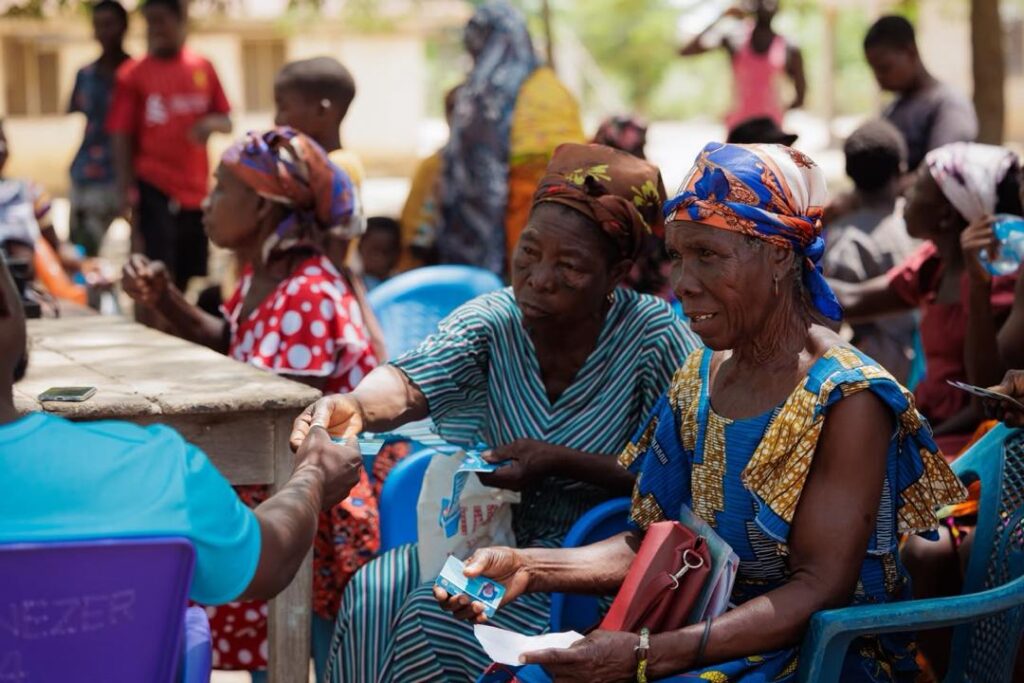
Healthcare access is one example of this interconnectedness, but it forms only one part of a wider approach that includes food access, economic opportunity, agricultural education and community development.
Turning Ideas Into an Operating System
The development of JEG Edment Farms required more than identifying a social problem. Dumashie had to build an organisation capable of operating around the solution she envisioned. As founder, she has responsibility for the strategic direction and development of the enterprise.
Her work extends across agricultural planning, business development, human resources, production, market opportunities, community programmes, partnerships and organisational growth. She has also had to develop the systems necessary to manage a growing operation.
The enterprise maintains records relating to agricultural production and its workforce, while financial and operational activities are increasingly structured around the requirements of a functioning agricultural business. That development is significant.
Dumashie's role is not limited to providing the original idea or holding a founder's title.
She has been involved in translating the concept into an operating organisation with land, employees, production activities, customers, community initiatives and external relationships. The organisational model she is developing requires commercial decisions to be considered alongside social objectives.
Production decisions affect the availability of food. Market decisions affect revenue.
Revenue affects the sustainability of community initiatives. Human-resource decisions affect the ability of the farm to operate.
Partnerships can extend the organisation's ability to reach farmers and communities. The different elements are therefore connected.
Bringing Development Thinking Into Business
Dumashie's Political Science background continues to influence her approach to agriculture. Her academic training taught her to examine how institutions, resources and opportunities are distributed. That perspective has carried into the way she approaches rural entrepreneurship. Rather than seeing farmers only as producers, she considers the systems around them. Who has access to productive resources? Who can reach markets? Who has the knowledge necessary to manage a farm as a business? What happens to a household when the primary farmer becomes ill? How can young people participate in agriculture as entrepreneurs?
How can private enterprises work with public institutions and community leaders to strengthen existing systems?
These questions have helped shape the structure of JEG Edment Farms.
The result is an enterprise operating at the intersection of agriculture, entrepreneurship and community development.
The farm is the productive engine.
The social-enterprise structure provides the mechanism for connecting that productive activity to broader community outcomes.
Sustainability Beyond One Harvest
Dumashie's approach also extends to the long-term sustainability of agricultural production. Agricultural businesses depend on land, water and other natural resources. If those resources are degraded, the economic viability of the farm eventually suffers as well.
JEG Edment Farms therefore incorporates practices related to waste management, water conservation and tree planting as part of its broader sustainability approach. For Dumashie, sustainability has both environmental and economic dimensions. A sustainable farm must protect the resources that support future production. It must also remain commercially viable enough to employ people, serve markets and continue investing in its operations. This is another reason she views social entrepreneurship differently from conventional charitable intervention. The objective is not simply to respond to a problem once.
It is to build an organisation capable of continuing to respond to that problem over time.
The Importance of Partnerships
Dumashie also recognises that no agricultural enterprise can solve rural development challenges alone. JEG Edment Farms has therefore developed relationships involving community leaders, individuals, agricultural stakeholders, buyers and other partners.
These relationships allow the organisation to connect its own resources and capabilities with systems that already exist within communities.
Her approach is influenced by the belief that sustainable development is stronger when communities, businesses and institutions can work together rather than operate in isolation. For an entrepreneur working across agriculture and social development, this requires a combination of business management, relationship building and an understanding of how institutions function.
Dumashie's academic and professional background has helped shape that approach.
Learning to Build for the Long Term
Building a social enterprise has also changed Dumashie's understanding of funding and organisational accountability.
She has learned that social-impact organisations must be able to explain not only what they intend to accomplish, but how their resources will be used, who will benefit and how progress will be measured. That has influenced the way she approaches organisational planning.
The enterprise considers its agricultural assets, human resources, operational requirements, market opportunities and community objectives when planning its activities. It also maintains documentation relating to its operations and workforce.
For Dumashie, accountability is not separate from social impact. If an organisation wants partners, customers, investors or community members to trust it, it must be able to demonstrate what it is doing.
The same principle applies to the farm itself. Production must be tracked.
Employees must be managed. Markets must be developed. Resources must be accounted for.
Community programmes must have identifiable objectives.
This emphasis on structure has accompanied the growth of JEG Edment Farms from an entrepreneurial idea into a functioning organisation.
A Different Way of Measuring Agricultural Success
For Dumashie, agricultural success cannot be reduced to the number of acres cultivated or the volume of crops harvested.
Those measurements matter.
A commercial agricultural enterprise must be productive and financially viable. But Dumashie also looks at what happens beyond the farm. Are vulnerable families able to access food?
Are young people finding productive opportunities?
Are women gaining access to agricultural resources and knowledge? Are farmers learning skills that can improve their businesses?
Are rural communities becoming more economically resilient?
Can the enterprise continue creating these outcomes without losing its commercial foundation? These questions have become part of the way she evaluates the purpose of JEG Edment Farms. The model does not treat business and social impact as competing objectives. Instead, it seeks to make commercial agriculture the engine that supports broader community outcomes.
From an Idea to an Enterprise
The significance of Dumashie's work lies in the attempt to bring several activities that are often treated separately into one functioning enterprise. Commercial farming provides the productive and economic foundation. Employment creates livelihoods.
Farmer training and agricultural inputs support productive capacity. Market relationships connect production to economic opportunity. Community food initiatives respond to immediate food insecurity. Partnerships extend the organisation's reach.
Sustainability practices protect the resources needed for future production.
Dumashie's contribution has been to conceive, organise, and lead these activities around a common social-enterprise purpose.
That requires more than identifying a problem.
It requires creating an organisation capable of acting on the problem.
It also requires making difficult decisions about land, production, people, markets, finances, partnerships and community priorities. JEG Edment Farms represents Dumashie's effort to turn that approach into a practical operating model.
Beyond the Farm: Sharing Ideas Through Research and Writing
Dumashie's work in agriculture has also extended beyond the day-to-day operation of JEG Edment Farms.
Her interest in food security and social entrepreneurship has led her to write and publish books addressing issues relevant to development practitioners, entrepreneurs and organisations working to create social impact.
Among her published works is Baby Steps to Food Security, which explores food security as a process that can be advanced through practical, incremental interventions at the household, community and broader economic levels.
She has also authored Grants Proposal Fundamentals for Businesses and Non-Profit Founders, a practical publication focused on helping entrepreneurs and nonprofit founders understand the fundamentals of developing effective funding proposals and presenting their initiatives to potential funders.
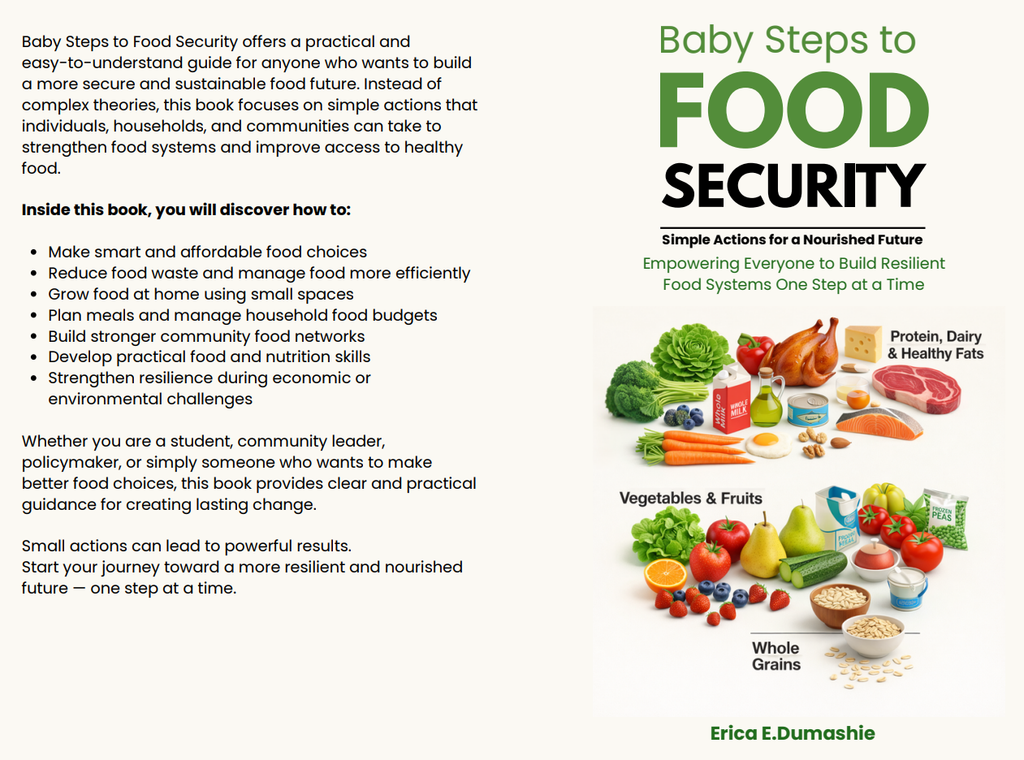
The two publications reflect complementary aspects of Dumashie's work. Her writing on food security addresses the development challenge that informs her agricultural enterprise, while her work on grant development reflects her broader interest in helping entrepreneurs and organisations turn social ideas into structured and sustainable initiatives.
For Dumashie, writing has become another way of contributing to the field.
Her work therefore extends beyond managing a farm. It includes developing practical ideas, documenting approaches to food security and social entrepreneurship, and sharing knowledge that can be applied by other entrepreneurs, development practitioners and community-focused organisations.
The Road Ahead
Dumashie does not suggest that one farm can solve Ghana's food-security challenges.
The problems facing rural communities are too interconnected and too extensive for a single enterprise to address alone.
Food insecurity, limited access to capital, inadequate infrastructure, market barriers, healthcare costs, youth unemployment and agricultural productivity are issues that require cooperation across sectors. But Dumashie believes individual enterprises can demonstrate what is possible.
Her ambition for JEG Edment Farms is to continue expanding its agricultural production, strengthening farmer support, creating employment, developing market opportunities and building community partnerships.
The long-term objective is to demonstrate that an agricultural business can remain commercially viable while also taking responsibility for the communities connected to its operations. Her journey from Political Science to agribusiness is therefore more than a career change.
It represents a transition from studying questions about institutions, inequality and development to building an enterprise through which she can address some of those questions directly.
Agriculture became the platform.
Social entrepreneurship became the mechanism. Food security became the mission.
And JEG Edment Farms became the organisation through which Dumashie is putting that vision into practice.
For her, the work is ultimately about more than growing crops. It is about building an agricultural enterprise that creates economic value, expands opportunity and contributes to stronger, more resilient rural communities.
The story is still developing, but the model is already operating: a farm designed not only to produce food, but to use agriculture as a platform for entrepreneurship, employment, food security and community development.
Latest Stories
-
Let The Constitution direct Chieftaincy to deliver “All Development Is Local”
1 hour -
John Jinapor outlines renewable energy, nuclear power priorities for 2027
2 hours -
Ghana explores centre of excellence for hearing, communication and cochlear implant care
3 hours -
Schizophrenia-related disorders lead mental health cases recorded in Ghana
3 hours -
Dutch authorities enlist Ghana in hunt for fugitive drug lord Bolle Jos
3 hours -
Ghana housing finance conference adopts communiqué to improve affordable housing access
8 hours -
Special Initiatives Minister urges Wa Technical Institute to enrol more girls as EU-backed solar training lab opens
8 hours -
In the matter of my first year at the Bar
8 hours -
ActionAid Ghana calls for an end to child marriage, greater investment in girls’ rights
8 hours -
Newsfile to tackle World Cup visa scandal, beach demolitions, education strikes, BRICS bid
9 hours -
UK-Ghana Trade & Investment Summit: Trade Resource Centre to help businesses maximise UK-Ghana trade opportunities
9 hours -
Embassy of Denmark celebrates World Maritime Day
9 hours -
Linking LEAP to productive inclusion could cut extreme poverty by 2030 – UNICEF
10 hours -
Trade Ministry backs use of creative arts to rehabilitate prison inmates
10 hours -
Negotiations with government to continue despite strike suspension – GNAT
10 hours