

Audio By Carbonatix
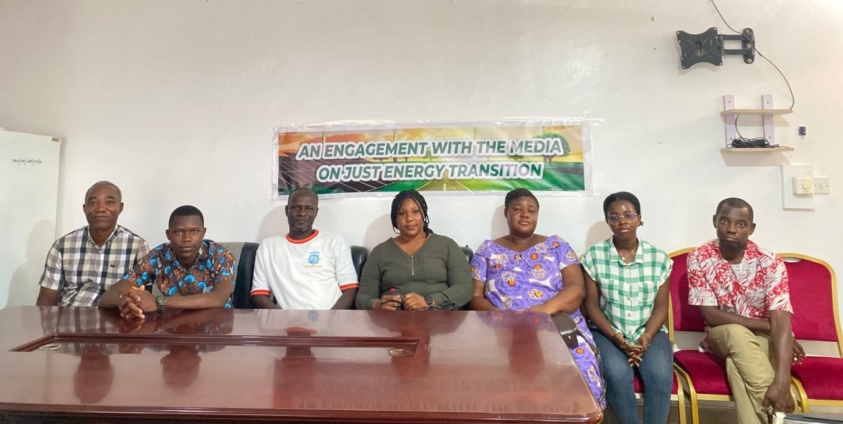
AbibiNsroma Foundation with support from Milieudefensie (FoE-Netherlands) empowered some media personnel at the Tema Metropolitan Assembly, focusing on the theme of Just Energy Transition.
This workshop aimed to equip media professionals with the knowledge and tools necessary to effectively communicate the importance of transitioning to cleaner energy sources, while also addressing the unique challenges faced by Ghana in this context.
During the engagement, it was emphasized that leadership must align with global advancements in energy and consider the social impacts of these transitions.
It was highlighted that although Africa contributes only 4% of the world's pollution, the continent suffers significantly due to a slow adaptation to new technologies and a lack of infrastructure to support them. This situation forces Ghana, which is rich in natural resources, to rely on exporting these resources, only to face exorbitant prices when they are re-imported after refinement elsewhere.
Ghana should support the decarbonization of ECAs. According to Article 2.1(c) of the Paris Agreement, financial flows must align with low greenhouse gas development pathways. Since the Agreement's signing in 2015, public financial institutions, including ECAs, have allocated about $80 billion annually to fossil fuel value chains. Ghana needs to commit to redirecting ECA financing from fossil fuels to green and renewable energy projects.
Hon. Yves Nii Noi Hanson-Nortey, the member of parliament for Tema Central constituency cautioned against rushing the transition, advocating for a gradual and cautious approach. Furthermore, he called for increased investment from the government in technology to support this transition.
Mr. Robert Tettey Kwami Amiteye, the Coordinator for AbibiNsroma Foundation, echoed these sentiments, stressing that Ghana's energy transition must be equitable and fair. He remarked on the necessity of creating awareness among the populace about the transition process, highlighting that jobs could be generated for the youth through this initiative.
He concluded by emphasizing the importance of capacity building for stakeholders to ensure that no one is left behind in this critical transition, urging that the community must be engaged and educated to facilitate a fair transition towards sustainable energy consumption.
Polluters should bear the cost of their actions, rather than using greenwashing funds. The new climate finance goal (NCQG) must not be diverted to fossil fuel investments.
Export Credit Agency (ECA) support significantly enables fossil fuel projects, despite promises from many governments to cease fossil finance abroad. This transition should encourage local participation and ownership, ensuring a just move towards sustainable energy.
Latest Stories
-
Imagination Africa, Mentors Chess Academy to host second African Genius Chess Championship at Ghud Park
1 hour -
Nana B passport claims a diversionary tactic — Abu Jinapor
2 hours -
Pope Leo diagnosed with cancer as doctors remove lobe of lung, Vatican says
2 hours -
Legal Aid Commission takes free legal services to Techiman main lorry terminal
2 hours -
Nana B denies seeking passport favour, accuses Ablakwa of failing to account for GH¢16.4m
2 hours -
Young girls demand climate action, stronger protection against child marriage
2 hours -
Ex-gang boss sentenced to 40 years for orchestrating Tupac Shakur’s murder
3 hours -
From near-deferral to three awards: UMaT graduate’s academic journey
3 hours -
Atta Akyea denies seeking presidential pardon for Wontumi in galamsey case
3 hours -
Photos: Mahama commissions 85-bed Police Hospital ward, donates two ambulances
3 hours -
GTEC directs Ghana’s public universities to reopen by October 16 and begin lectures on October 19
3 hours -
Star Oil donates GH¢1million towards construction of new CID facility
3 hours -
Court hands Adjetey Sowah, two others lifetime bans after Amputee Football legal dispute
4 hours -
NDC appoints Julius Kwame Anthony as a Deputy Communications Director
4 hours -
Ghana repatriates 120 Nigerians rescued from suspected cybercrime centres
4 hours