

Audio By Carbonatix
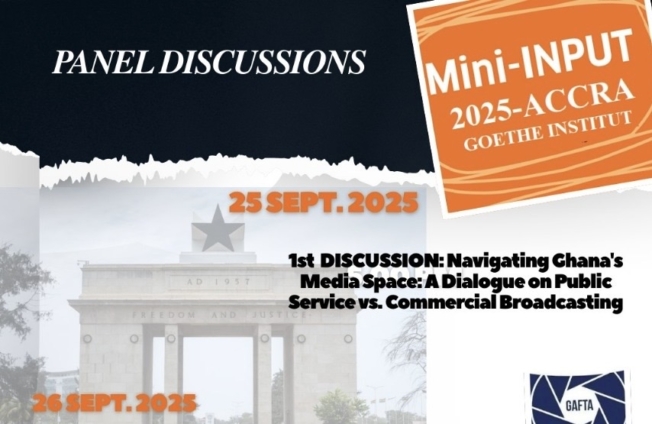
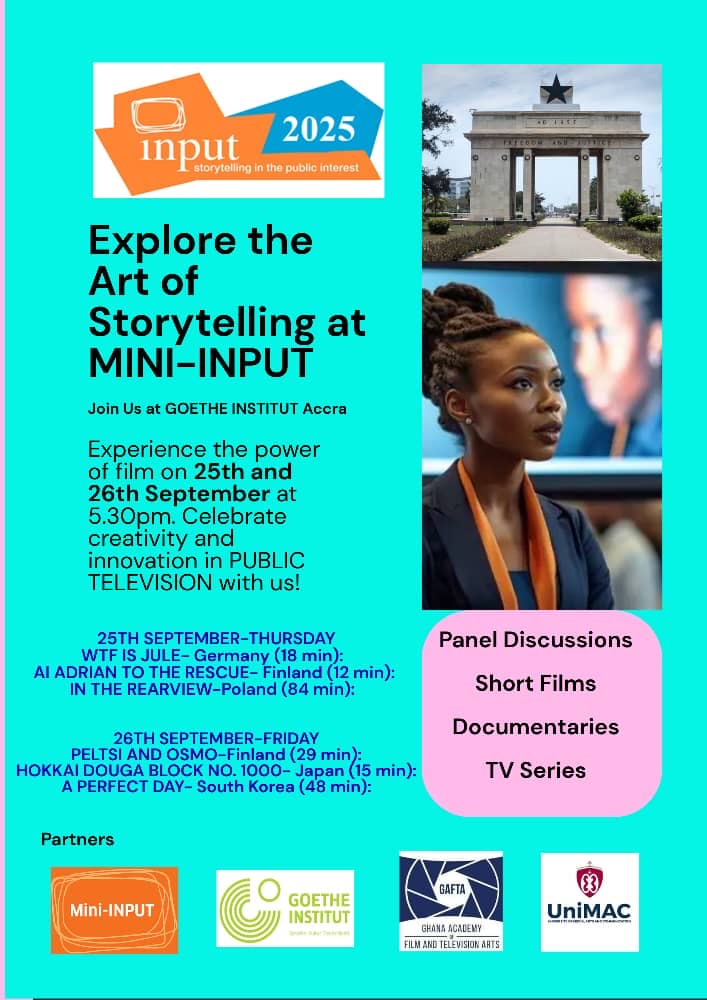
Accra will host its MINI-INPUT on 25 and 26 September 2025 at the Goethe-Institut. The two-day event will feature film screenings and discussions on the future of public service and commercial broadcasting.
MINI-INPUT, a subsidiary of the main INPUT conference, takes place after the global gathering. INPUT is held annually in different countries and showcases curated television programmes across genres including drama, documentary and factual content. Each screening is followed by moderated discussions, with workshops and panels exploring the evolving landscape of public service media.
This year’s Ghana edition will screen six films addressing global challenges in public service and commercial broadcasting. Each screening will be followed by dialogue sessions under two themes: “A Dialogue on Public Service vs. Commercial Broadcasting” on Day 1, and “The Art and Commerce of Storytelling: Content Production in Public and Private (Commercial) Television” on Day 2.
Day 1 will be led by Dr Kwame Akuffo Anoff-Ntow, an independent scholar, public intellectual and former Director-General of the Ghana Broadcasting Corporation (GBC). Day 2 will feature Mr Abdulai Awudu, General Manager of the Multimedia Group and a leading industry figure in content creation.
Other discussants include Nana Sandy Achampong, lecturer at the African University College of Communications and Business (AUCB) and a prolific writer and anthologist; Ms Aseye Tamakloe (ABD), lecturer at UNiMAC-IFT, film editor and founder of the Ndiva Women’s Film Festival; and Mr George Bosompim, GAFTA PRO and lecturer at UNiMAC-IFT. Screening sessions on both days will be moderated by Ms Tamakloe, in collaboration with Dr Jim Fara Awindor, INPUT National Coordinator.
INPUT places emphasis on public service media (PSM), advocating for television that informs, educates and engages, rather than existing solely for profit. It champions originality, ethical storytelling and programming that challenges prevailing norms, while creating opportunities for global dialogue among media professionals, producers, writers, directors, students and academics.
The conference also prioritises diversity and innovation by celebrating risk-taking and unconventional formats. It stresses ethical and responsible storytelling, often highlighting works that tackle complex issues with nuance, integrity and journalistic rigour.
Since its inception, television has been seen as a public service enterprise. However, tensions persist, particularly for state-owned broadcasters in Africa. MINI-INPUT Ghana aims to generate debate on whether public service broadcasting and its commercial counterpart remain relevant in today’s digital ecosystem and how they can adapt to changing audience expectations.
The event is held under the auspices of Goethe-Institut Ghana, the Ghana Academy of Film and Television Arts (GAFTA) and UNiMAC-IFT, long-standing partners of the INPUT initiative.
Latest Stories
-
Afoko can give NPP ‘new identity’ ahead of 2028 to overcome NDC – Political scientist, Dr Amakye-Boateng
1 minute -
2 injured amid gunshots during raid at Nawara Mining office at Nsuapemso
6 minutes -
St Augustine’s College retains 2026 National Investment Quiz title
10 minutes -
KNUST Nursing and Midwifery School staff recognised at 2026 Health Ministry Excellence Awards
18 minutes -
JoyNews’ Esther Esi Nkrumah selected for UK Media Excellence for Emerging Technology Fellowship
23 minutes -
Five NDC youth organisers in Western Region pay courtesy call on Armah-Kofi Buah
36 minutes -
NACOC demands tighter port controls to prevent Tema Harbour drug trafficking
38 minutes -
Ghana’s startup ecosystem must build sustainability into innovation – Ghana Hubs Network
49 minutes -
Friday’s beachfront demolition was carried out at Labadi Beach Hotel’s request, not for flood mitigation – Stan Dogbe
51 minutes -
LA 2028: Mukarama returns to Black Queens squad for Olympic Games qualifiers
52 minutes -
Fusaini Yakubu Abanga leads NPP National Youth Organiser race with 45% in Global InfoAnalytics poll
1 hour -
Suame Methodist JHS marks 120 years with a call for STEM innovation
1 hour -
Global fashion coalition launches in the heart of Kantamanto Market
1 hour -
‘No concrete commitments from government’ – Brong Ahafo teacher unions maintain strike
1 hour -
Finance Minister demands greater returns from NLA after GH¢10 million dividend presentation
2 hours