

Audio By Carbonatix
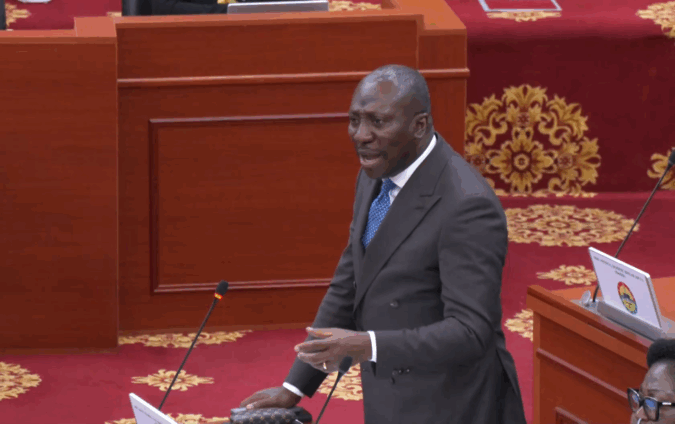
Minority Leader Alexander Afenyo-Markin has described the Value for Money Office Act, 2026, as an unnecessary bureaucratic layer that fails to address the real causes of corruption in Ghana’s public procurement system.
In a Facebook post shared on Wednesday, May 13, Mr Afenyo-Markin argued that the law, which has been promoted by the government as a major accountability reform, lacks the institutional independence needed to effectively oversee public procurement.
According to him, the structure of the board and its reporting lines place excessive control in the hands of political authorities.
“What has been presented as a reform in accountability is simply another layer of bureaucracy designed to serve political interests under the guise of transparency,” he stated.
He added that a board “dominated by partisan political appointees” could not be trusted to independently supervise procurement processes or prevent abuse of public funds.
The Minority Leader disclosed that the Minority caucus had warned Parliament during deliberations on the bill that the proposed law could worsen corruption instead of reducing it.
“At the consideration stage of the bill, I raised these concerns and cautioned the House that the law, instead of fighting corruption, risked introducing a new layer of politically supervised corruption into the procurement process,” he wrote.
He claimed that subsequent developments had vindicated the concerns raised by the Minority.
Mr Afenyo-Markin further argued that Ghana’s governance challenge is not the absence of laws but the weak enforcement of existing regulations.
He pointed to the Public Financial Management Act, the Public Procurement Act and internal audit systems already operating across state institutions as evidence that the country possesses adequate legal frameworks.
“The real challenge is enforcement. Those institutions must be strengthened, adequately resourced, and their officers held accountable for their responsibilities,” he stressed, urging the government to focus on improving existing accountability systems instead of establishing what he described as politically controlled structures.
Latest Stories
-
Sammy Gyamfi didn’t say BoG has ceded its forex role to us – GoldBod
44 minutes -
High Court sets November 4 for ruling on Wontumi’s bail application
57 minutes -
Tetteh Kwetey files nomination for NDC Greater Accra Regional Chairmanship
1 hour -
Korle Bu appeals for more doctors, nurses as A&E Centre struggles under pressure
1 hour -
AFCON 2027Q: ‘I’m optimistic Black Stars can turn things around’ – Agyemang-Badu
1 hour -
Digital innovation could widen Africa’s inequalities if people are left out – Sam Jonah
1 hour -
Galamsey is an economic, health and moral problem – Sam Jonah
1 hour -
Africa must create AI technology instead of paying to use it – Sam Jonah
1 hour -
2026 U-17 WWC: Black Maidens to face Norway, Brazil and Canada in Group C
2 hours -
Agbodza, Sam George move to curb fibre optic cable cuts during road works
2 hours -
2026 U-17 WWC: Black Maidens unveil 21-player squad for competition in Morocco
2 hours -
South Africa evacuation and the minority’s half-truth
2 hours -
‘You never know tomorrow’ – Anthony Baffoe on contesting for GFA Presidency
2 hours -
Obuasi SHTS head accused of sexually abusing students is NDC Juaben secretary seeking chairmanship
2 hours -
Cedi depreciates by 7.11% against dollar in August 2026 – BoG report
2 hours