

Audio By Carbonatix
Africa Education Watch (Eduwatch) has called for urgent parliamentary intervention to address a growing trend of truancy and school dropouts among children in northern Ghana.
He warned that betting, illegal mining (galamsey), and child labour are increasingly pulling children out of classrooms.
According to the education policy think tank, more than 3,500 children have dropped out of school in 2025 alone across five regions — Northern, Savannah, North East, Upper East and Upper West.
The call follows an extensive census conducted by Eduwatch across 20 districts in northern Ghana to generate community-based data to inform education policy and targeted interventions.
The survey revealed that boys account for the majority of out-of-school children, with particularly high numbers recorded in districts such as Chereponi, Nanumba South, Tatale Sanguli and Bawku West.
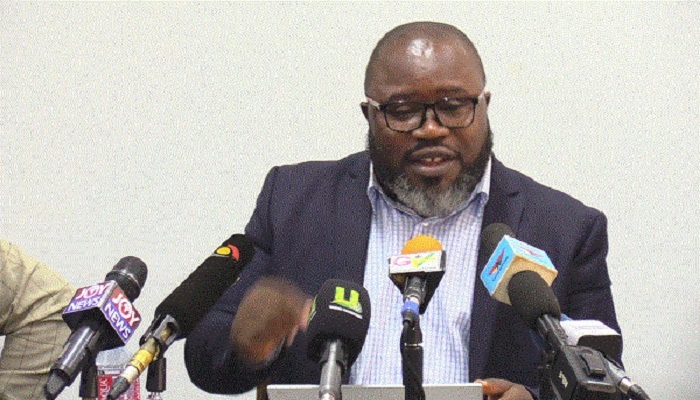
Speaking on the findings on Channel One, Executive Secretary of Africa Education Watch, Kofi Asare, said the key drivers of truancy are largely economic and disproportionately affect male children.
“The drivers are mainly economic — child labour, galamsey, betting and related activities — which are usually male-dominated,” he explained.
Mr Asare stressed that while parental responsibility remains critical, stronger state action is required to reverse the trend. He noted that in some communities, schools exist but parents fail to ensure their children attend.
“There are communities where schools are available, yet parents are not mindful of ensuring that their children are enrolled and retained in school. This is where Parliament must come in,” he said.
“We will work closely with Parliament, and we are going to have an engagement with Parliament on this census early next year,” Mr Asare added.
Referencing Article 38(2) of the 1992 Constitution, which guarantees Free Compulsory Basic Education (FCUBE), he lamented Ghana’s long-standing hesitation to fully enforce the compulsory aspect of basic education.
He dismissed arguments that enforcement should wait until all educational infrastructure gaps are closed, noting that no country achieves perfect adequacy before acting.
“No country in the world has complete adequacy in educational inputs, but it has to start from somewhere,” Mr Asare added.
Latest Stories
-
President Mahama ends Resetting Ghana tour of Ahafo Region
3 minutes -
African negotiators seek delivery of climate commitments at COP31
4 minutes -
BoG develops AI rules for financial sector
6 minutes -
‘Big Push’: Government assures contractors of prompt payments
10 minutes -
Court fines miner for breaking into gold buying shop
20 minutes -
Tarkwa court jails labourer for three years over GH¢123,000 theft
1 hour -
GAEC must retain nuclear scientists for Ghana’s nuclear ambitions – Minister
2 hours -
Man reportedly mistaken for game and shot by hunter dead in forest
2 hours -
19-year-old mason jailed 15 years for defiling seven-year-old pupil
2 hours -
Ghana’s banking sector assets rise 20.47% to GH¢500.2bn – BoG Governor
2 hours -
22 injured as Sprinter bus overturns at Sege after tyre burst
2 hours -
UN housing expert urges Ghana to strengthen Rent Control Department amid housing affordability concerns
2 hours -
Delta-BCI partnership reaches 166,000 people with breast cancer education
2 hours -
Power restoration fault suspected in Kumasi Central Market fire
7 hours -
The 7-foot giant of Ngleshie Amanfro: Seven-foot Ghanaian Ephraim Saawa dreams of joining the national basketball team
8 hours