

Audio By Carbonatix
African countries have been urged to increase domestic investment in healthcare to reduce reliance on external funding and accelerate progress towards health sovereignty and universal health coverage.
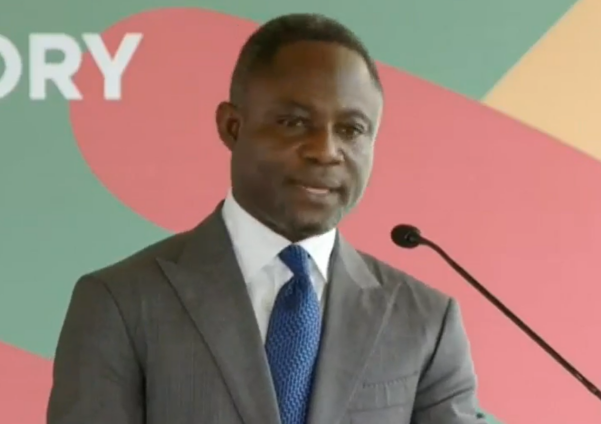
Speaking on behalf of President John Dramani Mahama at the opening of the African Union Ministerial Meeting on Health in Accra on Tuesday, July 21, Health Minister Kwabena Mintah Akandoh said the continent must take greater responsibility for financing resilient health systems capable of meeting the needs of its people.
Mr Akandoh acknowledged Africa's progress in combating infectious diseases, noting that new HIV infections have declined by nearly 60 per cent while AIDS-related deaths have fallen by more than 50 per cent across eastern and southern Africa over the past generation.
However, he said the continent still accounts for almost 70 per cent of global maternal deaths and continues to remain behind the rest of the world in access to essential health services.
He noted that Africa's Universal Health Coverage Service Coverage Index remains at 44, compared with the global average of 71, leaving millions of people without access to affordable healthcare.
"When healthcare pushes families deeper into poverty, we cannot honestly claim we have achieved universal health coverage. We have simply shifted the burden from illness to debt. This is precisely why the African Union Roadmap to 2030 and beyond is so important," he said.
The Health Minister called on African leaders to move beyond declarations and commit to concrete action by increasing domestic health financing in line with the Abuja Declaration, strengthening local production of medicines and vaccines, harmonising regulatory systems and building resilient supply chains.
"First, we must finance our own health. The vision of the Abuja Declaration remains as relevant today as it was when it was first endorsed in 2001. Africa's health systems must increasingly be financed by Africa's own resources, predictable, sustainable and domestically generated," Mr Akandoh stated.
He added that Africa must also reduce its dependence on imported health technologies by investing in local pharmaceutical manufacturing and vaccine production to improve preparedness for future health emergencies.
Recommendations from the ministerial meeting are expected to inform deliberations by African Heads of State as the continent advances its roadmap towards achieving Health Sovereignty by 2030 and beyond.
Latest Stories
-
Power restoration fault suspected in Kumasi Central Market fire
4 hours -
The 7-foot giant of Ngleshie Amanfro: Seven-foot Ghanaian Ephraim Saawa dreams of joining the national basketball team
4 hours -
Government promises support for Kumasi Central Market fire victims
4 hours -
Vibes The Movie: Big Ghun’s Ghanaian film earns five nominations at 2026 REFFA
5 hours -
MamaCare CEO warns unresolved conflicts among health workers could undermine maternal and neonatal care
5 hours -
Health professionals urged to translate medical knowledge into practice to save mothers
5 hours -
Conflicts among care providers linked to maternal, neonatal deaths – Expert
7 hours -
GIS marks 10th TIME conference, champions improved teaching practices
7 hours -
BRICS Or Balance? What Ghana’s bid really means
7 hours -
GPRTU wants full TRAFFITECH-GH implementation to start in 2027
8 hours -
Mahama announces plans to import electric wheelchairs for PWDs
8 hours -
KGL U17 Colts 2026: Western beat Prempeh Elite Academy to set up final final with Greater Accra Region
8 hours -
Late Solanke strike salvages 10-man Spurs draw at Man United
8 hours -
Gender Ministry to monitor welfare of Nana Akua Addo’s children amid domestic violence case
8 hours -
Benedict Okyere Yeboah: Ghana’s football problem goes beyond sacking a coach
9 hours