

Audio By Carbonatix
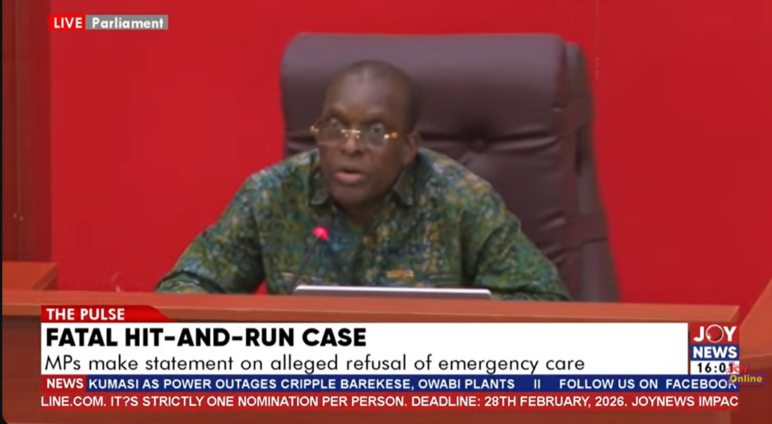
Speaker of Parliament Alban Bagbin has called for urgent investigations and fresh legislation to address Ghana’s recurring “no bed syndrome,” describing recent hospital-related deaths as “needless” and unacceptable.
Speaking during proceedings in Parliament, Mr Bagbin said the House must hold responsible persons accountable and prioritise the passage of an emergency care law to prevent avoidable fatalities.
“We need to enquire further into the matter, and we need to hold people accountable. This is one of the needless deaths we have experienced in this country,” he said. “We need to pass an emergency care law.”
His comments come on the back of renewed national debate over the “no bed syndrome” — a situation where patients in critical condition are turned away from health facilities due to a lack of space, equipment, or personnel.
The discussion was reignited following the recent death of 29-year-old engineer Charles Amissah, who reportedly died after being referred from one hospital to another in Accra without receiving timely care. His case has triggered public outrage and calls for reforms in emergency healthcare delivery.
Mr Bagbin acknowledged the difficult working conditions of health workers but stressed that professionalism and compassion must not be compromised.
“I know the conditions under which health personnel operate. But I also know health personnel have handled accident cases and stabilised patients even in the bush,” he said. “Patriotic health workers have done that, and people have survived.”
He argued that poor attitudes and systemic failures within some health facilities were contributing to preventable deaths.
“When you see the same people working outside, their attitude is different. It means something is wrong here,” he added.
The Speaker also expressed support for calls by Majority Leader Mahama Ayariga for Parliament to take leadership in addressing the crisis.
“That is why I partly agree with the Majority Leader that we should set the agenda as political leaders,” Mr Bagbin said.
In recent weeks, medical professionals and emergency service officials have also raised concerns about weaknesses in Ghana’s referral and emergency response systems.
The Ghana Medical Association and the Ghana National Ambulance Service have cited poor coordination, ageing ambulances, and limited funding as major challenges.
Latest Stories
-
Be careful with cross-border lending, foreign currency exposures – BoG to financial institutions
2 hours -
GPL 2026/27: Medeama go three clear as Hearts of Oak recover and Bechem stage stunning comeback
2 hours -
Ntiamoah Foundation launches “BEYOND 20” anniversary campaign
3 hours -
Credit Risk Management Directive: BoG to begin implementation for banks, others from July 1, 2027
3 hours -
Ghana Brands Awards 2026: Leading brands, business trailblazers to shine on November 20
3 hours -
T-bills auction: Demand improves as government exceeds target by about 76%; interest rates soften
3 hours -
Ziope undertakes initiative to build a technologically inclined community, commissions self-help ICT lab
4 hours -
ECG announces power outage in parts of Tema, Central Region due to network fault, maintenance
4 hours -
When the Gospel Becomes a Weapon: The church, blackmail and the abuse of faith
4 hours -
JoyNews’ Jacqueline Ansomah Yeboah selected for UK Media Excellence for Emerging Technologies Fellowship
5 hours -
Mental Health Alliance urges government to operationalise Mental Health Fund
5 hours -
Ghana–Holy See agreement heads to Parliament after Cabinet approval
5 hours -
Luv FM Corporate Games 2026: Kumasi Central Prisons, Amanfiman Bank win big amid fun
5 hours -
WAFU B U17: Ghana top Group A after win over Togo
6 hours -
Ho Central Mosque reopens amid unresolved leadership dispute that led to closure
7 hours