

Audio By Carbonatix
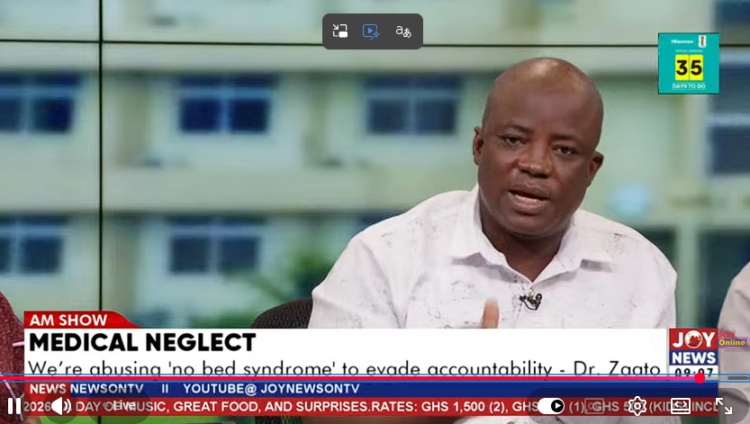
A political scientist at the University of Ghana Dr Joshua Zaato, has criticised the increasing use of the term “No Bed Syndrome” in Ghana’s healthcare sector, describing it as a convenient excuse being used by policymakers and health professionals to avoid responsibility for failures within the system.
Speaking on JoyNews’ AM Show on 7th May, Dr Zaato said the phrase “No Bed Syndrome” has gradually evolved from describing a genuine emergency healthcare crisis into what he called a blanket explanation for incompetence and inefficiency.
“This ‘No Bed Syndrome’ has now become a one-size-fits-all description of all the incompetence and weaknesses in our public health sector,” he stated.
According to him, the term is now frequently invoked whenever mistakes occur, allowing public officials and healthcare professionals to escape scrutiny and accountability.
“If you are a policymaker and you get it wrong, your easiest ticket out of it is to say ‘No Bed Syndrome’. If you are a professional and you get it wrong, the easiest way to get out of it is to say the same thing,” he argued.
Dr Zaato maintained that the phrase has become “a catchphrase and a master key” used to shield individuals from taking responsibility for lapses in healthcare delivery.
“Everybody is exploiting that phrase, ‘No bed, no bed, no bed’ to avoid being held accountable professionally or to avoid answerability,” he stressed.
He also questioned the credibility of investigative committees that fail to directly engage healthcare professionals who were present at the scene of incidents under review.
“If you set up a committee to investigate professional conduct involving a human life and you do not see it necessary to speak to the men and women who were supposed to have handled the situation at the scene, then that committee did a shoddy job,” he said.
Dr Zaato insisted that transparency and fairness remain essential in ensuring public confidence in such investigations.
Latest Stories
-
New York Times executive fatally shot allegedly by elderly in-laws
1 hour -
Teacher Payment Crisis: GES races to protect academic calendar
1 hour -
US prosecutors reopen case of alleged gang rape at Cornell University
2 hours -
Journalist to be crowned king in Uganda after bitter succession dispute
2 hours -
OpenAI scraps rollout of new model over safety concerns
2 hours -
Nigerian attempts to break world record by dancing non-stop for seven days
2 hours -
GES urges government agencies to end blame game over teacher payments
4 hours -
GES sets Oct. 5 deadline to resolve teachers’ payment dispute
4 hours -
GES working around the clock to get teachers back to class, says Daniel Fenyi
5 hours -
French PM warns against escalation of school protests after 164 arrested
5 hours -
UK tries to stop Trump’s diesel export ban
5 hours -
Late Olise goal gives France win over Belgium
5 hours -
Mancini enjoys first win since return as Italy boss
6 hours -
Interest payments to average a high 20% of government revenue over next 4 years
6 hours -
Anthropic warns AI may pose ‘existential risks to humanity’ in IPO filing
6 hours