

Audio By Carbonatix
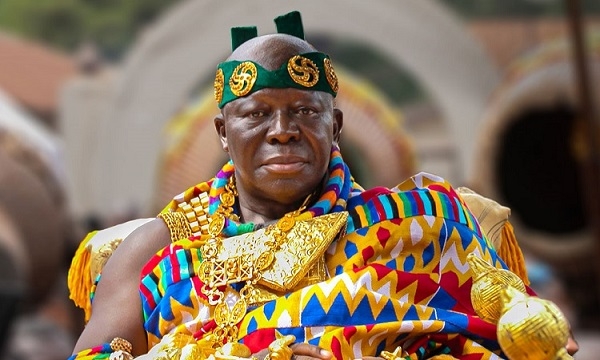
Otumfuo Osei Tutu II, the Asantehene, has called for strategic diversification of Ghana’s economy, noting that cocoa alone can no longer shoulder the country’s economic ambitions.
According to the Asantehene, cocoa has long been the backbone of Ghana’s economy, symbolising discipline, sacrifice, and resilience.
“It has educated our children, built our communities, sustained rural livelihoods, and earned Ghana global recognition as a dependable agricultural producer,” he said in a speech read on his behalf by the Nkoranza Manhene, Nana Kwame Baffoe IV, at the 2026 Ghana Tree Crops Investment Summit and Exhibition.
However, Otumfuo Osei Tutu II warned that cocoa faces growing threats, including pollution from illegal mining, climate change altering rainfall patterns, shorter growing seasons, and rising pest and disease pressures. These challenges have contributed to declining yields in several cocoa-growing areas over the past decade.
He commended the government’s efforts to diversify the tree crop sector, emphasising cashew, coconut, oil palm, rubber, mango, and shea as potential drivers of growth.
“This vision is not speculative. It is firmly grounded in economic logic, ecological necessity and global market demand. As such, it deserves sustained attention and full national support and investment,” the Asantehene said.
Noting that cocoa currently generates approximately two billion dollars annually, he said it was realistic to expect that six major tree crops could collectively generate 12 billion dollars or more for Ghana in the future.
“The combined strength of Ghana’s diverse tree crops can become a powerful engine of sustainable growth. This journey will, however, require patience, long-term capital, discipline and effective coordination. Tree crops are far more than commercial commodities,” he said.
He stressed that tree crops offer enduring environmental benefits, rehabilitating degraded landscapes, stabilising soil, and protecting watersheds. As custodians of over 80 per cent of Ghana’s land, traditional rulers, he said, have a responsibility to ensure quality land stewardship.
“So, I therefore issue a clarion call to all traditional authorities across Ghana. Let us deliberately make land available for large-scale, responsible tree crop development,” he urged.
The summit, themed “Sustainable Growth through Tree Crops Investment: Resetting and Building Ghana’s Green Economy,” was organised by the Tree Crop Development Authority in partnership with the World Bank and other organisations. President John Dramani Mahama and several ministers of state attended the event.
Latest Stories
-
Muntaka vows not to compromise in prosecuting drug suspects despite political pressure
37 minutes -
Cannabis traffickers using ambulances and bullion vans – Interior Minister
42 minutes -
Over 90% of people displaced by Savannah conflict back home – Muntaka
48 minutes -
LA28: Desmond Ofei invites 32 Black Meteors players for Libya clash
58 minutes -
ECG to undertake maintenance work in parts of Accra from October 12 to 16
1 hour -
Ablakwa: Ghana’s Embassies, High Commissions to support World Assemblies of God Congress
1 hour -
Joyce Bawah Mogtari cites infrastructure, healthcare reforms as evidence of Mahama’s development agenda
1 hour -
Ghana had no single gadget to detect narcotics when we took office – Muntaka
1 hour -
GES to consult stakeholders on academic calendar adjustments
1 hour -
Mahama reaffirms commitment to equitable development across Ghana
1 hour -
Youth employment must remain central to Ghana’s economic reset – Joyce Bawah Mogtari
1 hour -
Ethnic conflicts, land disputes and illicit drugs remain major security concerns – Muntaka
2 hours -
Mahama Ayariga visits Kumasi Central Market fire scene to assess damage
2 hours -
Ghana has 48 legitimate entry points but over 300 illegal crossing points – Interior Minister
2 hours -
Ghana is much safer now than in 2025 – Muntaka
2 hours