

Audio By Carbonatix
The Africa Sustainable Energy Centre (ASEC) has raised serious concerns about Ghana’s 2026 Budget, warning that despite the country’s recent macroeconomic progress, the energy sector remains burdened by long-standing structural weaknesses that threaten fiscal stability.
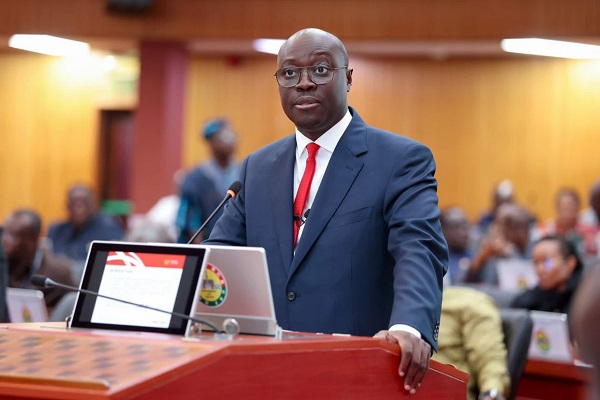
The concerns follow ASEC’s detailed review of the Budget Statement and Economic Policy presented to Parliament by the Minister for Finance, Dr. Cassiel Ato Forson, on November 13, 2025.
The budget, presented under the theme “Resetting for Growth, Jobs, and Economic Transformation,” has been widely praised for achieving significant economic stabilisation.
According to the government, public debt has declined sharply, the cedi has appreciated by nearly 35 per cent, and the country has recorded a primary balance surplus of 1.6 per cent of GDP. Debt renegotiations have also saved the state more than US$250 million, while stronger enforcement of the Cash Waterfall Mechanism has increased the Electricity Company of Ghana’s monthly revenue from GH¢900 million to GH¢1.7 billion.
However, ASEC cautions that these gains are resting on “a fragile foundation,” arguing that the 2026 budget does not adequately tackle the deep-rooted inefficiencies undermining Ghana’s power sector.
The Centre noted that the GH¢20 billion allocated to the sector—GH¢15.2 billion for energy sector shortfall payments and GH¢4.8 billion for legacy Independent Power Producer (IPP) debt, lacks clear, performance-based accountability measures.
It warned that without linking these funds to measurable targets for reducing technical and commercial losses, the allocation risks becoming an annual bailout rather than a driver of sector reform.
ASEC also criticised the government’s proposal to revise the investment policy of the Ghana Petroleum Funds to allow domestic investment in commercial state-owned energy projects.
The think tank argued that the Funds, held in foreign currency, serve as crucial buffers against commodity and exchange rate volatility. Diverting them into the local energy sector, it says, exposes Ghana to unnecessary fiscal risk and undermines the purpose of the sovereign wealth framework.
Another major concern is the government’s plan to begin constructing a 1,200MW state-owned thermal plant in 2026.
ASEC warns that this approach could repeat past mistakes that saddled the nation with over US$1.4 billion in excess capacity payments.
According to the organisation, Ghana must reduce distribution losses and improve power evacuation capacity before expanding generation, or risk worsening its financial obligations without addressing the root causes of the sector’s inefficiencies.
ASEC further highlighted the underutilisation of petroleum revenues allocated through the Annual Budget Funding Amount (ABFA). As of September 2025, only 0.43 percent of the US$290 million available had been spent. The organisation argues that this execution gap weakens investor confidence, delays progress under the government’s GH¢30 billion Big Push Programme, and limits the country’s ability to convert revenue into tangible development outcomes.
To prevent the energy sector from derailing Ghana’s economic progress, ASEC recommends tying the GH¢15.2 billion allocation for shortfalls to specific quarterly loss-reduction targets for ECG, accelerating private-sector participation reforms, protecting the mandate of the Ghana Petroleum Funds, and commissioning an independent capacity needs assessment before proceeding with the proposed thermal plant.
The statement, signed by Dr. Elvis Twumasi, Director of Research and Innovation, urged the government to act quickly to address these vulnerabilities in order to safeguard the gains Ghana has made and ensure long-term sustainability of the energy sector.
Latest Stories
-
Ghana is 5th largest crypto market in sub-Saharan Africa; annual transactions around $21bn
7 seconds -
Russia launches largest attack on Ukraine energy infrastructure since spring
26 seconds -
GHABA launches first national Hair and Beauty Festival to promote skills and enterprise development
29 seconds -
ICU urges GHABA members to transform hairdressing skills into sustainable enterprises
14 minutes -
Ghana eyes stronger trade ties as Australia hosts multicultural trade and investment forum
24 minutes -
Margaret-Marie Krakue
26 minutes -
Ayariga announces plans for live broadcast of MMDAs’ meetings on local radio stations
29 minutes -
Mrs Anna Tackie
31 minutes -
Ghana links Afghan heroin and Brazilian cocaine to global drug markets – Global Organised Crime Index
39 minutes -
NHIA launches nationwide inter-school quiz to deepen students’ knowledge of NHIS
45 minutes -
Political protection could be masking Ghana’s cocaine trade – Global Organised Crime Index
50 minutes -
AFCON 2027Q: ‘We have to dissolve the GFA’ – Effia MP after Black Stars lose to Gambia
52 minutes -
NPP announces voting schedule and ID requirements for October 3 national elections
54 minutes -
Lupus can mimic HIV symptoms and damage kidneys if untreated – KNUST expert
57 minutes -
Focus on Sickle Cell Foundation seeks to introduce sickle cell education through comics in Ghanaian schools
1 hour