

Audio By Carbonatix
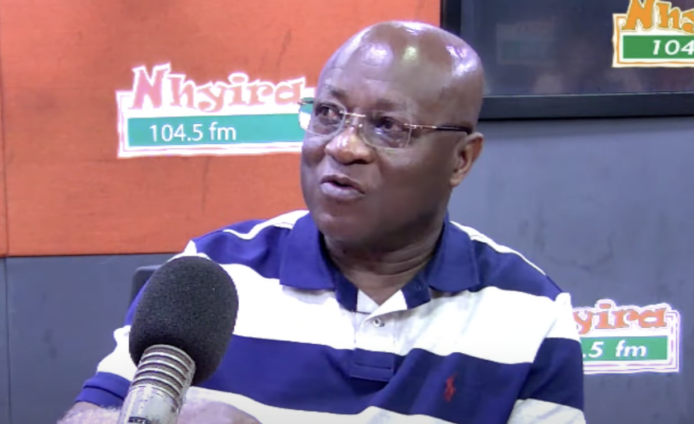
Former Majority Leader Osei Kyei-Mensah-Bonsu has reflected on the New Patriotic Party (NPP)'s defeat in the 2024 elections, stressing that the lack of enthusiasm during Dr Mahamudu Bawumia’s campaign.
The chairman of the party's manifesto committee told Nhyira FM, that unlike previous elections, the usual excitement of supporters that greeted NPP's campaign was noticeably absent.
He admitted that while signs of difficulty emerged early, the party remained hopeful that the situation would improve before the elections.
According to the former Suame MP, if the elections had been held in August, Dr Bawumia would have secured only about 30% of the vote against John Mahama due to economic hardships at the time.
However, by December, some economic improvements had been made, which slightly bolstered support.
The NPP flagbearer polled 4,877,611 votes (41.75%) against his key contender John Mahama who got 6,591,790 (56.42%).
Key factors behind the NPP's defeat in the Ashanti Region included the party's delegate selection system, which determined leaders from the polling station level up to the national executive.
Respondents also pointed to the widespread economic hardship as a major contributor to voter dissatisfaction.
He recalled that Asantehene Otumfuo Osei Tutu II had warned President Akufo-Addo in 2017 about the dangers of allowing Ghanaians to become both hungry and angry.
This, he said, was a decisive factor in Mahama’s 2016 loss and ultimately led to the NPP’s defeat in 2024, compounded by post-COVID-19 economic struggles and the impact of the Russia-Ukraine war.
The perception of corruption within the government, along with President Akufo-Addo’s leadership style—viewed as single-minded and resistant to dissent—further weakened the party’s standing.
Additionally, many believed that the President and his family wielded excessive control over both the party and government, reinforcing the image of a centralized power structure.
Dr Bawumia himself was seen as a continuation of Akufo-Addo’s administration rather than a distinct leader.
Some respondents in the Ashanti Region also felt that his background as a Mamprusi contributed to instability in the North, particularly in conflicts involving the Kusasis in Bawku.
There was also significant concern over the government’s perceived neglect of the Ashanti Region in terms of infrastructural development, coupled with a disconnect between the regional and constituency levels of the party.
This led to a loss of trust and enthusiasm among the party’s core supporters.
Despite these grievances, Kyei-Mensah-Bonsu stated that many voters remain open to returning to the NPP if the party acknowledges its missteps and makes the necessary corrections.
He stated that this willingness to be candid about the issues should be seen as an opportunity for the party to regain public confidence.
Regarding former President Akufo-Addo’s influence, he acknowledged that while Akufo-Addo is no longer the party leader, any future NPP candidate must still build upon his legacy.
On whether Bawumia should continue as the party’s leader, he said the decision would depend on findings from the other 15 regions, noting that in the Ashanti Region, religion and ethnicity were not considered factors in the loss.
He also addressed concerns about Dr Matthew Opoku-Prempeh's role in the election outcome.
While Opoku-Prempeh was eventually chosen as Bawumia’s running mate, Kyei-Mensah-Bonsu revealed that he had initially declined the opportunity to run alongside Bawumia despite significant support within the party for his selection.
The choice of Opoku-Prempeh was intended to bridge the long-standing divide between the Kufuor/Kyerematen and Akufo-Addo/Adu Boahen factions within the NPP.
With strong ties to both sides, he was seen as a unifying figure who could consolidate the party. However, expectations that he would attract significant youth support did not materialise.
Moving forward, Osei Kyei-Mensah-Bonsu emphasised that the party’s next steps, including Bawumia’s potential candidacy and the selection of a future running mate, will depend on comprehensive assessments from all regions.
Latest Stories
-
The Traffitech-GH SMS spot-fine system: The good, the sad, and the funny – Bright Simons writes
7 minutes -
Hawa Koomson pledges experienced and mature leadership of NPP women’s wing
1 hour -
Young woman found dead at Kasoa Peace Town
2 hours -
Playback: The Law examined lawful arrest in Ghana
2 hours -
Mahama urges African governments to treat healthcare as an investment, not budget cost
3 hours -
Bawumia congratulates John Boadu and new NPP executives, pledges support ahead of 2028
3 hours -
‘No talent should be left out’ – Bawumia pledges inclusive NPP campaign for 2028
3 hours -
Prof. Mike Oquaye recounts how he blocked the Special Prosecutor’s attempt to arrest Bawku Central MP
3 hours -
Make health sovereignty a priority for Africa – Mahama
3 hours -
Dorimon Naa, Wa West DCE lead massive clean-up exercise; threaten sanctions against recalcitrant residents
4 hours -
Photos from Adom FM Y2K Jam
4 hours -
Praye Tiatia steals the show at Adom FM Y2K Jam [Watch]
4 hours -
Boakye Agyarko congratulates John Boadu, pledges support for NPP leadership
4 hours -
Antwi HiMight thrills fans with Antwi ne Antwi hits at Adom FM’s Y2K Jam [Video]
4 hours -
Amb. Edward Boateng congratulates Boadu, Kodua on election wins
5 hours