

Audio By Carbonatix
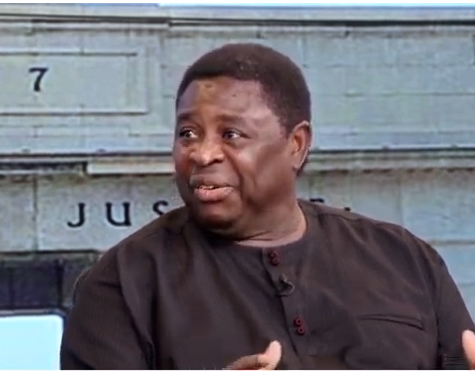
As Ghana marks 69 years of independence, agronomist and politician Dr Abu Sakara says the nation has made significant strides, but cautions that youth unemployment, lack of industrialisation, and economic gaps remain urgent challenges.
Speaking on JoyNews’ The Pulse programme on March 6, he provided a detailed assessment of the nation’s economic, political, social, and geopolitical development.
“Clearly, we have not yet reached where we should be, but we have made a lot of progress. I think on the economic side, we have transitioned our economy towards a more mixed economy, but we didn’t achieve industrialisation. We have not achieved it yet, so we’re still behind compared to our contemporaries,” Dr Abu Sakara said.
On the political front, he praised Ghana’s democratic stability. “On the political side, of course, we’ve made a significant gain. We’re known as the beacon of stability in our neoliberal democracy, and of course, with various changes, peaceful changes of government, so that is a good plus in our cap,” he added.
Yet he cautioned that social challenges persist, particularly youth unemployment, which is closely linked to the lack of industrialisation. “On the social side, there’s a lot of youth unemployment, and that is coupled with the lack of industrialisation. Although we’ve made progress through the foundation of universal primary education, we’re now training people not for our economy, but to export them because we have high youth unemployment. You will have that if you don’t have industrialisation, because the service sector cannot absorb all of them, and even those absorbed by the service sector are being absorbed to service other people’s industrial growth. So there we have a big task to do,” he explained.
Dr Abu Sakara also addressed Ghana’s evolving geopolitical stance. “I think if you look at the geopolitical stance, we went from a purely Pan-Africanist view, now we have a more non-aligned view, the one in which we have a more multilateral approach, and some will even say that we have aligned ourselves a little bit more with the West. But I think that with the reset agenda, we hope that we’ll come back, especially as we are now trying to build bridges with our AES colleagues, that we’ll come back more towards our core Pan-African agenda, and also begin to look seriously at facing a new multipolar world in which it may not necessarily be a question of non-alignment, but advantageous collaboration with those who will take us furthest.”
He added: “I think that will be a contrast to our traditional Western trade linkages, but be that as it may, these are choices in the real world you have to make, and we have to prepare ourselves and our country to be able to do that. Aspirations of people, whether people are happy, whether they are achieving their aspirations, finally that is the bottom line, and their welfare. All these factors play into that.”
Reflecting on overall progress, Dr Abu Sakara said: “I think we have made significant progress, but a question is not whether you’re on the right path or not. It is whether you are where you are supposed to be. Is this your sitting place, compared to where you should be?"
Despite these advances, he highlighted the economic gap between Ghana and its peers. “Our GDP per capita is around $2,000, compared to $65,000 in some countries, and even South Korea at $35,000. Money is not everything, but it drives many other outcomes,” he said.
He concluded that while Ghana has made considerable strides since independence, accelerating industrialisation, creating meaningful employment, and positioning the nation strategically in the global arena remain urgent priorities.
Latest Stories
-
Prioritise cocoa sector with better prices, timely payments-Annoh-Dompreh urges NDC
28 minutes -
Lands and Mines Watch Ghana endorses Heath Goldfields’ mining capacity
43 minutes -
Gbintiri residents protest alleged diversion of 24-hour market project
1 hour -
Justin Bieber headlines Coachella with nostalgia-fuelled set
1 hour -
Ukraine and Russia accuse each other of hundreds of ceasefire violations
1 hour -
Asha Bhosle: The sound of Bollywood dies aged 92
2 hours -
Fire destroys section of 4-bedroom apartment at Tantra Hill
2 hours -
Safe city: Unnoticeable protection
2 hours -
North East Regional Police Commander raises alarm over burning of checkpoints
2 hours -
Free Primary Healthcare Programme set for take-off — Health Ministry confirms readiness
2 hours -
3 co-wives, 5 children perish in canoe disaster – Maritime Authority insists life jackets use mandatory for all water transport
3 hours -
Iran war lands ‘triple blow’ to flood-ravaged Sri Lankans
4 hours -
Gunmen kill at least 11 people at Afghanistan picnic spot
4 hours -
Woman, 25, in court for stealing baby at Bogoso
4 hours -
Trump unveils giant gold-accented victory arch design for US capital
4 hours