

Audio By Carbonatix
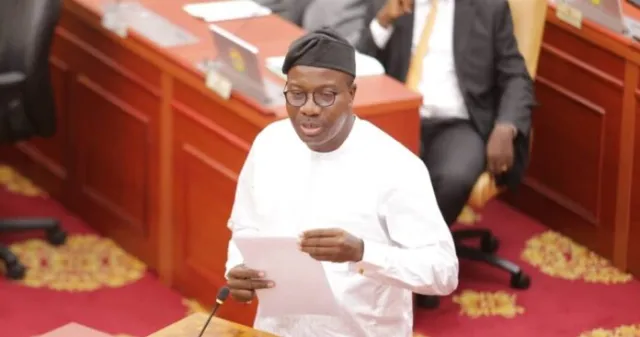
As Ghana’s Parliament closed for the year, Majority Leader Mahama Ayariga firmly pushed back against growing allegations that state investigative agencies are being weaponised to suppress the Minority in the legislature.
In a strong-worded rebuttal during his closing remarks on the floor of Parliament, Mr. Ayariga described the claims as unfounded and contrary to his extensive experience in public service.
“I have been in this House for close to two decades—as an opposition member, as a minister, and now as Majority Leader. I have never seen anything like that,” he stated, dismissing suggestions of institutional intimidation.
His comments come amid a backdrop of political tension and public scrutiny over the perceived use of legal and investigative institutions in politically charged matters.
Some members of the Minority Caucus have recently raised concerns over what they describe as a climate of intimidation and selective prosecution.
However, Mr. Ayariga—who has served in various capacities under both National Democratic Congress (NDC) and New Patriotic Party (NPP) administrations—insisted that Ghana’s democratic institutions remain independent and robust.
The Majority Leader also used the opportunity to commend both sides of the House for their dedication and spirited debates throughout the year, emphasising the importance of maintaining decorum and unity in national discourse.
Meanwhile, Minority Leader Alexander Afenyo-Markin struck a more personal and reflective tone in his own end-of-year submission, urging MPs to prioritise their personal well-being and family life during the recess.
“To all honourable members, please spend time with your family. We’ve worked hard enough. Let’s use this period to check our health,” he advised, drawing attention to the often-overlooked mental and physical toll of public service.
With growing awareness of health-related challenges among political leaders across the continent, Mr. Afenyo-Markin underscored the need for proactive care.
“When we leave this abode, the Constitution requires that there must be a replacement. Life will go on without you. Don’t be afraid to know your medical condition. It is better to know and treat it than live in fear of the unknown, only for it to worsen,” he added.
His remarks struck a chord with many within and outside the chamber, reminding political leaders of the delicate balance between national duty and personal health.
As Parliament adjourns, lawmakers are expected to return in early 2026 for the next session, with several key legislative matters—including the national budget implementation, electoral reforms, and constitutional amendments—awaiting attention.
The call for renewed focus, accountability, and wellness serves as a fitting reminder of the human side of governance, even as political tensions simmer ahead of the next election cycle.
Latest Stories
-
LA 2028: Black Queens to face Mauritius in Round Two of African qualifiers
5 minutes -
Three dead, including child, in Channel crossing attempt
9 minutes -
Woman charged with stealing from patients and staff at hospitals across Ontario
9 minutes -
Foreign tourists stay longer as domestic guests dominate Ghana’s accommodation market – GSS
11 minutes -
Ghana’s tourism accommodation market shows sharp regional disparities – GSS
15 minutes -
Ayalolo BRT to get contra-flow lanes on three major Accra corridors
19 minutes -
GH¢111bn DDEP maturity wall in 2027/2028 – Insights from Charles Adu Boahen
21 minutes -
Danlad Ibrahim on crutches after suffering injury against Aduana FC
23 minutes -
Aayalolo to operate contra-flow on three major Accra corridors
28 minutes -
Northern Region pupils left unsupervised as teacher unions begin strike
29 minutes -
Limited time forced me to contest 2024 election as independent candidate — Alan Kyerematen
30 minutes -
GES clarifies NCPTA, Prospectus Ghana Limited partnership
32 minutes -
Daily Insight for CEOs: The CEO’s role in strategic reflection
34 minutes -
John Jinapor reiterates government’s commitment to Salaga transmission project
35 minutes -
I’m not surprised Tinkler resigned because I predicted this – Kojo Addae Mensah
52 minutes