

Audio By Carbonatix
The Joint Receiver of the collapse banks and microfinance institutions has revealed that some customers are yet to receive their monies.
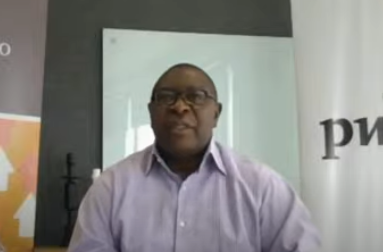
According to Mr Eric Nipa, some customers sent in their claims late while others had no information to validate their claims because their institutions had already collapsed before the revocation of licence.
Hence, when the government released GH₵6.5billion, it was for the payment of depositors' claims that had already been validated, he said.
“When I was made, for example, receiver of the 347 microfinance institutions, there were 155 of this microfinance which ceased to operate way before the revocation of their licenses, and so many of them do not have records, till this day we cannot locate those records.”
“What typically happens in that situation is that within 90 days of the company being placed into receivership, you are supposed to have submitted your claims, based on which I would review, validate and approve these claims and then admit them,” the Director of PricewaterhouseCoopers (PwC) said.
His comment comes after the Bank of Ghana revoked the class 1 banking licenses of nine banks, some microfinance institutions, and savings and loans companies during the financial sector clean-up.
The move led to depositors’ funds being locked up. The Consolidated Bank Ghana (CBG) which is a merger of the collapsed banks was subsequently established.
In 2020, the deputy Finance Minister said that more than 96% of depositors who had their monies locked-up from the banking sector clean-up “have been paid in full."
Charles Adu Boahen said 20% of the monies were paid in cash while 80% was paid in bonds.
“The bonds were structured to pay out over four years,” he told MPs during the debate on the mid-year Budget Review in Parliament on July 28, 2020.
But speaking on JoyNews, Mr Nipa told Samson Lardy Anyenini, on Newsfile, that there is currently an excess of over GH₵1 billion that needs to be paid to depositors who submitted their claims after the deadline on July 4th 2020.
He explained that he does not have the money to pay the depositors, however, he is putting together a report to the Bank of Ghana and the Ministry of Finance to consider supplementary payment.
The PwC Director said that the payment of the funds, financed by the government, is part of the bailout scheme it set up to help clean the banking sector.
Meanwhile, the Finance Minister Ken Ofori-Atta, in March 2020 revealed that the banking sector cleanup saved about 4.5 million customers of affected institutions from losing their deposits.
He, however, revealed that a total of GH₵ 21billion was spent on the exercise.
“We think we have done the best that the country deserves and the results show that we have a much stronger banking sector now than we had in 2017,” he said.
Latest Stories
-
Mfantsipim must cultivate more business leaders, entrepreneurs – Nana Awuah
15 seconds -
MOBA must reduce reliance on donations to protect Mfantsipim’s future – Patrick Kittoe
1 minute -
GCB extends Customer Service Week into month-long customer engagement
2 minutes -
Africa risks widening inequality if it fails to build AI expertise – Kweku Awotwi
3 minutes -
Women’s Voices Matter Movement petitions Gender Ministry over women’s rights and development
4 minutes -
Huel ad banned for suggesting its products could replace all meals
16 minutes -
Global InfoAnalytics poll puts John Boadu, Justin Kodua and Titus Glover ahead in NPP executive race
2 hours -
Ghana to establish skills development university with $50m from German support package
2 hours -
Baffour Awuah under EOCO investigation over alleged financial loss and money laundering – Deputy AG
2 hours -
How healthy is Ghana’s health sector?
2 hours -
HACSA Tech4Girls graduates 80 young women with digital and technology skills
2 hours -
Arrest of Manhyia South MP should involve Parliament, not police station – Kpebu
3 hours -
Two Nigerians sentenced to 189 months in US prison over $2.4m cyber fraud
3 hours -
Cristiano Ronaldo leaves Portugal’s training camp after rift with Head Coach
3 hours -
Ghana Energy Awards opens nominations for landmark 10th anniversary edition
3 hours