

Audio By Carbonatix
The President of the Ghana Union of Traders' Associations (GUTA), Clement Boateng, has attributed the financial difficulties facing utility providers to inefficiencies within their own operations, insisting that consumers should not be made to bear the cost through frequent tariff increases.
Mr. Boateng made the remarks in an interview on Joy FM's Midday News, in response to the latest utility tariff adjustments announced by the Public Utilities Regulatory Commission (PURC), which have raised concerns among businesses and households.
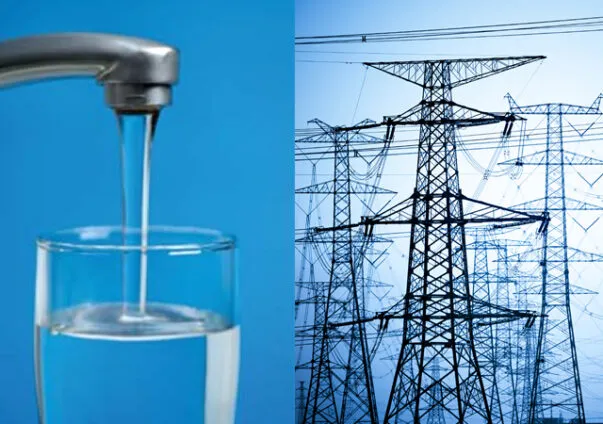
Under the new rates, electricity tariffs will increase by 3.49%, while water tariffs will go up by 0.85%, with both adjustments taking effect from July 1, 2026.
According to him, while utility companies require adequate revenue to maintain their operations and improve service delivery, the financial challenges confronting the sector are largely the result of operational losses that could be reduced through improved management and efficiency measures.
"They [utility providers, e.g., ECG, Gwl] should know that the financial challenges they find themselves in are attributed to their own inefficiencies in their operations," he said.
"If you take Ghana Water Company, for instance, they are recording operational losses of between 51 and 52 per cent. In the electricity sector, operational losses are about 32 per cent," he added.
Mr. Boateng explained that a substantial portion of these losses stems from theft, illegal connections and wastage within the distribution systems, challenges he believes should be addressed before resorting to tariff hikes.
"These losses account for a huge part of the challenges they are facing. They arise as a result of theft, illegal connections and wastage in the system. This is due to inefficiencies in their operations," he noted.
He urged utility providers and regulators to prioritise measures aimed at reducing technical and commercial losses, arguing that such interventions would improve revenue mobilisation and lessen the need for regular tariff adjustments.
Mr. Boateng further maintained that addressing operational inefficiencies would not only strengthen the financial position of utility providers but also help ease the burden on businesses and consumers already grappling with rising costs.
Latest Stories
-
Livestream: The Law examines lawful arrest in Ghana
46 seconds -
Mahama urges African governments to treat healthcare as an investment, not budget cost
36 minutes -
Bawumia congratulates John Boadu and new NPP executives, pledges support ahead of 2028
37 minutes -
‘No talent should be left out’ – Bawumia pledges inclusive NPP campaign for 2028
43 minutes -
Prof. Mike Oquaye recounts how he blocked Special Prosecutor’s attempt to arrest Bawku Central MP
59 minutes -
Make health sovereignty a priority for Africa – Mahama
1 hour -
Dorimon Naa, Wa West DCE lead massive clean-up exercise; threaten sanctions against recalcitrant residents
1 hour -
Photos From Adom FM Y2K Jam
2 hours -
Praye Tiatia steals the show at Adom FM Y2K Jam [Watch]
2 hours -
Boakye Agyarko congratulates John Boadu, pledges support for NPP leadership
2 hours -
Antwi HiMight thrills fans with Antwi ne Antwi hits at Adom FM’s Y2K Jam [Video]
2 hours -
Amb. Edward Boateng congratulates Boadu, Kodua on election wins
2 hours -
John Boadu pledges to rebuild NPP from grassroots and restore ‘winning machinery’
3 hours -
Ashaiman Assembly deploys monitoring system to curb dumping in storm drain
3 hours -
John Boadu must rebuild, unite NPP for 2028 – Edward Boateng
3 hours