

Audio By Carbonatix
Ghanaians must do away with blind loyalty and unquestioned obedience to authority if they want to develop under a democracy, a governance expert has said.
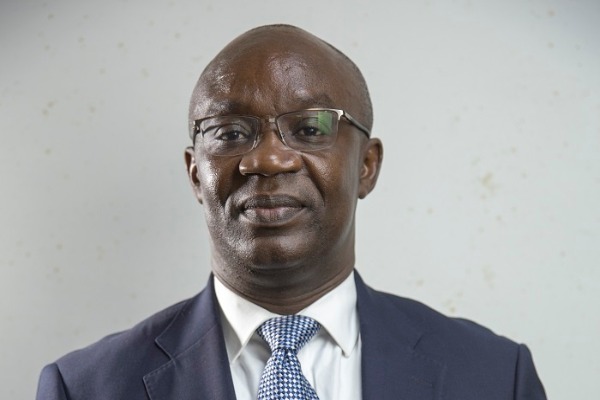
Dr Valentin Mensah noted the poor Ghanaian socio-political culture has affected every facet of the governance structure and its crippling Ghana's fledgling democracy.
He made the remark during a Corporate Governance Faculty Lecture organised by the Institute of Chartered Accounts Ghana (ICAG) on the theme, “Dysfunctional Executive Oversight and Accountability in Ghana.”
The lecture was to tease out some of the challenges and bottlenecks that have bedevilled Ghana's democratic development and recommend possible solutions.
The keynote speaker believes anachronistic culture is one of Ghana's biggest headaches in its democratic development.
In his detailed presentation, Dr Mensah, who is also a Board Member of the Graphic Communications Group Ltd, said even though Ghana had independence with South Korea around the same time and shares some cultural similarities except long term orientation, the Asian country is now described as a developed country whilst Ghana still wallow in the economic doldrums.
Explaining the gaping difference in the development of the two countries, Dr Mensah walked participants of the lecture through G Hofstede (2001) research, titled dimensions of culture, which sought to explore how culture addresses fundamental issues, including the relationship with authority, people and change.
Culture and development
Hofstede had five cultural value dimensions and how they correspond with mental programs or behaviours of citizens in eight different countries-
Ghana, Nigeria, South Korea, South Korea, Canada, Australia, US and UK.
Among these five dimensions include how citizens related to those in authority (Power Distance); whether or not policymakers were short-sighted or had a long term planning policy regime (Long Term Orientation); or whether or not they were individualistic in their decision making.
Quoting the findings of the research, Dr Mensah said Ghana, Nigeria and South Korea scored high marks in power distance which meant the citizens of Ghana and Nigeria kept a distance from their leaders without proper oversight and accountability, but Ghana scored abysmally low (4) on Long Term Orientation which relates to focus on the future, a savings culture and long term development planning.
On the other hand, South Korea scored a not too distant mark from Ghana on Power Distance but attained a 100 per cent mark on long-term orientation, which influenced their long-term policy initiatives.
According to Dr Mensah, that is the game-changer for South Korea and has led to massive development in the Asian country.
The governance expert replicated Hofstede study in Ghana for his PhD in 2008 using Customs officials across the ten regions.
The outcome was not significantly different from the original study, pointing to the dire consequences of a backwards-looking culture.
This must change, Dr Mensah noted, adding, leadership in Ghana must begin to work on the cultural consciousness of the citizens and ensure it works favourably for Ghana's developmental agenda.
Dr Valentin Mensah said Ghana may continue to needlessly blame democracy as an alien political system of governance if it fails to transform its citizens' cultural and traditional belief systems.
The Lecture on Zoom had participants from various accounting firms, public and corporate institutions.
President of ICAG, Prof William Atuilik, said governments must begin to take a critical look at the policies they implement and ensure they are sustainable long term policies.
He said the ICAG will begin to play a major role in the accountability architecture of governance and make recommendations where necessary.
He said for members of institutions that disburses funds; it will be an abdication of responsibility if they do not hold the authority to account.
Latest Stories
-
Trade Minister applauds GUTA as a pillar of economic growth; Prez Mahama honoured
50 minutes -
President’s brother’s takeover of Damang Mines is ‘untidy’ – Alhassan Tampuli
56 minutes -
It’s not true that gov’t decided not to renew the lease for Gold Fields – Bobby Banson
60 minutes -
Ghana to boost tomato production with 60-hectare irrigated farms and processing initiatives
1 hour -
E&P’s takeover process of Damang Mines was very clean – Inusah Fuseini
1 hour -
Damang takeover: There is not going to be any job loss; it is a lease change – Bobby Banson
2 hours -
Gold Fields didn’t stop mining at Damang mines; such claims are untrue – Bobby Banson
2 hours -
Engineers and Planners currently operate only in Ghana – Bright Simons
2 hours -
Lands Minister has no legal basis to restrict lease to Ghanaian firms – Bright Simons
2 hours -
Gov’t’s refusal to renew Gold Fields’ lease was simply untenable – Bright Simons
2 hours -
SOS Children’s Villages Ghana deepens partnership with Gender Ministry
3 hours -
Gender Ministry celebrates Christina Koch, reaffirms commitment to empowering girls
3 hours -
Live stream: Newsfile digs into E&P’s takeover of Damang Mines, OSP powers and Anti-LGBTQ Bill
3 hours -
Moody’s maintains Ghana’s rating at Caa1, revises outlook to positive
4 hours -
Zambia elevates tourism education to national priority as President Hichilema backs continental summit
4 hours